The Best Looking Movie of the Year Was Shot on an iPhone
Don't sleep on 'The Left-Handed Girl,' Taiwan's official submission for the Best Foreign Language Film at the Oscars, now on Netflix.
Welcome to The #Content Report, a newsletter by Vince Mancini. I’ve been writing about movies, culture, and food since the late aughts. Now I’m delivering it straight to you, with none of the autoplay videos, takeover ads, or chumboxes of the ad-ruined internet. Support my work and help me bring back the cool internet by subscribing, sharing, commenting, and keeping it real.
—
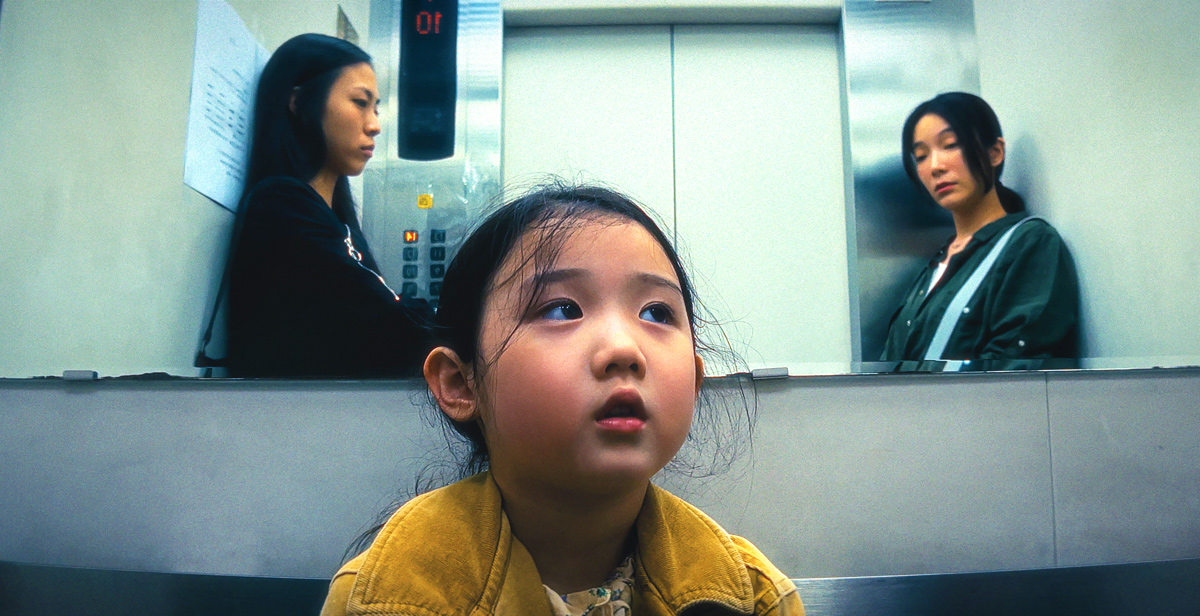
It’s easy to forget sometimes that a film’s most basic function is something you want to keep watching. Watching movies is an inherently voyeuristic act, which is why all true film lovers are, on some level, perverts. That was the essential point made by Babylon, which was mostly hated by critics and snubbed by awards voters upon release, many of whom don’t especially like being reminded of their own freakiness. It’s true though—we peer out this window that is a screen hoping to see something titillating (or funny or sad or affirming, but always still titillating at a basic level), and the best most basic test for any movie is how well it keeps us leaning against the sill. A great movie turns us all into the Sickos meme.
This is perhaps a weird introductory paragraph for a review of The Left-Handed Girl, a movie about a small Taiwanese girl which is about as gentle and wholesome as they come, especially for this newsletter. Yet The Left-Handed Girl is also one of those necessary, periodic reminders that movies are a visual medium. Shih-Ching Tsou’s film, Taiwan’s official submission for the Oscars’ foreign language category, catches your eye from its very first frames and never lets go, a relatively simple story that’s always so stuffed with visual detail that it feels like it’s bursting at the seams. That it’s one of the best looking films of the year (with due respect to One Battle After Another, Caught Stealing, Sinners…) despite being shot on iPhones, proves that what’s in the frame, what’s in focus, and how you shoot it matters far more than the camera or the film stock. (Or, God forbid, the score or the aspect ratio).
The story concerns I-Jing, played by 9-year-old actress Nina Ye, whom we meet on the road to Tapei where she’s moving with her overworked mother, Shu-Fen (Janet Tsai) and bratty, wild child older sister I-Ann (Shih-Yuan Ma). (The sisters clearly have some sort of iCarly naming convention going on, the cultural significance of which is largely lost on me, other than that it’s nice that there’s clearly more there than I can immediately grasp). In an opening montage, I-Jing surveys the sights of Tapei in between POV shots through her toy kaleidoscope while the older women snipe and bicker over plans to open a noodle shop. It’s essentially the opening title sequence of The Sopranos, if you replaced the Lincoln Tunnel with the road to Taipei and Tony holding a cigar with a young Taiwanese girl holding a kaleidoscope. Woke up this morning… got myself some soup…
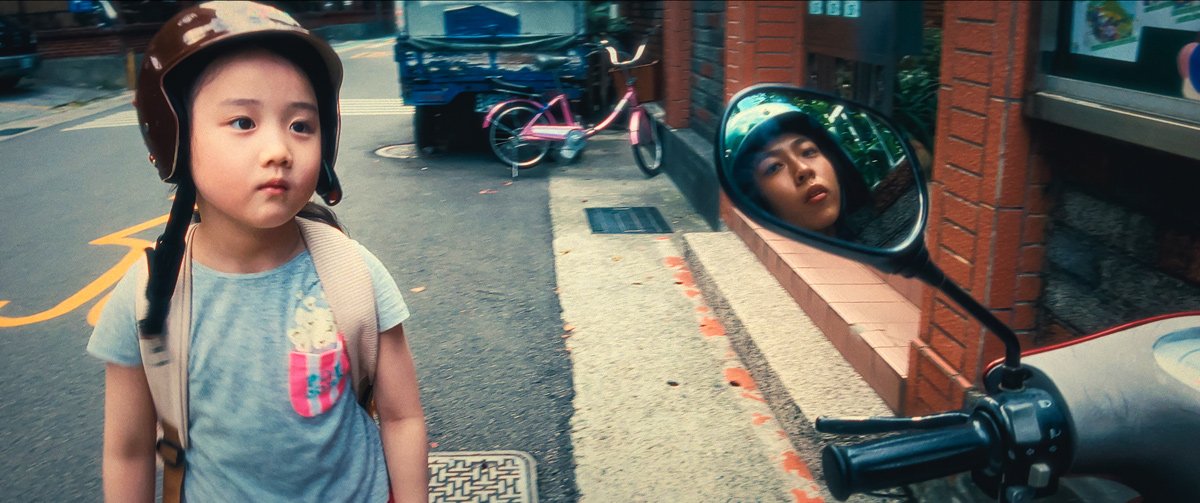
The child’s-eye-view conceit is a staple of countless memoirs, and the kaleidoscope such a plug-and-play metaphor (life, she is beautiful, que no?) that The Left-Handed Girl sort of sets us up for this middlebrow, festival conventional tale of slightly morose family drama. Yet I-Jing’s child perspective never feels falsely naive or artificially innocent the way those often can (and it’s the falseness and pedantic nature of the trope that tends to grate).
Shih-Ching Tsou is a long-time collaborator of Sean Baker’s (a producer on all Baker’s movies from Take Out—which Tsou co-wrote—to Red Rocket), and there’s a heavy dose of Tangerine and The Florida Project in The Left-Handed Girl (which Baker also edited). If there’s anything that separates Baker and Tsou from the pack, it’s their eye for authenticity in casting, and verité style in shooting. Shooting on phones isn’t just meant as a bullet point for a press release, it allows Tsou to move through spaces in a naturalistic way that allows us to feel like we’re experiencing them all with fresh eyes, just like I-Jing. It’s also strikingly kinetic, in a way that jumpy editing and computerized camera moves never seem to accomplish. Ye makes a wildly adorable protagonist, yes, but it’s the way the filmmakers never talk down to her or style her like their personal dress-up doll that allows her to be so.
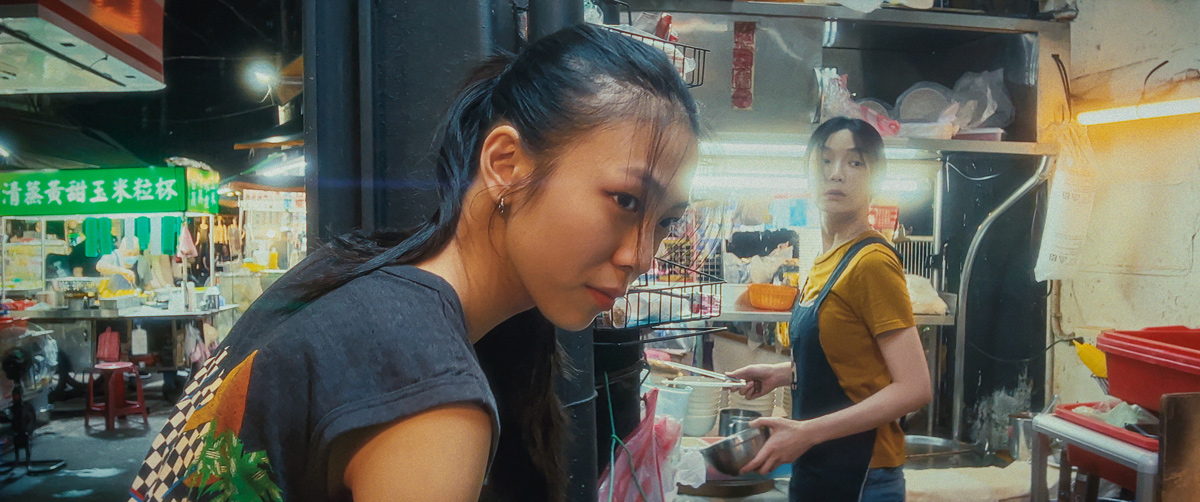
The drama, such as it is, concerns I-Jing’s overworked mother (still paying for her estranged ex’s medical care), her bad girl sister (dressing skankily and in a bad relationship with her loser boss at the betel nut stand), and her kooky grandparents. Her leopard-printed grandma is wrapped up in some kind of passport scam, often leaving I-Jing in the care of her Guinea T grandad (is “guinea tee” less offensive than “wifebeater?” I’m opting for the former as an Italian-American) who seems willfully ignorant of virtually all his family’s troubles save for the fact that his granddaughter is left-handed. He gets upset that no one has tried to train the southpaw out of her and tells her that the left hand is the devil’s hand.
I-Jing creates her own interpretation of this superstition, giving her the left-hand-as-mischief-loophole (she can’t really be blamed for the actions of the devil, now can she?) leading to one of cinema’s most adorable crime sprees.
Meanwhile, her mother’s finances, her sister’s promiscuity, and her grandmother’s sketchy scheming all collide in a Seinfeld-style crescendo at a dim sum palace for the grandmother’s 60th birthday party. Tsou understands that the root of her story is people and place (Brando Huang as the benevolent Shamwow guy of the Tapei night market is a particular favorite, and not just because of the awesome name), and that capturing them in all their texture is of the utmost importance. But neither does Tsou shirk her responsibilities as a yarn spinner, and ultimately the combination of telenovela melodrama with cinema verité cinematography makes for a delicious confection. Popcorn drama + eye candy photography = …some kind of cinematic Rice Krispy treat? In any case, The Left-Handed Girl feels like a sugar high.
