'One Battle After Another' is a Perfect Movie
Modelos never tasted so sweet.
Welcome to The #Content Report, a newsletter by Vince Mancini. I’ve been writing about movies, culture, and food since the late aughts. Now I’m delivering it straight to you, with none of the autoplay videos, takeover ads, or chumboxes of the ad-ruined internet. Support my work and help me bring back the cool internet by subscribing, sharing, commenting, and keeping it real.
—
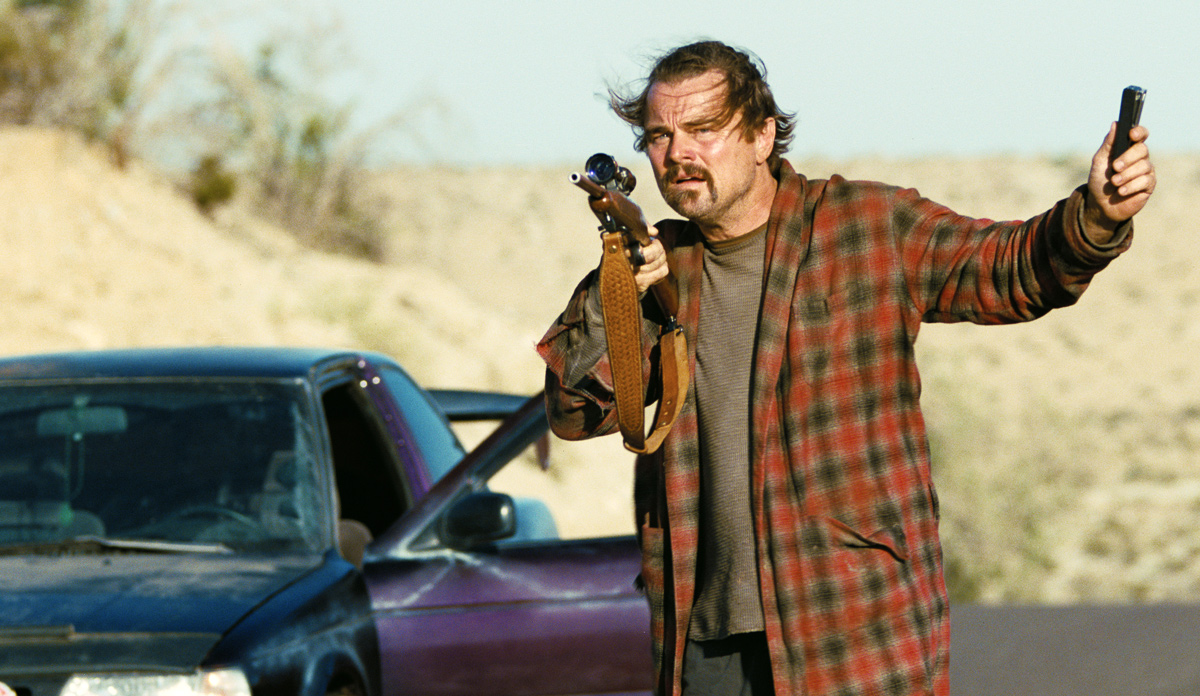
Back in high school when I was roughly the most obnoxious kind of film bro, I used to have friendly arguments with my friend Matt over the relative merits of Paul Thomas Anderson vs. Quentin Tarantino, usually staged over red cups and bummed cigs. I would take the Tarantino side of the debate and Matt, who claimed he had learned Italian from watching Fellini movies, would argue for PTA. This was shortly after the release of Magnolia, PTA’s mopiest, most morose film, so at the time I could theoretically justify the position. Upon the release of One Battle After Another, it seems high time for me to admit the obvious: Matt, you were right, I was wrong. There may not be another American filmmaker alive worthy of fetching PTA’s coffee.
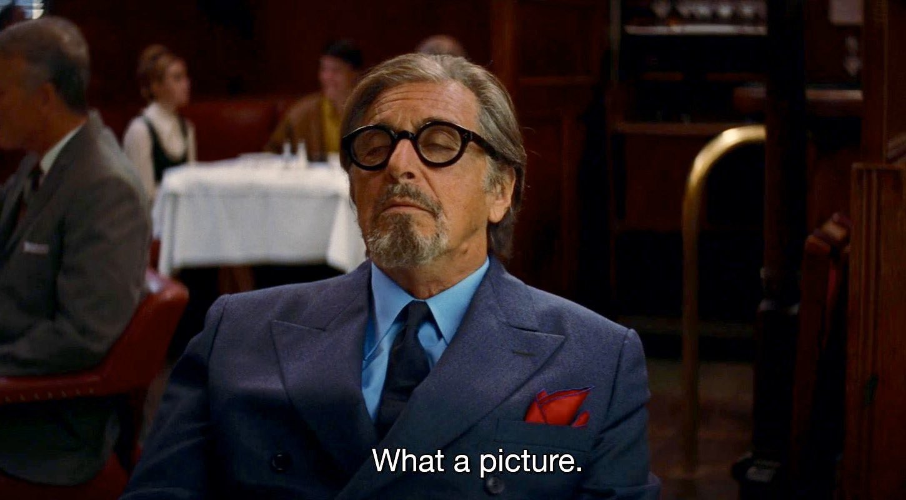
Whoever decided to let Paul Thomas Anderson adapt another Thomas Pynchon novel deserves a raise. The last time he did, we got Inherent Vice—somehow flawed, a masterpiece, the most faithful Pynchon adaptation ever, one of the defining seventies retrospectives, and not even the best seventies retrospective by the same director all at the same time. While that film was locked into the oversexed, paranoiac, addled alienation of seventies California, complete with sexy babes, flattopped heavies, and an unreliable stoned narrator, One Battle After Another offers an additional layer of introspection. Adapted from Pynchon’s 1990 novel, Vineland, One Battle After Another is a film about flawed people who feel compelled by injustice to take up the cause of revolution, never entirely sure of their decision on an intellectual level (if they even have one), but driven ineffably by something inside them, sometimes to their own chagrin.
One Battle After Another is as beautiful an expression of the anti-authoritarian spirit as Casablanca or Andor S2, while also being a heartfelt portrait of girl-fatherhood. It’s also, at times, a pure comedic romp, that had me laughing harder and louder than anything I’ve seen this year, and this is a year that includes Friendship so the competition was stiff. There were times I was braying so loudly I worried I was ruining the movie for the other patrons, like some combination of DeNiro in Cape Fear and the donkeys from the vice island in Pinocchio. Sean Penn’s portrayal of a horned up Looney Tunes commandant is just that good, a running sight gag spewing perfect wordplay that’s also a satirical bullseye, quite possibly one of the greatest movie characters of all time.
One the way out of the theater, the friend I saw it with asked, “You think Ari Aster saw this and thought, ‘Fuck, that’s what I was trying to do?’”
I would argue that Eddington is more about the fracturing of consensus reality than a statement of political convictions, and genius in its own right, but I take his point. Earnest humanism like OBAA is always more satisfying than a clinical dissection of an alienating time, as historically perfect as Eddington is at that. The most enjoyable art never skips the corn entirely. I always think I’m going to be immune to yet another Tom Petty needle drop, but when “American Girl” kicked in as OBAA’s credits began to roll I had to hold back tears. I forfeit my jadedness. Give me all of the reverb, you sick bastard.
If there’s a common thread between OBAA, Casablanca, and Andor, it’s that paeans to a common cause hit harder when they acknowledge the uncertainty; that faith is hard, courage is lonely, and fighting injustice rarely feels like you’re doing the right thing in the moment. Maybe you were just a naive idealist and this was all a mistake. The universe rarely offer clean answers. Leonardo DiCaprio plays our “hero,” Ghetto Pat, whom we meet some time in the past as the bomb maker for a Symbionese Liberation Army/Weathermen-style group of revolutionaries known as “French 75.” The timeline is deliberately a little fuzzy, since Vineland was released in 1990 and set in 1984, about sixties revolutionaries slouching towards adulthood in the 80s. OBAA is a contemporary work about ex-70s or maybe early-80s radicals, and the timeline probably doesn’t entirely line up, but making it current seems like the right choice even at the expense of the math not quite mathing. The circularity of time is intended.
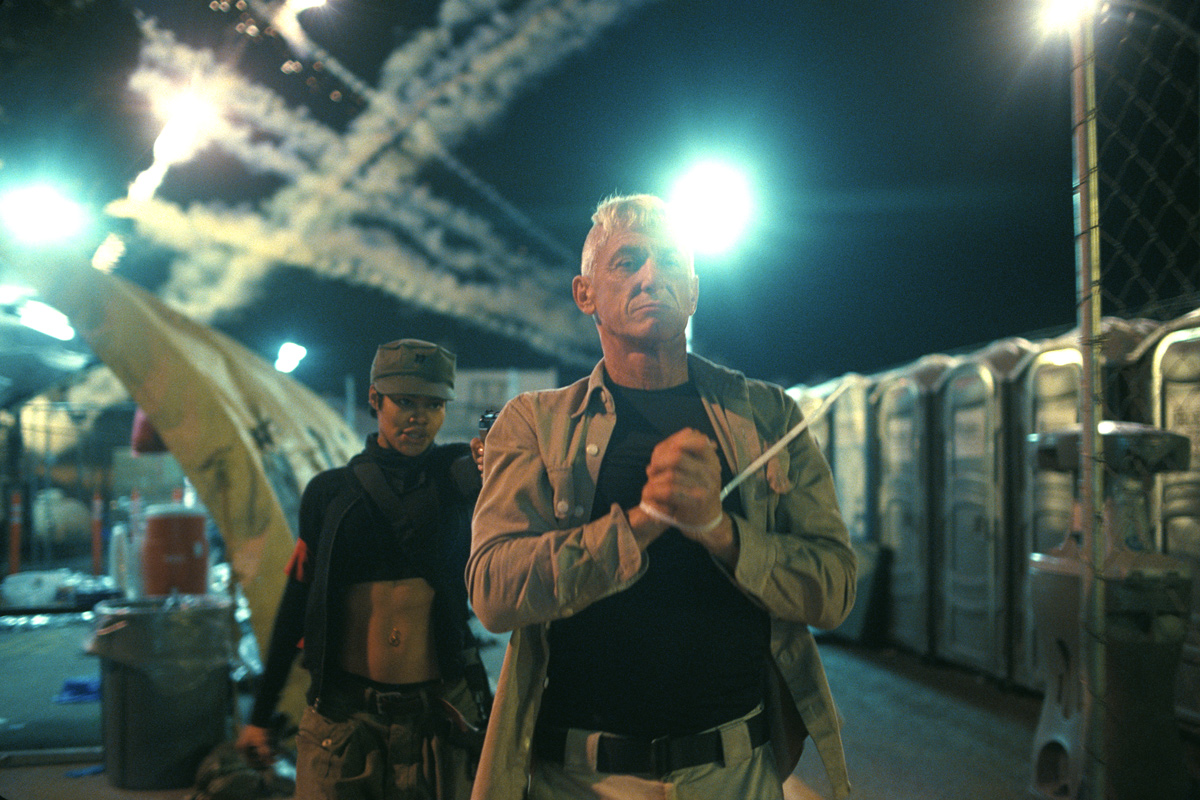
Ghetto Pat is in love with a fellow revolutionary, a jive-talking sexpot named Perfidia Beverly Hills. Played by Teyana Taylor, Perfidia’s high fashion pornstar look (ripped abs, enhanced lips and maybe butt, cheekbones that could cut glass) makes her the perfect idealized black radical of every white boy’s dreams. Those besotted white boys include not just Pat but Steven J. Lockjaw (Penn), the swishy-hipped little Patton in charge of the immigration detention facility Perfidia and Pat liberate in the first scene. Lockjaw wears lifts in his boots and a tight black t-shirt, with a floppy grey military fauxhawk that looks like it was inspired by Gary Oldman in The 5th Element (another classic example of a Chuck Jones animation made flesh). Perfidia is in charge of subduing Lockjaw during the assault, and for a second it looks like she might rape him, ordering him to get hard before she applies the handcuffs, a role-reversal of America’s history of racialized sexual violence. Whereas for Pat, Perfidia represents exactly the kind of revolutionary cool he hopes to appropriate (every 70s white radical secretly wishing to be Huey P. Newton), for Lockjaw, she’s just a fashionably militant update on the classic forbidden fruit of the racist white power structure. Lockjaw sweatily complies with her erectionary demands and he holds a candle for her for years afterwards, turning COINTELPRO-style surveillance into an act of voyeurism.
In his Glossary of Terms for the Cinema of the ’80s, Roger Ebert once included an entry for the “First Law of Funny Names,” writing that “no names are funny unless used by W.C. Fields or Groucho Marx. Funny names, in general, are a sign of desperation at the screenplay level.”
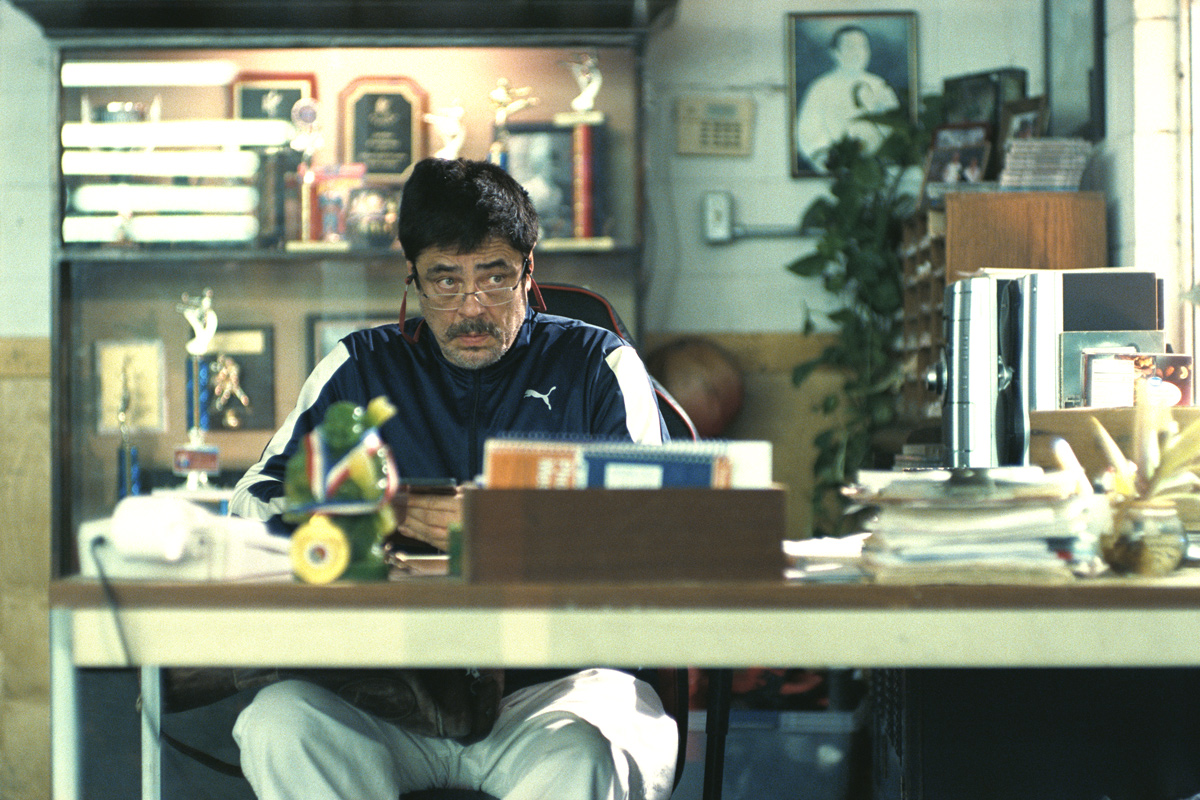
While that’s generally true, and even sort of true in Inherent Vice (Doc Sportello, Shasta Fay Hepworth, Michael Z. Wolfman, Petunia Leeway, Dr. Buddy Tubeside…) OBAA proves a notable exception. For one thing, whereas in Inherent Vice the silly names come in like a flood and never let up, in OBAA, Anderson excises far more of Pynchon’s less necessary Vineland characters. (A few others, like Benicio Del Toro’s “Sensei Sergio St. Carlos”—another fantastic character—are rarely or never referred to by their first names). For another, many of OBAA’s characters are revolutionaries, for whom pseudonyms would be common and their self-aware theatricality in-character. Revolutionaries named Mae West, Junglepussy, and Laredo in this case feel more like choices of the characters themselves rather than strictly an author’s expression of his own cleverness. Anderson also maximizes some of Pynchon’s best names, like Steven J. Lockjaw, by not crowding them out with lesser alternatives.
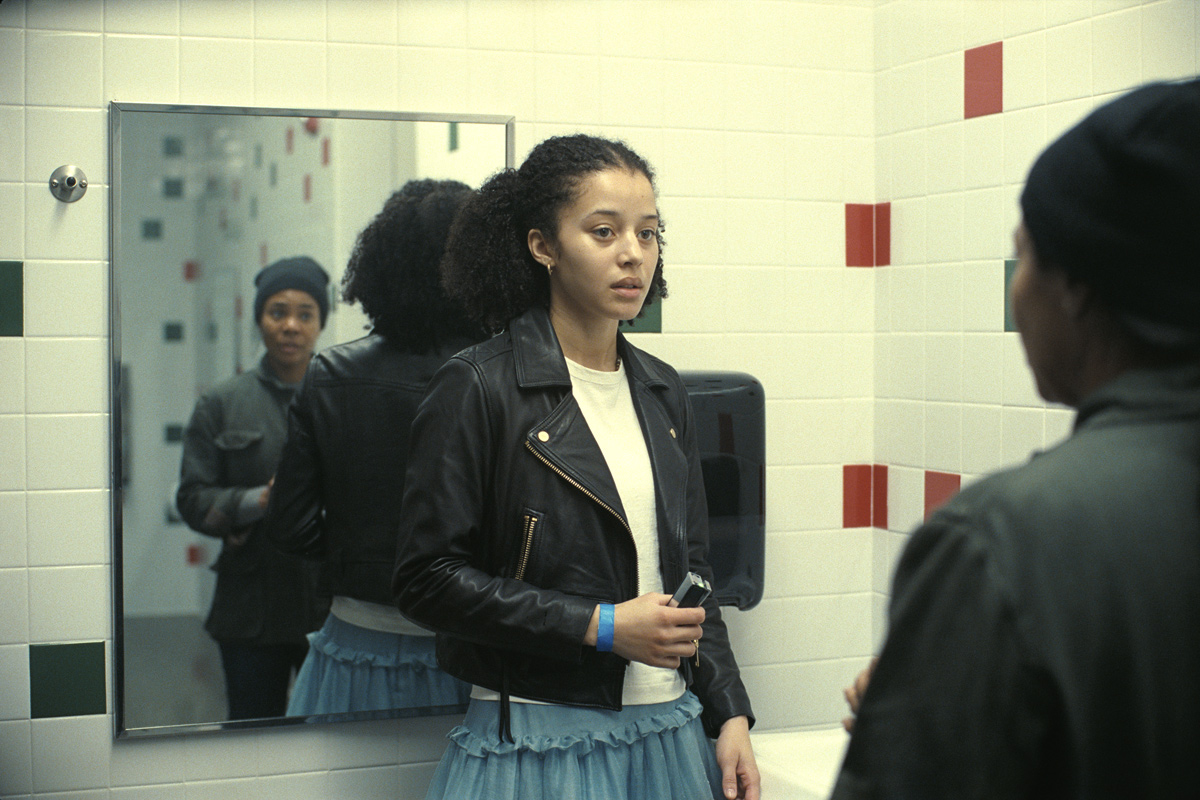
French 75’s plans go sideways soon after they liberate the detention center, and its members variously get killed, captured, turn state’s evidence, or scatter to the wind. Anderson finds a rare balance of slapstick and graphic violence. Ghetto Pat goes underground, and when we catch up to him 16 or 17 years later, he’s living semi-off-the-grid in the fictional “Baktan Cross, California.” He has retained some of the op-sec of his past life and occasionally slips into half-remembered revolutionary patter, but mostly he’s just the stoned dad of a biracial teen daughter, whose lapsed principles and general slovenliness are a joke to those around him. DiCaprio does an incredible job channeling well-meaning dopey stoners of cinema’s past—from Brad Pitt’s Floyd in True Romance to The Dude to Joaquin Phoenix in Inherent Vice—all while synthesizing them into this modern day suburban ex-weatherman whole. Young actress Chase Infiniti (who herself sounds like Pynchon named her) is wonderful as the daughter, functioning as Pat’s grounding and as his straight man. When Pat grills her friends (and PTA is as good as anyone at casting teens who actually look like teens) calling them “homie” and “ése,” or questions her teacher about whether she’s receiving a sufficiently Marxist education in between surreptitious pipe tokes, he’s nearly as screamingly funny as Penn’s tumescent fascist. In Anderson’s hands, neither political faction has a monopoly on the absurd.
Even before One Battle After Another, it was safe to call Paul Thomas Anderson the singular bard of post-radical California, and yet he still manages to reveal deeper levels of insight. As the child of pseudo-back-to-the-land hippies whose childhood acquaintances included rural NorCal commune dwellers and Bay Area Catholic Worker’s Party members myself, Inherent Vice already unlocked in me sense memories I didn’t even know I had. Once again PTA brings to terrifying life a world of green linoleum, Earth-toned formica, loose flannels, and medical forceps employed as roach clips that brought me similar bone-chilling revelations. Oh my God, I’m watching my fucking dad, I kept thinking. I both hate and love him for this. For Californians raised by hippies, for anyone who has spent significant time in Mendocino County, One Battle After Another should probably come with a trigger warning. If it didn’t also allow the opportunity to howl at a sight gag of a dead Nazi being loaded into a blast furnace it’d probably be too real.
While One Battle After Another’s characters are often played for comedy, and maximum slapstick even in life-or-death moments, the stakes are always real. Ghetto Pat and Steven J. Lockjaw might’ve just been naive dopes on opposite sides of an undeclared civil war, but even if they often realize as much themselves (Pat more than Steve), it’s not as if they can just stop fighting. The die has already been cast. Lockjaw has little choice but to keep working towards his lifelong goal: induction into a shadowy, KKK-meets-skull-and-bones secret society known as “The Christmas Adventurers” (heil St. Nick!). Lockjaw isn’t quite a shoo-in for membership, on account of the rumblings about his taste for dark meat. (Another comment from my friend, “Do you think PTA was ever lying in bed next to Maya Rudolph and had to try to explain the kind of dialogue he was writing for Sean Penn?”). And so Lockjaw comes to see taking down the surviving members of French 75 as something like his initiation ritual.
One of the best things about American Psycho is that it depicts its handsome serial killer as kind of a dolt. When Patrick Bateman has to pretend to know what he’s supposed to do for work, he improvises a conversation about how much to tip a stylist. In the same way, OBAA’s über-fascist, Steven J. Lockjaw is defined by his lack of imagination. What do you get in exchange for your unwavering support of an evil empire? A bigger desk, a nicer chair, kind words from some stranger. That’s more than reward enough for Lockjaw; he simply lacks the imagination to dream that anything could be better.
Whether Ghetto Pat’s own dedication to the revolutionary cause has waned with age and family life becomes mostly irrelevant, as he becomes forced into a battle to protect his daughter against a far superior force of military-industrial goons. Anderson never pulls punches or misses opportunities to wring comedy from these stoned pseudo-boomers. Benicio Del Toro pulling a sixer of Modelo to share with Pat during a car chase will make Modelo taste even better for the next decade. Yet there’s a genuine affection for them that takes Battle After Another to a level beyond even Inherent Vice. This time around, Anderson seems arguably less concerned with doing right by Pynchon and more with putting a little of himself, as the father of mixed race daughters, into Ghetto Pat’s antihero’s journey. The pure earnestness with which he undertakes this effort is so sweet to its core that it becomes the perfect foundation for Pynchon’s goofiness. A subplot about proximity censors, that each play a different song when they get near each other, which harmonize perfectly, would be saccharine in just about anyone else’s hands, but in Anderson’s are true movie magic.
Such a palpable, apolitical moral center also allows the absolute savagery with which Anderson skewers Lockjaw, which could easily come off smug or high-handed, to be screamingly hilarious. You only ever laugh this hard at a memorial. Tension and emotional investment this deep when released is the comedic equivalent of splitting an atom.
Even on a pure filmmaking level, it’s hard to imagine a more perfect movie than this. Anderson stages the climax as a three-way car chase on a winding road, shot at asphalt level, as the path dips and rises like a roller coaster through California’s hilly coastal dunes. He evokes not just speed and the stomach-in-your-throat feeling of the undulating path but the white knuckle anxiety of constant vigilance to what might be hiding just over the next rise. It’s an absolute tour de force of suspense and when he finally breaks the tension you want to shiver with relief. I wanted to bum a loosie and smoke it in the parking lot. Who else is doing it like this? This is the kind of movie that makes me glad to be alive.
On the way out of the theater, a guy walking in front of us turned back to ask, “Hey… did you guys like that?”
We looked at each other for a beat, slightly wary of where this might be going, until I admitted, “Uh… fuck yeah.”
“Okay, cool,” he said, looking relieved. “Because when I was buying tickets a guy overheard me and told me that he just walked out after the first ten minutes and demanded a refund.”
For a second I tried to think back to the first ten minutes of this two hour and 42-minute film, trying to figure out what could’ve offended this man so. Were the politics already that obvious? Was it just the perceived crassness of brassy black woman ordering Sean Penn to get a boner at gunpoint?
I’m still not entirely sure, but for some reason it makes me appreciate the movie more knowing that not everyone will get it. The battle continues.
Thanks for reading The #Content Report, By Vince Mancini! This post is public so feel free to share it.
So, How’d It Do At The Box Office?
