'Jay Kelly' Should've Been a Bigger Asshole
George Clooney plays George Clooney in Noah Baumbach's new Netflix movie, but Noah Baumbach can't quite commit to making him unlikable.
Welcome to The #Content Report, a newsletter by Vince Mancini. I’ve been writing about movies, culture, and food since the late aughts. Now I’m delivering it straight to you, with none of the autoplay videos, takeover ads, or chumboxes of the ad-ruined internet. Support my work and help me bring back the cool internet by subscribing, sharing, commenting, and keeping it real.
—
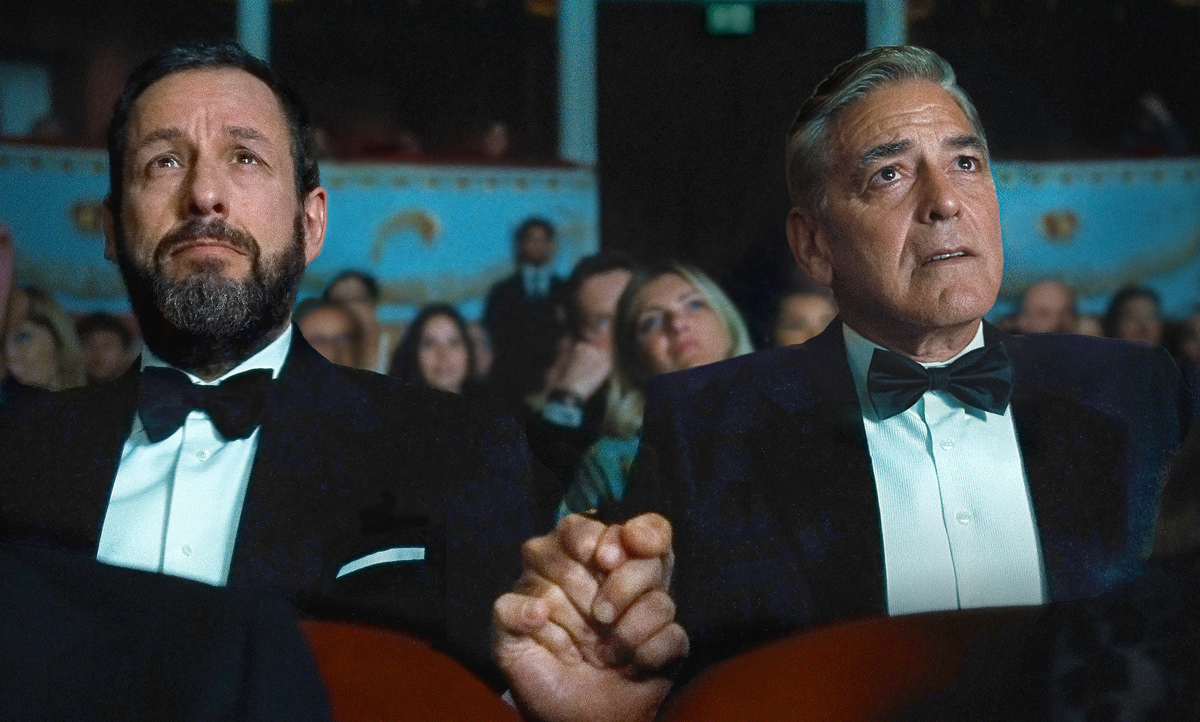
It seems like every few years for almost the last 20, there’s a new Noah Baumbach movie released during awards season that a handful of people ask me about that inevitably slides under my radar for whatever reason. I’ve enjoyed some of his collaborations with current partner Greta Gerwig (Frances Ha, Barbie) and Wes Anderson (Fantastic Mr. Fox) though the first Baumbach solo effort I caught was Marriage Story, which I loathed (great memes though). White Noise was a pleasant surprise, and now comes Jay Kelly, which hit Netflix this week, directed by Baumbach and written by Baumbach with Emily Mortimer, starring George Clooney as the titular movie star and Adam Sandler as his long-suffering manager.
Men: sometimes they choose fame and fortune over family early in life, only to regret it later on. Have you seen this? Have you heard about this? What if Rosebud was a cheesecake?
Jay Kelly is in many ways an Americanized take on Sentimental Value (aging movie guy faces mortality and attempts to reconnect with his two grown daughters), though ultimately more tedious. Where Sentimental Value was tasteful but lacking, Jay Kelly feels more confused, meandering its way to 132 minutes that feel much longer. It took me four or five separate attempts to get through it.
Jay Kelly does seem promising in the early going, especially when it feels more like The Studio, Seth Rogen’s screwball skewering of the movie business for AppleTV. It opens with a big single-take tracking shot through the studio space where Jay Kelly (played by Clooney in peak Silver Fox mode) is shooting his latest movie. An unnamed assistant played by Mortimer rambles on about eye drops while stage hands complain that they’re getting paid less than one of the lead actors who is a dog, while Adam Sandler’s Ron Sukenic, Kelly’s manager and leader of Team Jay Kelly, wanders through the wings coaching his own daughter through her tennis tournament nerves over the phone. Eventually the camera settles on Clooney, who is pretending to die, bleeding out while delivering a monologue about dying a good death. The Jack Russell terrier misses his cue on the first take, so Kelly, still in character, asks for more anchovy paste on his finger. “The dog was great,” says a producer after they call cut.
Jay being forced to confront his pretend mortality in the context of an artificial movie set is forcing him to confront his real mortality in the context of his actual life. Get it? Only he’s spent the last 35 years deliberately insulating himself from real life and now he can’t work out what’s real and what isn’t.
Jay Kelly is strong in the early going, when it’s having fun with the absurdity of show business. At his best, Baumbach has an ear for clever dialogue. “Death always feels so unreal, particularly in LA,” Sandler commiserates with Clooney on the occasion of Jay Kelly’s mentor’s funeral.
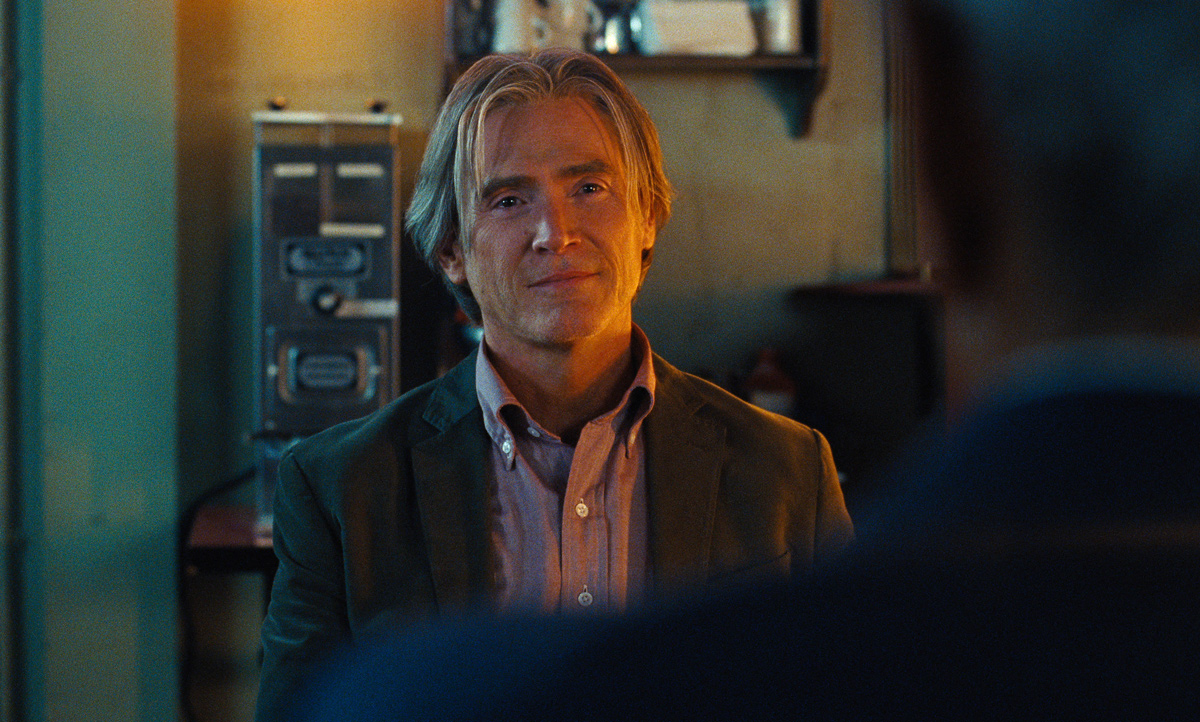
At the funeral, Jay bumps into an old classmate from acting school, played by Billy Crudup. They reminisce about the old days, and wax philosophic about their own mortality (Baumbach’s favorite subject, where sometimes you wish he’d give it a fucking rest). Crudup shares some wise words from his guru.
“I’d love to get your guru’s number,” Jay says.
“Oh yeah, he’s magic. He’s better over text.” (Great line).
Crudup’s character was apparently the class prodigy, and Jay Kelly prods him to do a dramatic read on the menu. At least in this one transcendent moment, the film feels almost like a drama school take on The Trip, only instead of Steve Coogan and Rob Brydon trading Michael Caine impressions, it’s Clooney and Crudup having a charming-off. I would’ve watched that movie.
Only Crudup’s character soon reveals the real reason that he’s invited Jay Kelly for a drink: to confront Kelly about “stealing” his life. There’s a flashback to an audition, Crudup’s audition, where Jay Kelly has accompanied him just to read. Only Crudup bombs because of stage fright, Jay Kelly steps in to read, the director (played by Jim Broadbent) ends up loving Jay, and the rest is history. Crudup’s character, apparently, has carried this resentment with him ever since.
This ending to this scene is basically the trouble with Jay Kelly in a nutshell: we can’t tell how much of an asshole Jay Kelly is supposed to be. That’s not to say he’s not “relatable” (obviously he isn’t) or “likable” enough (who cares). It’s easy to love characters who are assholes or sociopaths (Tony Soprano, McNulty, etc), but much easier when the storyteller seems to know that his character is an asshole. With Baumbach, it seems like he either doesn’t know or can’t decide whether Jay Kelly should really be a prick.
In this crucial early scene, Jay’s former friend seems like the one with the hangup, not Jay. Crudup’s character is essentially a hater, and just as Eric Adams predicted, he’s fittingly turned into Jay Kelly’s waiter at the Table of Success. In a movie that’s otherwise so concerned with the tradeoffs that one makes for artistic success, Jay’s origin story depicting him so positively (or at least neutrally) feels almost like Baumbach is being cautious or guarded. Where is the calculated behavior, the ruthlessness and ambition that made Jay Kelly a star and alienated those close to him, the tradeoffs guys like Crudup’s character weren’t willing to make? It feels like Baumbach is trying to make a movie about the costs of fame and success, but can’t commit to being entirely honest about them.
Adam Sandler’s character is more interesting than Jay Kelly, facing a real conflict between owning a piece of his clients’ success and being there for his younger family. Perhaps the film’s fatal flaw is that it isn’t really about Sandler’s character. And so instead, it devolves from well-constructed jokes skewering the absurdity of assistants, PR flacks, and film festivals into banal noodling about divorce, daddy issues, and the impossibility of reconnecting with children who resent you. Jay Kelly, as a character, doesn’t seem like a great vehicle for that.
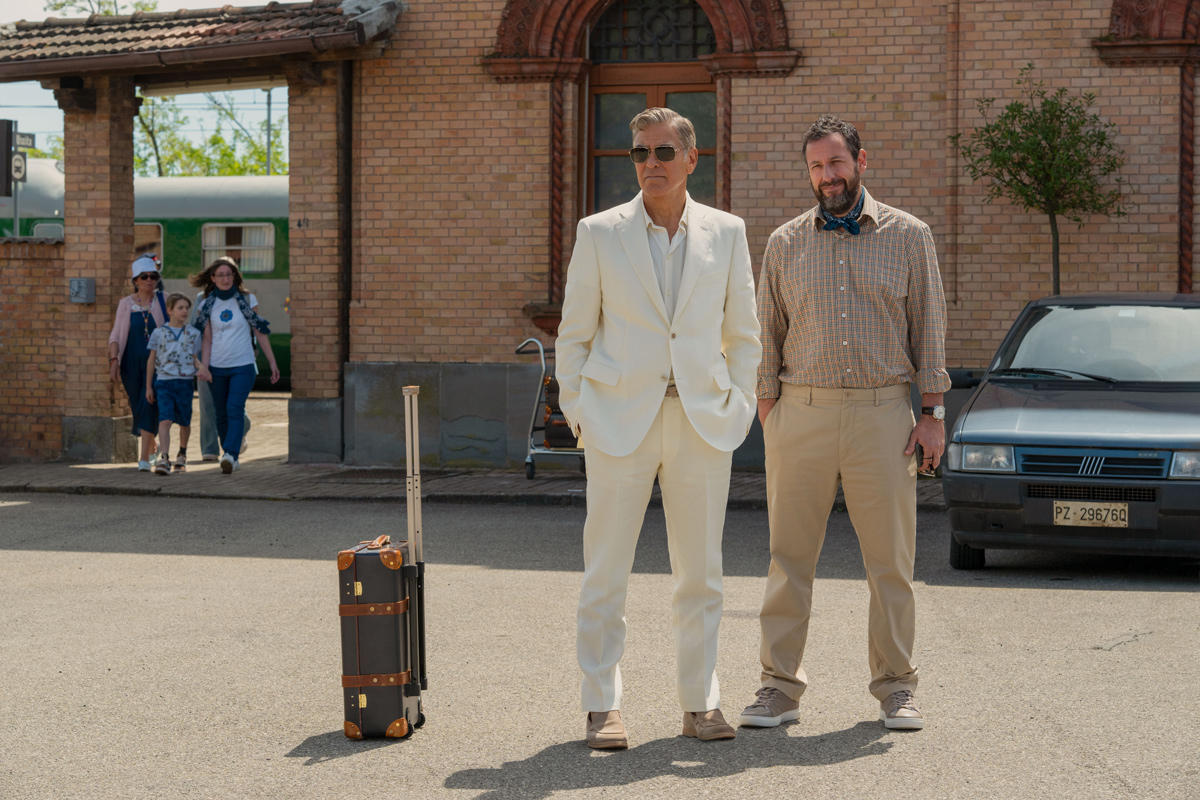
“Why do they always bring me cheesecake?” Jay Kelly asks Sandler’s character in the green room in the first scene.
“It’s in your rider,” Sandler says.
“How is it in my rider, I don’t even like cheesecake,” Jay Kelly says.
“You said you did, that’s why it’s in the rider.”
The cheesecake becomes a recurring bit throughout the movie, and from Sandler’s character’s perspective, having to coddle these stars, who demand that you anticipate their every needs and then change their minds about what they want every five seconds like toddlers, it’s funny. Yet Baumbach seems to want the cheesecake to represent Jay Kelly’s existential crisis, about whether the work family he chose over his real family constitutes an adequate tradeoff. Finding the pathos in the latter is much tougher sledding than finding the humor in the former. Sympathy for the Cheesecake Man? Uh-uh, not today, Chief. Not in this economy.
