Awards Season Digest: Die My Love, Sentimental Value, Hamnet, and Nouvelle Vague
The movies aimed at adults once again arrive in a deluge. Here's the first part of an attempt at a guide.
Welcome to The #Content Report, a newsletter by Vince Mancini. I’ve been writing about movies, culture, and food since the late aughts. Now I’m delivering it straight to you, with none of the autoplay videos, takeover ads, or chumboxes of the ad-ruined internet. Support my work and help me bring back the cool internet by subscribing, sharing, commenting, and keeping it real.
—
I’ve been covering movies for the better part of 20 years now, and I’ve always struggled with awards season coverage. In a perfect world, I’d be able to give every movie the consideration it deserves, with a fully formed, nuanced take on each one, as befitting the artistic gesture. I’m not even being funny here, I genuinely think that’s the right thing to do, it’s just not something I can do. It’s just not possible in a world in which studios cram all their ambitious, actually-aimed-at-thinking-adults releases into the final two and a half months of the year.
Sadly their assumptions about recency bias in awards voters are probably correct. How much those awards actually matter in the grand scheme of things is up for debate. (They also send us awards voters all kinds of crazy shit, like movie branded soaps and socks and tote bags and blankets this time of year, which is a whole other weird thing that’s too much to even get into here. Part of me thinks they’re all just underwriting Big Paper Shredder).
At the bare minimum a decent movie review takes about four hours. And each one leaves less energy for the next—which is especially true of extra think-y awards season movies. World’s smallest violin, I know. This is not to complain, simply a note to say that I hope you’ll accept my penance: these collected mini reviews, rather that long, individual ones.
How long a review does a person need, anyway? It’s not the length that counts, it’s how you write it!
Brief Update on an Old Story
Remember Trump’s obsession with the word “groceries?” He’s doing it again!
I love that Trump treats the word “groceries” like it’s an ancient incantation. He can’t get enough!
Meanwhile, if my theory that we’re living through a second Gilded Age is true (extreme wealth inequality, openly corrupt government, a rise of magical thinking—crypto and crystals in place of snake oil and mesmerism—a succession of ineffectual one-term presidents including Trump’s non-consecutive ones echoing Grover Cleveland’s) then we should expect also the return of bearded politicians. Perhaps Mamdani is a harbinger of the new Bearded Era.
At the very least, Trump seems to appreciate his look.
Okay, onto some movies…
Sentimental Value
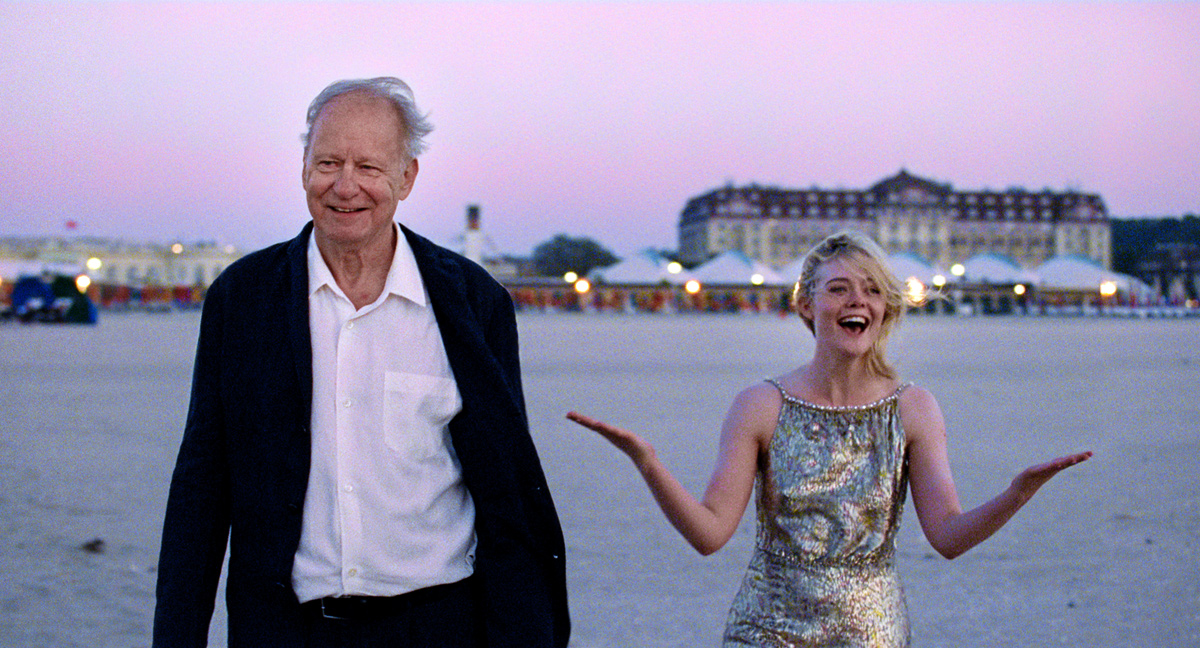
This one comes from director Joachim Trier, who made The Worst Person in the World (a perfect movie I love very much), and writer Eskil Vogt, writer of Worst Person in the World, and writer/director of Blind (another great film not enough people saw or remember). It stars Renata Reinsve (the brilliant star of Worst Person in the World—I assume the entire Norwegian film industry is like 45 people), along with Stellan Skarsgard, Inga Ibsdotter Lilleaas, and Elle Fanning, the latter playing a famous American movie star named Rachel Kemp, probably the most “fun” part of the movie.
Sentimental Value is essentially a film about intergenerational trauma (sorry), with the house they all grew up in as main character/macguffin. Skarsgard plays the towering-but-absent, acclaimed filmmaking father of Reinsve and Ibsdotter. Reinsve is the Bohemian actress daughter, single and childless, beset by stage fright, and prone to comparing herself to her sister. Ibsdotter plays that other sister, the stable, suburban one, with a husband, children, and a dog. Where Ibsdotter is prone to keeping things nice with their father, Reinsve is more confrontational, demanding penance for his years of freelancing.
The girls’ mother has recently died (I think she was bitten by a møøse) and Skarsgard’s character has written an autobiographical film he thinks will be his comeback. He wants Reinsve to star. You could say that after years of letting his art keep his family apart, he’s now banking on art bringing them back together (on second thought, don’t say that).
It’s a film that’s tasteful in all the ways, touching on Skarsgard as absent father (whose own mother committed suicide when he was young), the conflict between art and family, and the twin difficulties of aging and reconciliation. Heartfelt, beautifully shot, and brought to life by a perfect ensemble, Sentimental Value is nonetheless one of those films that’s maybe too tasteful for its own good. Or at least too tasteful for me, someone who appreciates tastelessness. The interlude with Elle Fanning as the ambitious American actress was probably its most compelling. Otherwise, there isn’t enough humor or naughty edge to cut the inherent maudlinness of the gesture. Aren’t Scandinavian movies usually way more freaky? Independently successful family learns to tolerate each other; news at 10.
And so it ends up being the kind of movie about which I have almost nothing bad to say that I’ll nonetheless probably never watch again. Great work, just not quite for me.
Die My Love
I’m generally averse to pullquotes about actors being a “force of nature,” but when the actor in question is Jennifer Lawrence, I can’t help but agree. I still remember the night I fell in love with her, one snowy night in Park City 15 years ago at the premiere of Winter’s Bone. (Not to toot my own horn, but here’s what I wrote then: “Jennifer Lawrence is going to be a star. She is the real deal.” There’s not a lot that I wrote in 2010 that I don’t regret, but that’s on the short list of things I wrote in 2010 that I most don’t regret.)
Lynne Ramsay is another filmmaker whose movies (We Need To Talk About Kevin, You Were Never Here) I’ve never entirely fallen head over heels for, though they’re always intriguing enough that I want to. Certainly you’d never describe her as “mannered.” Ramsay has an abrasive, punk rock style that is deliciously misanthropic (part of the Scottish national character?) and if anything, cool in a way that I haven’t quite achieved yet. I don’t think I entirely get Lynne Ramsay, but she’s never boring.
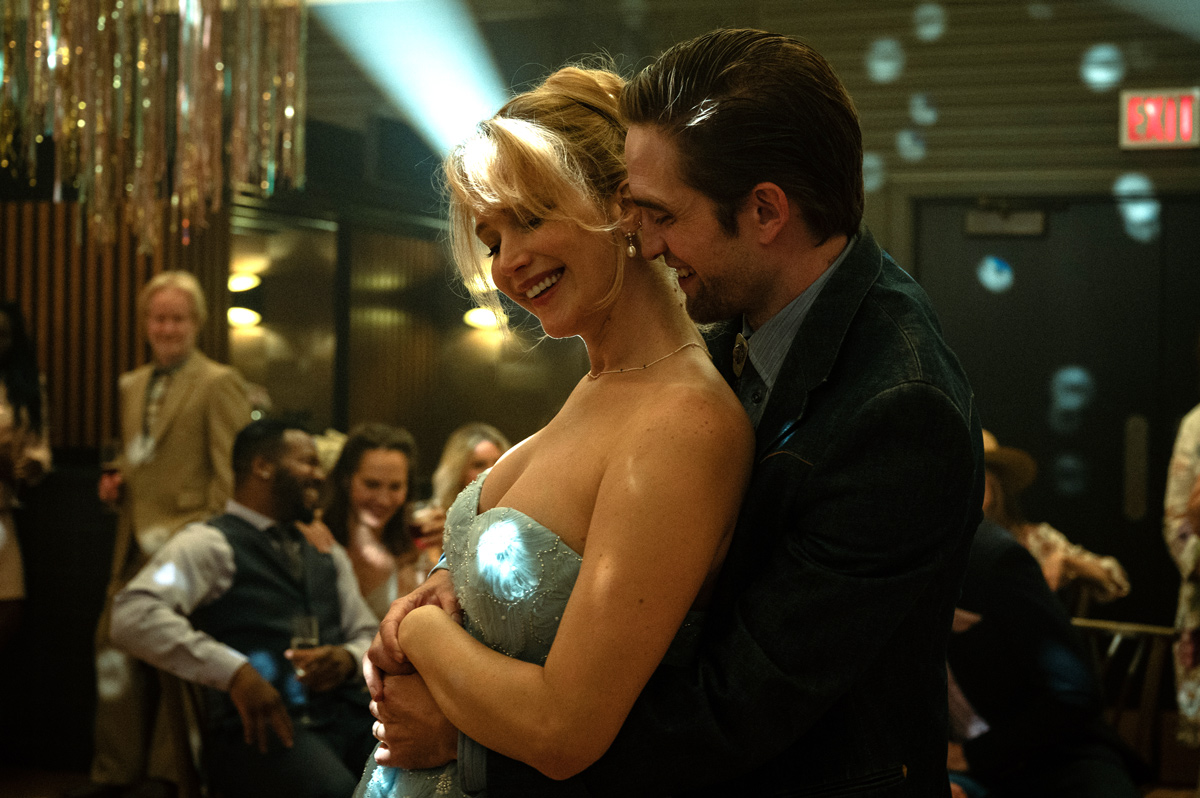
In Die My Love, Jennifer Lawrence and Robert Pattinson play young couple Jackson and Grace, who move into Jackson’s uncle’s house somewhere in the rural Mountain West after the uncle’s suicide. Jackson seems to aspire to a kind of dull stability, where Grace is pathologically unstable, compelled to destroy anything that seems too permanent and to push people away before they can talk down to her. It’s her sad lot in life to be obsessed with this unremarkable man, and his to be hopelessly attracted to this psychotic woman. Jennifer Lawrence is mesmerizing playing hot/crazy, easily outshining her costar Pattinson, but that’s also partly the characters they’re playing.
Die My Love is also notable, perhaps, for featuring possibly the most annoying dog in the history of cinema. The dog is Jackson’s idiotic gift to his breastfeeding wife, and all it does is bark shrilly, so constantly and for so long that you’re eventually as frazzled as Grace, desperate for someone on screen to do something truly evil. That was surely the point, but it was also like being stabbed in the ear for part of the movie. I don’t know whether to pity the sound department or hate them.
There’s a John Prine/Iris Dement duet that bookends the film.
Excerpted lyrics:
[Verse 1: Prine]
She don’t like her eggs all runny
She thinks crossin’ her legs is funny
She looks down her nose at money
She gets it on like the Easter Bunny
She’s my baby, I’m her honey
I’m never gonna let her go
[Verse 2: Iris Dement]
He ain’t got laid in a month of Sundays
I caught him once and he was sniffin’ my undies
He ain’t too sharp, but he gets things done
Drinks his beer like it’s oxygen
He’s my baby and I’m his honey
I’m never gonna let him go
[Chorus: Both]
In spite of ourselves, we’ll end up a-sittin’ on a rainbow
Against all odds, honey, we’re the big door prize
We’re gonna spite our noses right off of our faces
There won’t be nothin’ but big old hearts dancin’ in our eyes
That song… well, it’s pretty much the whole movie. With its malevolent sound mix and long stretches of psychosexual noodling, there were times I questioned why I was still watching Die My Love.
It wasn’t especially an enjoyable experience, but by the end it was mostly a cathartic one. I found myself oddly charmed, wondering if I should go back and watch it again to uncover the levels of meaning I might’ve missed. Could’ve just been the song.
Hamnet
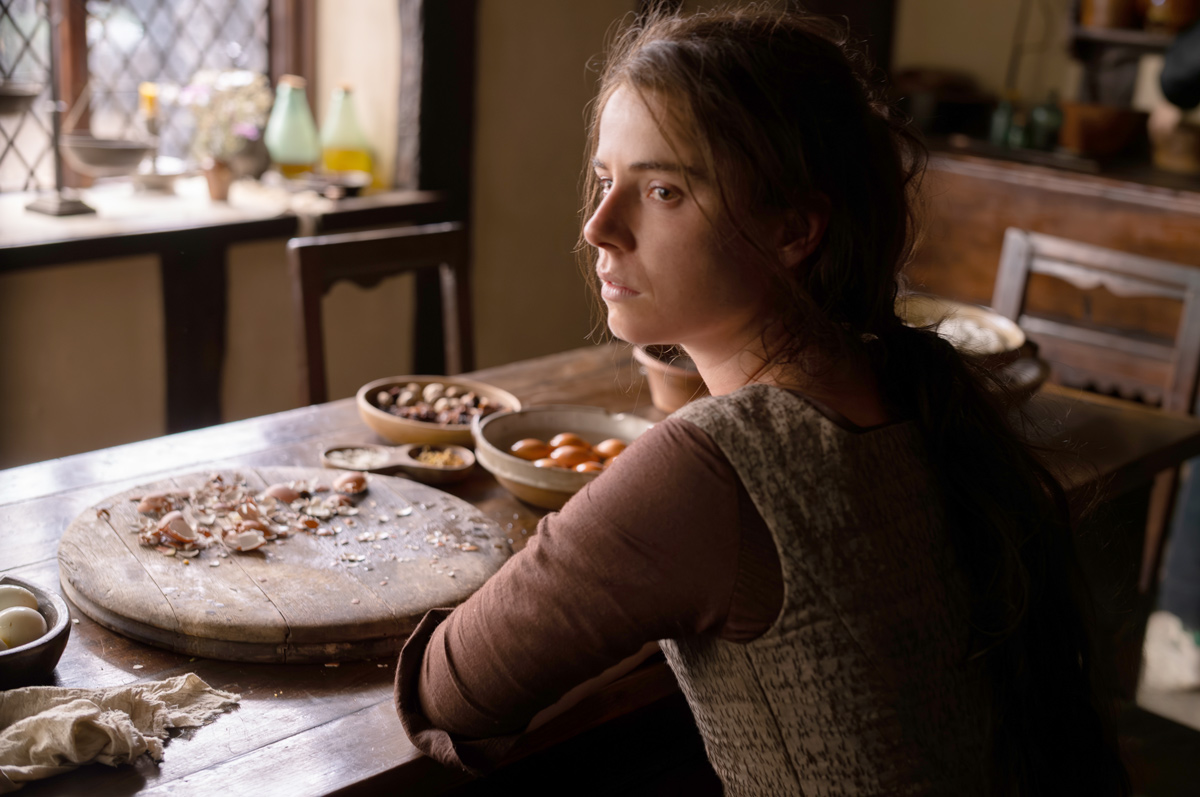
Speaking of attractive actors playing star-crossed lovers, there’s Hamnet, from Nomadland/Eternals director Chloe Zhao (not to be confused with Zoe Chao), starring Paul Mescal as William Shakespeare and Jessie Buckley as Agnes Shakespeare (pronounced Ahn-yes, the eye-talian way).
I call this one “Shakespeare in Mourning.”
I figured “Hamnet” was something they caught your mom in, but it’s actually the name of Maggie O’Farrell’s 2020 historical novel, from which Zhao adapts. It’s a sort of fan-fiction take on the creation of Hamlet, positing that the play was inspired by Bill and Agnes’s child, Hamnet. A title card at the beginning of the film helpfully informs us that at the time of its writing, the names “Hamnet” and “Hamlet” were more or less interchangeable.
Why not just call the play “Hamnet” then? Who knows, man, the English language is constantly gaslighting us.
The film starts off interesting enough, with William, a “pasty scholar” cornering the older sister of his Latin tutees in her hawk chambers. That’s right, Agnes has a pet hawk. She’s rumored to be the daughter of a forest witch, and thus a bit witchy herself. William, naturally, senses an opening, “I heard you like playing with hawks” presumably being the “do you like Wendy’s” of its day.
