'Wuthering Heights' is Perfectly Miscast
Emerald Fennell turns Brontë into a scarcely believable but weirdly entertaining cautionary tale about the dangers of edging.
Welcome to The Content Report, a newsletter by Vince Mancini. I’ve been writing about movies, culture, and food since the late aughts. Now I’m delivering it straight to you, with none of the autoplay videos, takeover ads, or chumboxes of the ad-ruined internet. Support my work and help me bring back the cool internet by subscribing, sharing, commenting, and keeping it real.
—
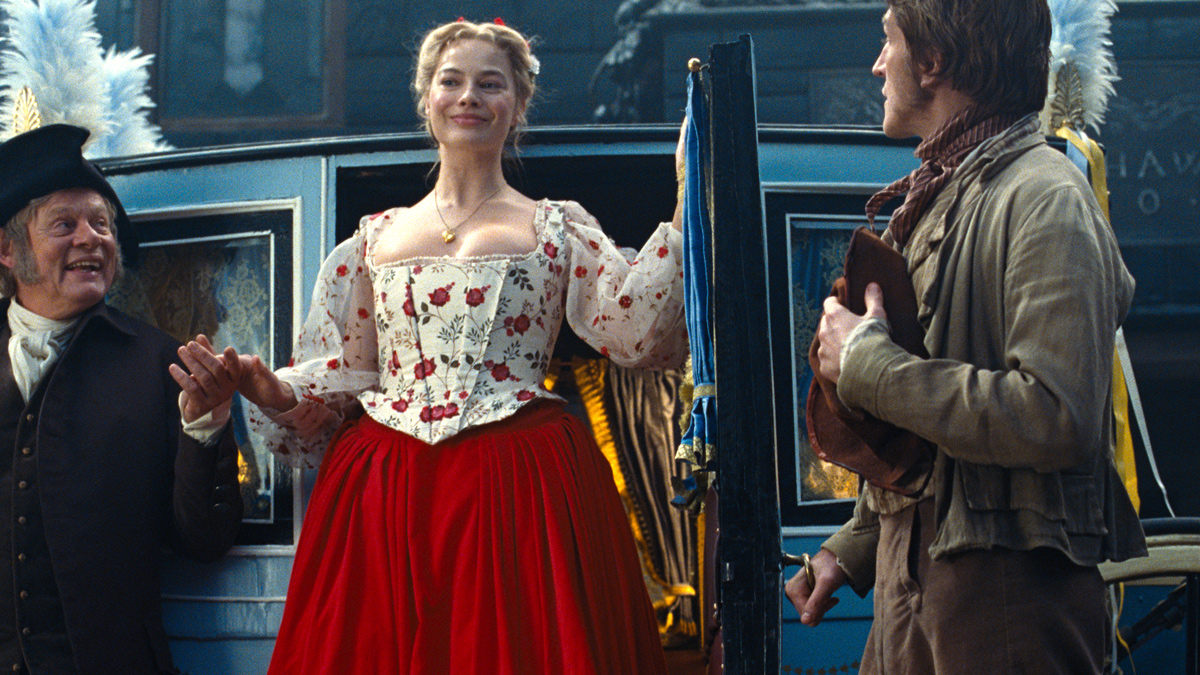
First Corinthians, that Bible verse I’ve heard read at countless weddings, is rendered, in its most popular contemporary translation, as “Love is patient, love is kind. It does not envy, it does not boast, it is not proud…”
The Emerald Fennell version, based on her new adaptation of Emily Brontë’s Wuthering Heights (you’re tellin’ me a Brontë sister wuthered these heights??) might go something like “Love is entitled, love is selfish. Love is cruel, love is homicidal; it respects neither bodice nor the rules of Victorian society…”
Fennell’s vision is a grandiose and sharp-elbowed anti-rom-com, a soap operatic tale of unruly and scattershot horniness. To render its central conceit in Trumpian terms, love doesn’t care about your feelings. It’s a story about what happens when a terminally annoying rich girl gets a nearly mute hot-boy for a pet and it proceeds to ruin everyone’s lives.
There are essentially two ways to read Wuthering Heights: as either a tale about the awe-inspiring intensity of young love (a lá Romeo and Juliet, referenced overtly in one Wuthering Heights scene); or, as a story about two of the biggest pains in the ass on Earth whose inability to just screw already dooms everyone they come into contact with. The second (which doesn’t entirely invalidate the first) is far more interesting to me, though at times I wondered whether Fennell had entirely committed to the bit.
The age of its principals is in a large part responsible for Wuthering Heights’ ambiguity. From a commercial standpoint, casting Jacob Elordi and Margot Robbie, the two absurdly attractive Australians (Queenslanders, even) as the two lovers was obviously a stroke of genius. Early projections have Wuthering Heights earning $50-55 million in North America alone, which is an insane amount of money for a period-set adaptation of early Victorian literature. Fennell’s last movie, Saltburn (an over-the-top satire of English perversion that I loved) earned less than half that, worldwide, in its entire run. Insofar as movie magic is back, we have Elordi and Robbie to thank for it.
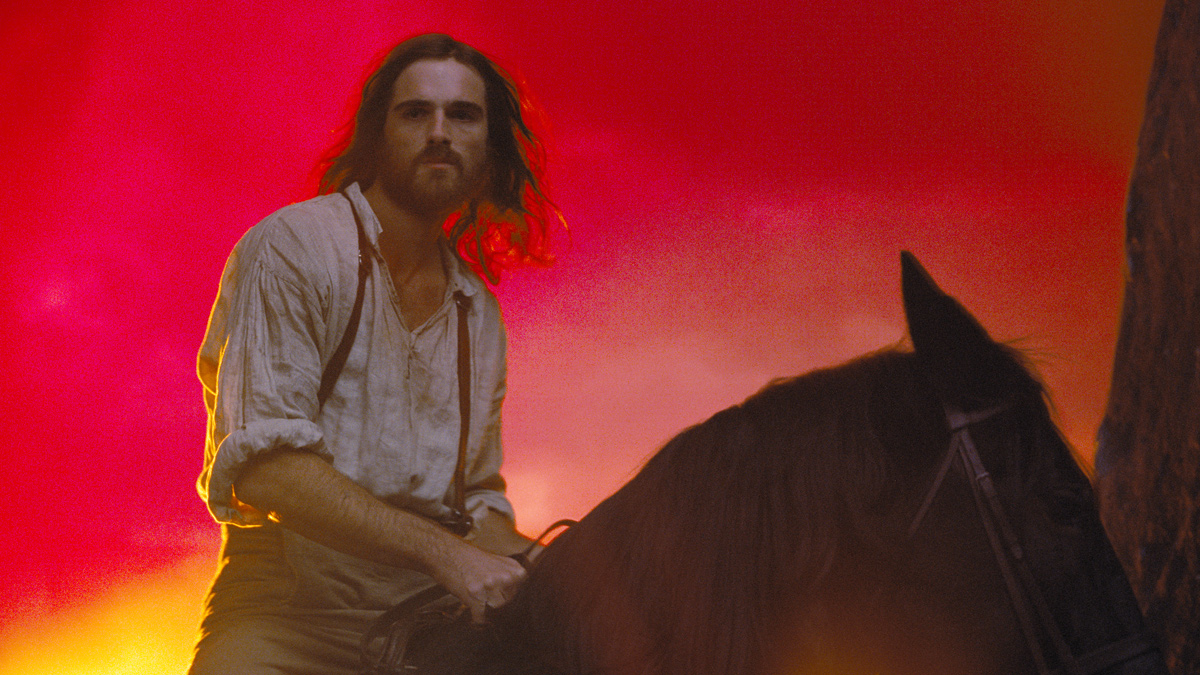
And yet narratively, their ages (looking roughly late 20s-early 30s; 28 for Elordi and 35 for Robbie in real life) almost immediately don’t make sense in the story. In many stories, aging up the principals a few years would be fine, but a story about two close friends who are hot for each other but haven’t screwed yet only really makes sense until the age of about 23 (and even that’s pushing it). By the time they hit 28 sans consummation you start to wonder whether they’re mentally defective.
Fennell establishes place in an opening scene set at a hanging. A hooded man, convicted of an unnamed offense, writhes for breath, his feet dangling, the canvas head sack sucking into his mouth after the initial drop fails to break his neck—his gasping breaths are undeniably sexual sounding, an overt “O face” allusion in his death throes. Some naughty boys in the audience point and jeer at the dying man’s obvious dick print, betraying his swollen, asphyxiation-induced boner. (For sale: massive hard-on, never inserted. Alas.). Two girls in the crowd, one blonde and one Asian, look on, horrified but intrigued.
A drunken yokel leans into the camera and shouts “A HANGING, XKLJBDUI!!!” (couldn’t make out the last part, he was very British) apropos of nothing, and the scene cuts to black.
Oh good, I thought as the title card appeared, this promises to be both perverse and morbid. Little did I know then that it would be more than an hour before anyone in Wuthering Heights has sex. Not quite what I expected from an auteur who had Barry Keoghan slurping jizz out of a bathtub drain in her last film.
We soon learn that the two young girls are the landowner’s daughter, Cathy (Charlotte Mellington, the blonde) and her paid companion, Nelly (Vy Nguyen), the bastard daughter of some unnamed aristocrat whose father pays to store her away at Wuthering Heights. Of course, no one actually says “Wuthering Heights” for 40 more minutes (don’t make a drinking game out of it, you’ll leave stone sober). The lord of Wuthering Heights in turn is a drunk, Mr. Earnshaw, played by Martin Clunes, who gets so annoyed with his daughter’s melodramatics that he storms off to the pub for “better company” (honestly, hard to blame him, Young Cathy is very bratty).
When he comes home, Mr. Earnshaw has with him a shorn and dirty boy, whom he says is an orphan he’s saved from a cruel master, and whom he gifts to his daughter in the hopes that the companionship will cure her obnoxiousness. She names the orphan boy Heathcliffe and he becomes her devoted, besotted pet, frequently hiding under her bed to massage her ankles. We’re forced to endure a good 20 minutes of the tweens’ Disney Channel acting, the central scene of which is Heathcliffe lying to Mr. Earnshaw in order to take a cruel beating meant for Cathy when they arrive late to a birthday dinner. Presumably the beating becomes a sort of Victorian proto S&M play where every whip strike only gets them hotter, or so I gathered from all the loving close-ups of Heathcliffe’s perspiration-dotted lash scars.
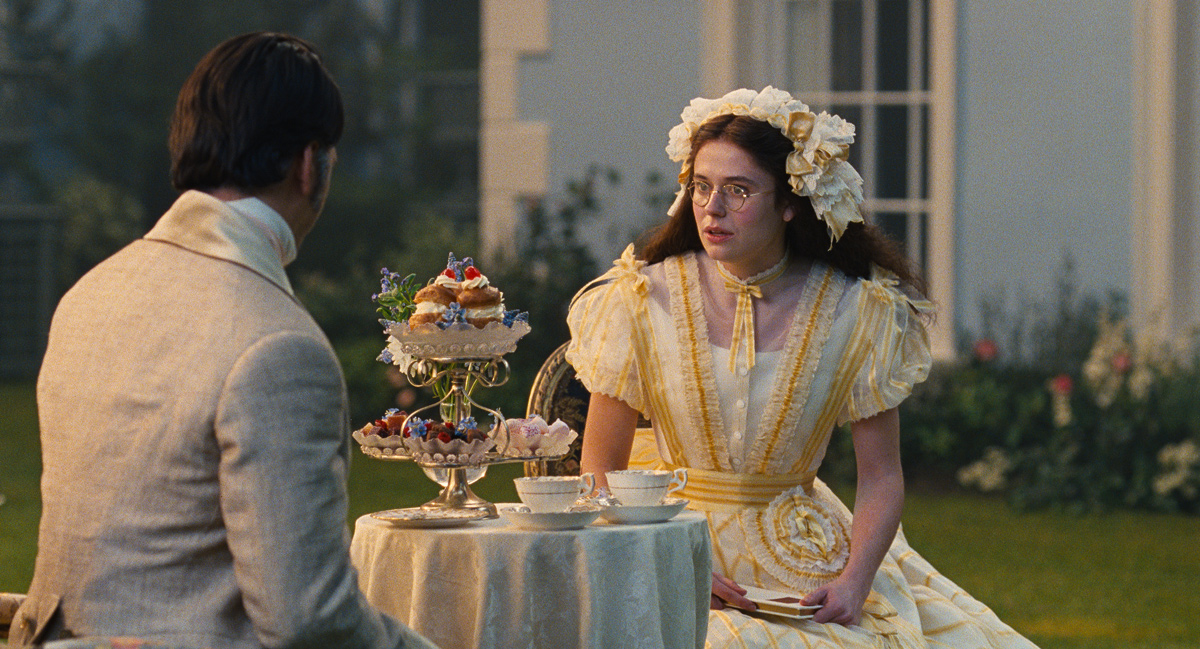
At long last the inevitable age up turns Cathy into Margot Robbie, Heathcliffe into Jacob Elordi, and Nelly into Hong Chau. They’re all in their late 20s or 30s by now though the essential dynamic remains the same: bratty Cathy, besotted Heathcliffe, and jealous Nelly, still miffed that Heathcliffe has replaced her as Cathy’s chosen companion. The sexual tension between Cathy and Heathcliffe is so palpable that the Wuthering Heights staff basically all roll their eyes at their every interaction. Even to them, the idea that these two have made it into their late 20s spending virtually every waking moment together on an isolated country estate whose dominant mode is boredom and loneliness without fucking is inconceivable. The closest they get to “it” is spying together on the estate’s groom and servant girl, the former of whom fits a horse bridle into the latter’s mouth before mounting her from behind. (*neighing sound*).
