'Balloon Boy' and the Revisionist Documentary-Industrial Complex
I still do not trust the balloon man. And no, we were *not* wrong about that.
Welcome to The #Content Report, a newsletter by Vince Mancini. I’ve been writing about movies, culture, and food since the late aughts. Now I’m delivering it straight to you, with none of the autoplay videos, takeover ads, or chumboxes of the ad-ruined internet. Support my work and help me bring back the cool internet by subscribing, sharing, commenting, and keeping it real.
—
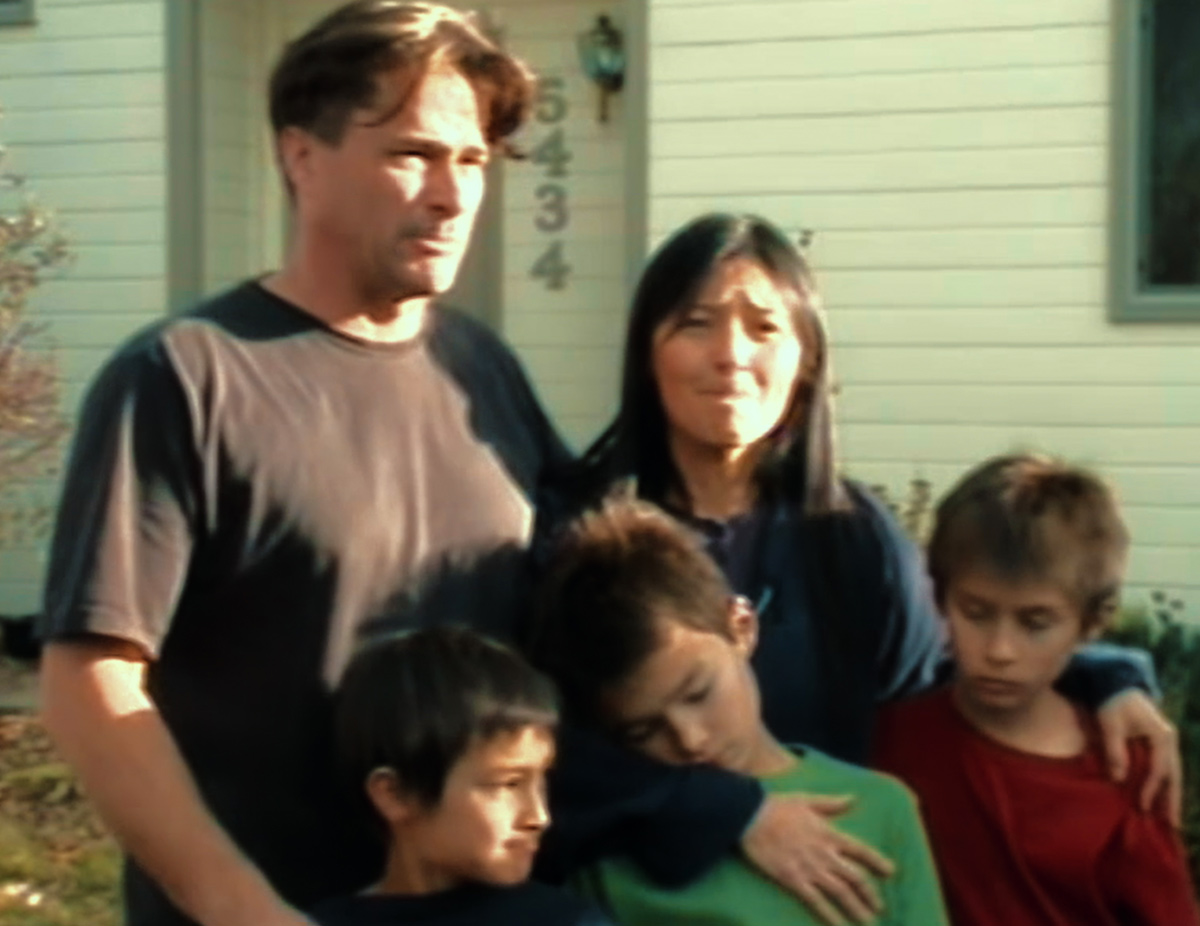
I recently watched the latest in Netflix’s “Trainwreck” documentary series, Trainwreck: Balloon Boy this past week. Having already watched Trainwreck: Poop Cruise fairly recently, I should’ve known what I was in for: a sort-of lazy, hastily produced streaming documentary relying heavily on montages of blog headlines from however long ago the story happened, intercut with talking head interviews with local news anchors offering zero insight and whichever actual witnesses to said drama the film’s producers could convince to sign a release. Yes, the format is that rigid, though identifying it is probably no great coup. That’s why it’s a series.
Yet even knowing that the latest Trainwreck-branded documentary probably wouldn’t have much to offer, I still couldn’t entirely silence my inner Cletus the Slack Jawed Local. He was inside my head marvelling “Balloon Boy! Ah ‘member dat!” in between excretions of drool.
Clearly, this is how these docs work. Fine, I’ll be your huckleberry, I thought. Why spoil something with Google when I can have an hour of #content?
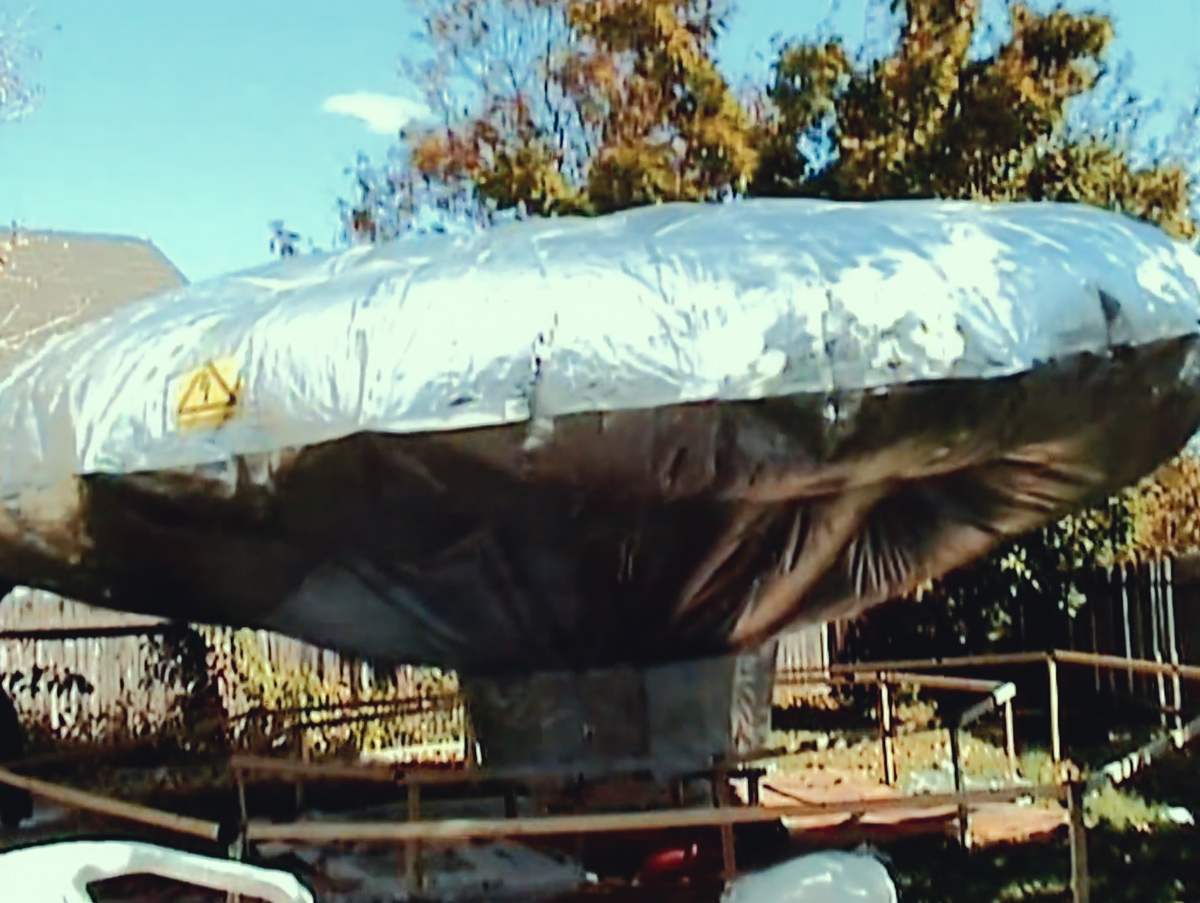
The Balloon Boy saga, if you’ll remember, or be reminded by the doc, concerns the Heene family. Major players include patriarch Richard and mother Mayumi, who hove into public consciousness one day in 2009 when their then-6-year-old son Falcon floated away (or so we thought!) in a homemade helium-based dirigible made to look like a flying saucer.
Even before the doc (written and directed by Gillian Pachter) brought me back into all the ins and outs of the story, I had the same gut reaction to Richard Heene as I once did to the father in The Curious Case of Natalia Gace (Michael Barnett). Before the man got two words out of his mouth, every cell in my body was practically shrieking “Do not trust this man. Absolutely everything he says and does is suspect.”
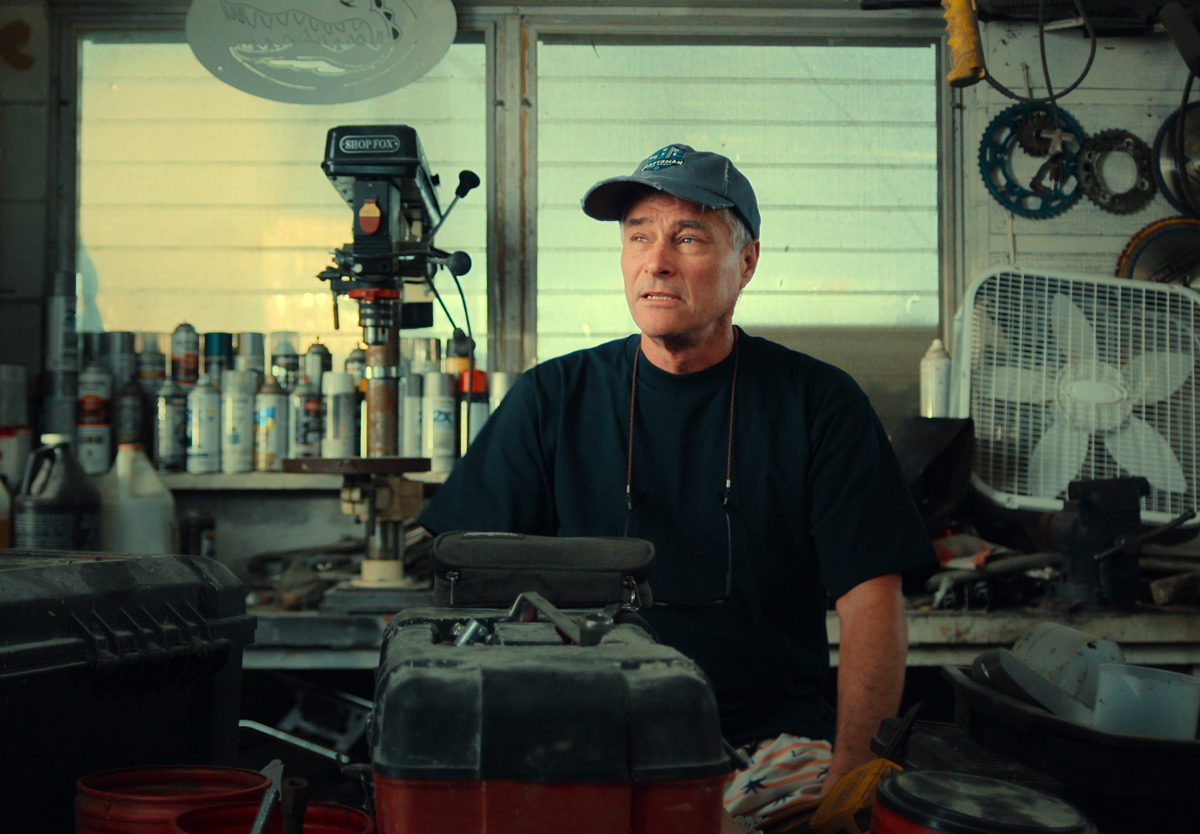
Richard Heene is the kind of guy I’d dive through a hedgerow to avoid passing on the sidewalk, lest he pick my pocket or get me involved in a pyramid scheme.
Again, much as with The Curious Case of Natalia Grace, Trainwreck: Balloon Boy basically consists of introducing us to this palpably untrustworthy character, then spending the next seven-eighths of its run time attempting to make us doubt our first impressions, only to land us right back where we started at the end as we realize our first impressions were correct all along. A big win for trusting your instincts.
So, Balloon Boy. Father Richard is presented to us as an “Amateur Scientist,” which isn’t really a thing unless you’re a landed aristocrat from the 18th or 19th centuries, though that’s as much as we ever get vis-a-vis what he actually does for money. He’s presented as some kind of lovable Doc Brown character1, always cooking up some new hare-brained scheme. In 2009, his latest scheme involved a flying saucer-shaped helium balloon for some reason. Only there was a snafu with the rigging during one of his “tests,” and the balloon floated away, with the whole family believing little Falcon was holed up in the space inside. By the time the media caught up with the Heenes, Falcon, so we were told, was already blowing with the breezes thousands of feet in the air like the movie Up. (The incident’s reminiscence to Up was my excuse for covering the story on my movie blog in 2009. Those were the days.).
The documentary is centered around interviews with the Heene family, who, impressively, are all sticking with their stories, even after 16 years and Falcon being college-aged now. They really thought Falcon was hiding in that balloon!, they claim over and over, despite all evidence to the contrary. Evidence like Richard having alerted the media to the runaway balloon himself (supposedly because he thought the media would have a helicopter, uh huh sure, bud), the family having previously appeared on the reality program Wife Swap (complete with clips of Richard Heene screaming at his swapped wife in a way that seems borderline psychopathic), and the most damning bit of all, the self-shot video of the moment the balloon floats away.
This video was always the weakest part of the Heenes’ alleged hoax, a supposedly not-staged home video of the balloon/saucer supposedly accidentally floating away above the backyard, with the family supposedly believing Falcon is inside. Nothing about this phony home movie passes the smell test in 2025 anymore than it did in 2009, from the painfully on-the-nose dialogue (“you were supposed to hold it!” “Dad, Falcon’s in there!” “Falcon’s in there?!”) to the fact that they just happened to be shooting this moment, and got all of the relevant action perfectly in frame, as well as capturing in real time Richard’s realization that Falcon was inside. This video is for me exhibit A-Z that the whole thing was a hoax, and I spent spent the bulk of my time time watching the doc waiting with increasing impatience for the film to acknowledge it.
Instead, we get interview clip after interview clip with the Heenes (as well as their charmingly eccentric Foghorn Leghorn-style lawyer) restating their cover story (allegedly?) over and over. One of Richard Heene’s least believable justifications is that of course he didn’t stage this entire incident to try to get a reality show. He hadn’t even wanted to be on Wife Swap in the first place. It was just that he needed money and they were offering to pay him! And why would a guy… who agrees to debase himself for money… uh… debase himself for money!? Riddle me that one, smart guy!
The evidence for this whole thing being a hoax continues to pile up fitfully, even when broken up with long interview segments in which the Heenes try to hand wave it all away. When Falcon said on Larry King, “You guys said that we did this for the show,” how could anyone take that at face value? He was only six! Six-year-olds say crazy stuff all the time! When Mayumi admits to the police interrogators that it was all a hoax under questioning, she didn’t know what “hoax” meant! She’s Japanese! (Despite having a degree in English literature, as the prosecutor points out). The whole thing feels like one family’s attempt to talk you out of Occam’s razor. The main question I was left with was whether grown-ish Falcon Heene was now willingly sticking with his family’s story out of solidarity, or if they actually managed to convince him it wasn’t a hoax during the intervening years. Either seems possible.
The film also conveniently fails to mention the Heene Brothers’ heavy metal band:
They’re not too bad, aside from the vocals. But you’d think the brothers trying to capitalize on their novelty fame with a band would be relevant information in a documentary about whether the family was trying to become novelty famous in order to capitalize on it.
Watching all of this unfold, I ended up having to do some soul-searching. Why did I even turn this on in the first place? If I already knew the story, what did I expect to get out of seeing it retold? I suppose the answer is that I only sort of half-remembered it, so I wanted to be reminded, and maybe also hear from the subjects what was going through their heads at the time. What ever compels us to relive the past? Insight, a feeling of closure, all the basic reasons why “where are they now” headlines are so irresistible.
These are the basic desires feeding the cheap-streaming-documentary-industrial-complex. Only as its grown, they’ve struck upon a mass-produced, plug-and-play kind of fake insight, an implicit clickbait headline that goes something like “what if everything you thought you knew about Story X was wrong?”
Britney Spears is probably the ultimate example here. In the time between Spears shaving her head in 2007 and her conservatorship ending in 2021, the conventional wisdom about her shifted from “wild child out of control” to “unfortunate victim of a sexist media apparatus.”
It turned out, the public liked championing Britney’s cause as much as we liked goading her into meltdowns. In the process, an entire industry of “maybe we were wrong about” content sprung up. More as a lazy form of decades-late media criticism, where we get to argue about which 2010 gossip rag headlines were too mean while ignoring the entire fame-manufacturing industry that they were a reaction to. Yes, Perez Hilton was a moron. He also didn’t come out of nowhere. The revisionist documentary industry exists so that we can self-flagellate over how cruel and naive we once were as a way to prove how compassionate and media-savvy we have since become.
Trainwreck: Balloon Boy is worth evaluating in this context, mostly because the seams are showing more than ever. It’s very easy to intuit just how this thing probably got made. Someone at Netflix remembered that Balloon Boy was a big story 15 years ago, and thus ripe for reappraisal. They secured the participation of the Heene family, no doubt partly by dangling the promise that the doc would give the Heenes a platform to “tell their side of the story.”
At some point, the director Gillian Pachter, or someone else involved on the creative side, probably hoped that this would involve the Heenes coming clean and offering a window into what they were thinking while they were planning the (alleged…) hoax. Which is to say: some new revelation. Yet the Heenes seem to have participated in Trainwreck for the same reason that they concocted the balloon boy hoax (allegedly…) in the first place: as an audition for some vaguely-defined future project. Indeed, the whole thing ends with Richard, having moved the family to Florida (of course) and gotten a pardon from the Colorado governor. Mayumi has also since become a US citizen. In his final interview clip, Richard Heene smirks while looking directly into the camera, “I’m working on something new. …And it’s gonna be really big.”
Clearly you don’t have to squint too hard to imagine Richard Heene’s motive for participating. The filmmakers, meanwhile, faced with subjects who refuse to deviate from their story and already in too deep to back out, end up with no choice but to try to subtly editorialize what material they have. They spend the final third of the film gently attempting to create the impression that the Heenes are unreliable narrators, and that perhaps depicting them thusly was the intention all along. But rather than creating the intended level of artistic remove, it kind of just feels like we’ve been conned twice.
The logic of reselling people things that they’ve already bought is as old as time, but perhaps the rub is that the subjects of these revisionist documentaries have become self-aware. They seem to have realized that the general public is too dumb to value introspection, that they’ll keep baying for blood even if you apologize (especially if you apologize). Much safer and more lucrative to just stick to your story and extend your brand.
How else to explain Jussie Smollett, six years removed from his alleged hate-crime hoax, with a reality show under his belt (Special Forces: World’s Toughest Test) and an upcoming Netflix documentary of his own, The Truth About Jussie Smollett? set to drop August 22nd? Much like the Heenes, Smollett too sticks fiercely to his guns in a new interview with Variety:


:max_bytes(150000):strip_icc()/michael-barnett-032025-1ff2418a108247f388329b8fd9ab95d2.jpg?ref=the-content-report.ghost.io)