'Train Dreams' and the Levity Test
One critic is brave enough to shout "smile, honey" at a film that's clearly not meant for that.
Welcome to The #Content Report, a newsletter by Vince Mancini. I’ve been writing about movies, culture, and food since the late aughts. Now I’m delivering it straight to you, with none of the autoplay videos, takeover ads, or chumboxes of the ad-ruined internet. Support my work and help me bring back the cool internet by subscribing, sharing, commenting, and keeping it real.
—
A Brief Story About Thurman Merman
I hadn’t realized how bad fatherhood had messed me up, and then the other night we were watching Bad Santa during dinner (as one does with small, impressionable children), and the scene came on with Thurman Merman telling Billy Bob Thornton that Santa had never brought him any presents before, probably because he’s such a dipshit loser. Before I even knew what was happening my eyes were leaking actual tears and my wife was looking over in shock going “…are you crying during Bad Santa?”
My wife (*awaits Borat call and response*) has been known to tear up during particularly heartfelt insurance commercials and sporting events where she’s not related to any of the players, so for her to be concerned speaks volumes. This is a movie I’ve seen at least 30 times, by the way. I think maybe a squished a regulator valve or something?
The Thurman Merman kid should’ve won an Oscar for that role.
—
Netflix Has Acquired Warner Brothers
In an $82.7 billion deal, Netflix co-CEOs Ted Sarandos and Greg Peters have reportedly finalized an agreement to take over Warner Brothers Discovery. It would seem like a good thing on the surface, given that WBD, since 2022, has been run by most-hated-man-in-show-business David Zaslav, an insanely-overpaid CEO known mainly for things like holding Looney Tunes hostage and constantly changing the name of HBO Max.
Yet Zaslav aside, Warner Bros distributed Sinners, Weapons, and One Battle After Another this year (not to mention the megahit Minecraft), whereas Netflix blew $275 million on The Electric State this year and $200 on The Grey Man a few years back. (Though in fairness, they did also make Death By Lightning). Certainly there are very few entertainment mergers that fans of good TV and movies wouldn’t greet like the death of a pet, but Netflix in particular has historically been pretty bad the theatrical business (it’s the exact opposite of what they’re known for) and getting people interested in going to the movies (the exact thing you’d want them to do as the stewards of Warner Bros).
I can’t tell you whether this will definitely be good or bad (I mean it will probably be bad), but I’ll always remember the Netflix advanced screening of Roma I went to a few years back (2018, according to IMDB). I showed up the screening at the Netflix building 15 minutes early, only to wait at the gate for about that long, while security at the gate radio’d around to see who was supposed to let me in. After they finally got things worked out, I walked through the lobby and made it up to the screening room about 2-3 minutes later than the stated start time for the screening. When I walked in, I saw that the movie had already started. It seemed very punctual for a movie screening, where movies normally start rolling anywhere from 5-30 minutes after the time on the invitation.
Wow, I thought, there must be some big deal VIP muckity mucks in the audience raring to go for them to be this strict on the schedule. As my eyes gradually adjusted to the darkness, I noticed that the entire audience consisted of me and one other guy. That guy fell asleep about five minutes in and was asleep for most of the movie (which I liked!). I’d like to think Netflix has gotten better at promoting their own movies since then, but that’s always the first story that comes to mind.
—
Sea of Trees
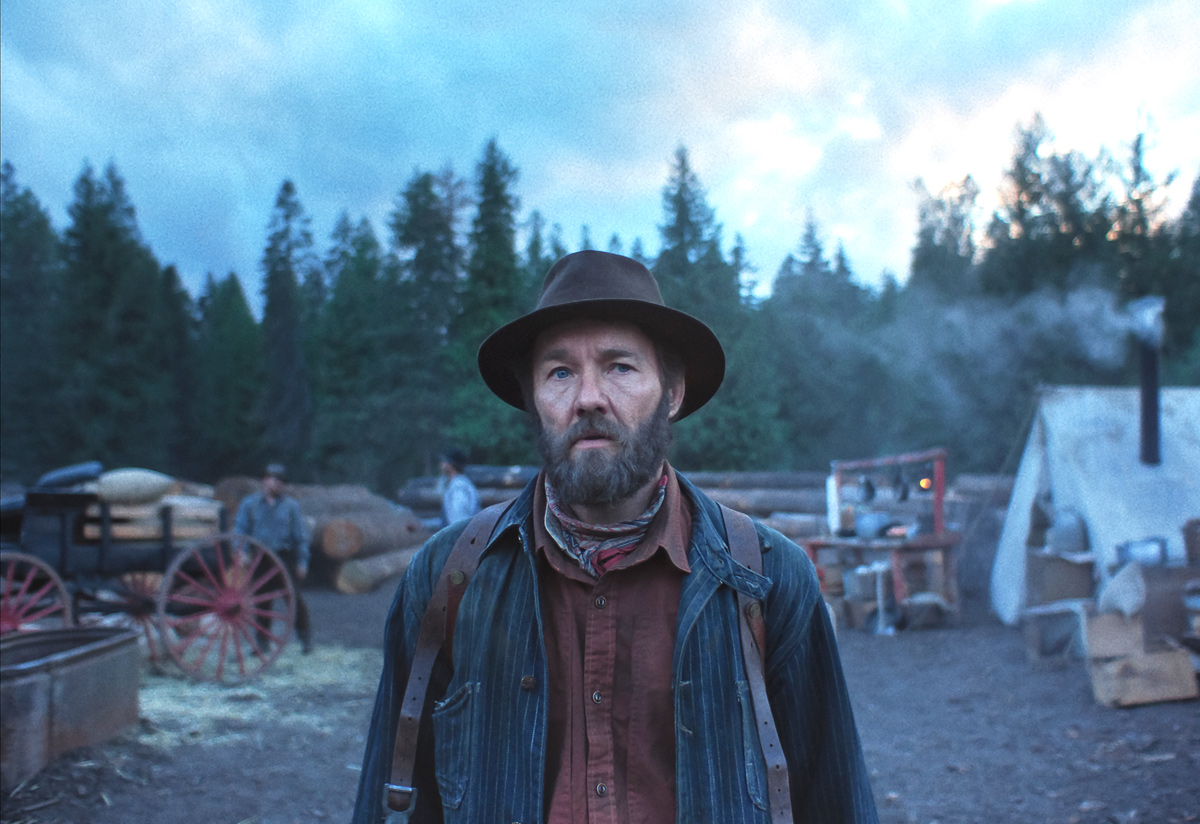
Over my many years of movie watching, I’ve come to realize that I have my own internal version of the Bechdel Test. Like the Bechdel Test, it’s not really a “test” per se, and I’m happy to be surprised by exceptions to it, but it is an identifiable pattern to my own preferences, impossible not to notice after a time. My version goes something like this: I can’t truly love any film that doesn’t have at least one moment of genuine humor. This is a reflex I’m struggling to explain rather than a requirement that I’ve set, but if I had to explain it, I think it’s that laughter is such an integral aspect of the human condition to me that anything entirely without it strikes me, on some level, as an affectation.
I was thinking about this as I was watching Train Dreams on Netflix this week, a film that is undeniably beautiful and heartbreaking and tactile and at times maybe even profound, to explain why I still couldn’t entirely love it. Joel Edgerton, an actor with the perfect face for an early 20th century period piece, plays Grainier (like the mountain, only with a G), the lead character in director Clint Bentley and co-writer Greg Kwedar’s adaptation of Denis Johnson’s 2011 novella of the same name. The film tells the story of Grainier’s sad, hermetic, and ultimately noble life, which would pass by with little fanfare or record that he was ever here, perhaps the noblest kind of life, in the storyteller’s mind. Grainier is sort of like the proverbial tree falling in a forest in that way. Ironic then that he was a lumberjack; a mountain man named for a mountain.
From what I remember of reading Denis Johnson (Tree of Smoke, I think?) the film is faithful to the source and conveys the feeling of reading Denis Johnson perfectly, leaving me sad and reflective and certainly impressed, if not quite stirred. It’s a step up from Bentley’s last film, Jockey, starring an excellent Clifton Collins Jr., though I mostly just remember thinking it should’ve been called “Golden Hour: The Movie.” Once again Bentley films almost entirely in the most beautiful hours of dawn and dusk, though this time he also mixes in quite a few nighttime scenes lit by campfires, lanterns, or candles as well, to similarly glowing effect. It’s initially picturesque and impressionistic and compelling, though the repetition of it eventually dulls its appeal a bit, and starts to feel, like the relentless morosity of the story, a bit like an affectation.
It’s 1917. The lumberjack Grainier is working on a train crew, chopping down the forests of the Pacific Northwest for use as railroad ties, when a group of angry men snatch away Grainier’s sawing partner, a Chinese immigrant, presumably the scapegoat for some petty crime, and toss him to his death off a half-built trestle. The man, Grainier’s potential friend though they barely knew each other at the time, continues to appear to Grainier in periodic visions, the “train dreams” of the title. Grainier comes to see him as something like a harbinger of woe, some supernatural instrument of karma, or maybe just the hazy embodiment of Grainier’s own guilt over not helping him, as he knows he should have. A different take on Train Dreams could’ve been called “The Chinaman’s Revenge.”
Other interesting characters pass through Grainier’s life while the Shanghai woodcarver haunts him. Like Arn Peeples (absolutely perfect name) played by William H. Macy, a philosophical old lumberjack who sings folk songs, tells tales of Civil War canvas, and tries vainly to make the other lumberjacks acknowledge the tragedy of what they’re doing: chopping down the Earth’s cellular memories of ancient times to build infrastructure that won’t last a generation. Grainier has a love interest too—Gladys, a spunky church girl who sees his kind heart beneath the laconic flannel. Soon they’re living out a grade school child’s pastoral fantasy of domestic bliss: raising a little girl in a log cabin they built in the forest near a river. Grainier falls hard for Gladys, and we along with him, as always seems to happen with Felicity Jones characters (remember Like Crazy? Loved that one, RIP, Anton Yelchin). Grainier leaves the homestead from time to time to chop trees and bale hay, while Gladys builds fish traps and shoots deer. They make big plans to build an even better life, one that will keep them together forever on their little patch of Eden.
Tragedy intervenes, and Grainier is lost again, unable to forget and move on the same way he was with his Chinese friend. The crux of Train Dreams probably this, a reminder of how much thriving in modern life requires a kind of willful forgetting. Yet the Mountain Man Remembers (another good alt title). One of Grainier’s few consistent acquaintances is the local shopkeeper, a Native man (Nathaniel Arcand) who seems to understand him. Later there’s a forest ranger, another Earthy gal, played by Kerry Condon, another actress who seems to brighten any scene she’s in. Is there commentary embedded in the fact that the principals in this tale of the American West are British (Jones), Australian (Edgerton), and Irish (Condon)? Perhaps not. It’s hard to find authentically early American faces in America these days. Joel Edgerton’s slit eyes and Dorothea Lange cheekbones probably would’ve disqualified him from Disney Channel stardom, the factory that produces most of our domestic leads.
Train Dreams works on the level of a sense memory, a movie that feels like staring out at a horizon. It inspires a kind homesick nostalgia for places and people you’ve never been or met, though part of me couldn’t shake a nagging need to poke holes in it. It seems to ride a delicate line between collective memory and rusticated, cinematic Lumineers cosplay.
