The Citizens of Moneyland Have Always Been At War
Who actually wants a war with Iran? The Epstein Class does.
Welcome to The Content Report, a newsletter by Vince Mancini. I’ve been writing about movies, culture, and food since the late aughts. Now I’m delivering it straight to you, with none of the autoplay videos, takeover ads, or chumboxes of the ad-ruined internet. Support my work and help me bring back the cool internet by subscribing, sharing, commenting, and keeping it real.
—
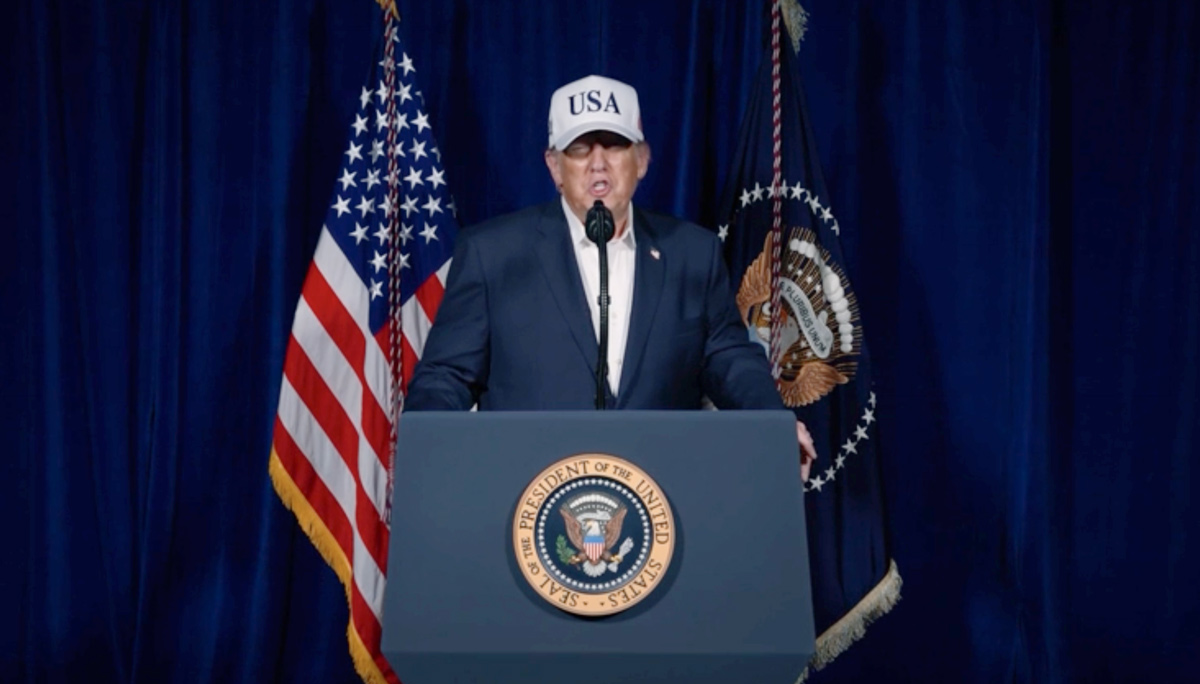
For those of us old enough to remember the War on Terror, so much of this week’s attack on Iran feels like nightmarish deja vu: the US embarking half-cocked on a war in the Middle East, determined to unseat some supposedly-evil foreign government, without much plan for what happens next or how it will destabilize an entire region, not to mention total disregard for the trail of dead bodies it will leave.
And yet even with those past comparisons reasonably fresh in our minds, it’s hard also not to note the utterly slapdash nature of this most recent iteration of Forever War. Last time around we had six or eight months of buildup. Of officials making their case for why this war was just and necessary, of waving the bloody shirt of past terrorist attacks, of “we cannot let the smoking gun be a mushroom cloud,” of sending respected generals in front of congress with doctored satellite photos and trumped up evidence of why These Bad Guys Really Have It Coming. There was a case made, for why war was necessary, and why we should support it.
Many of us still weren’t convinced by said case, but enough people were that Michael Moore got booed for daring to suggest that a new big war was a bad idea, at the Oscars of all places. Moore being shouted down by even the limousine libs seems proof that at least some consent was manufactured. Watching that war felt so hopeless at least partly because all the killing was broadly popular, at least at first.
This time around, it feels like no one even bothered with the convincing.
The best they could muster were some half-hearted, post-facto justifications and algorithmically delivered videos of cheering Iranian ex-pats (and even, hilariously, some paeans to the “Crown Prince” Reza Pahlavi, a 60-year-old fallen aristocrat who hasn’t lived in Iran since he was a teenager, the son of an absolute monarch turned beacon of democracy). While Pete “War Department” Hegseth was bragging about “death and destruction from the sky all day long,” congressional Republicans couldn’t even agree to call it “a war.”
“This isn’t a war. We haven’t declared war,” Sen. Markwayne Mullin (R-Okla.) said on CNN on Monday, later adding that Iranian Supreme Leader Ayatollah Ali Khamenei “declared war on us. We are not at war with the Iranian people.”
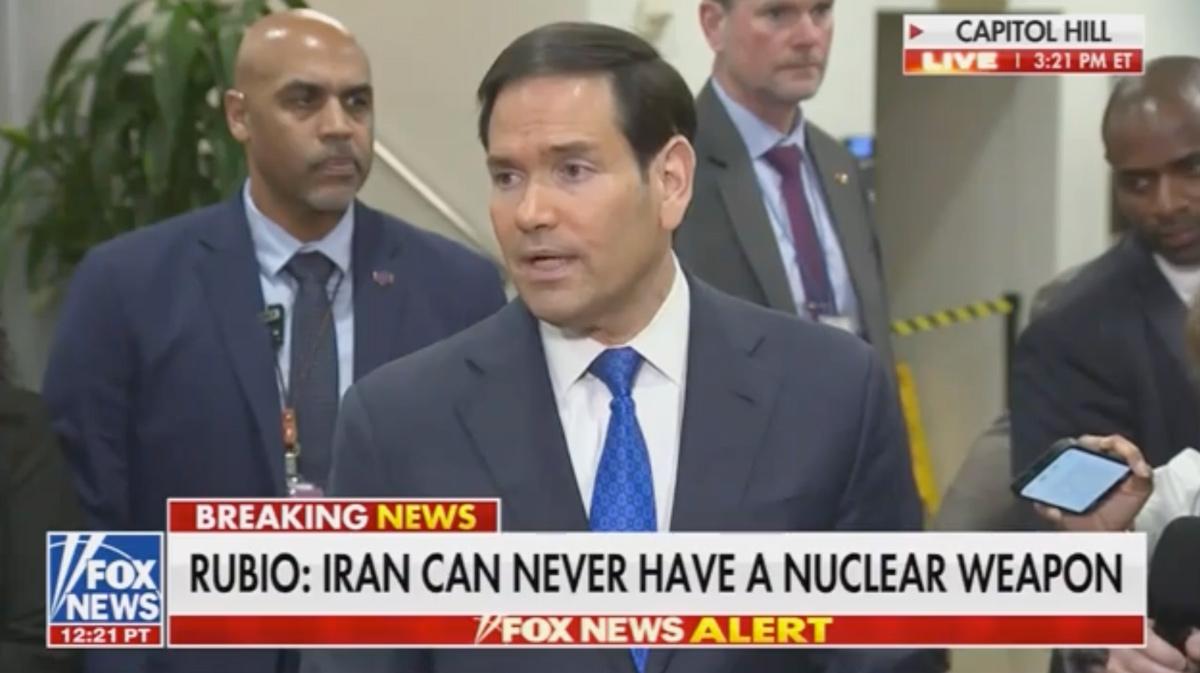
Everything seems almost comically half-hearted. As Marco Rubio attempted to explain it in a press conference:
“The imminent threat was that we knew that if Iran was attacked, and we believed they would be attacked, that they would immediately come after us, and we were not going to sit there and absorb a blow before we responded. We went proactively in a defensive way to prevent them from inflicting higher damage.”
The logic of knowing Israel was going to attack Iran, and having to join in on that attack, so that Iran couldn’t retaliate against us, for that attack, is so perfectly convoluted that it couldn’t help but produce a perfectly nonsensical Orwellianism for our times: “We went in proactively in a defensive way.”
While it’s tempting, nearly irresistible, to poke holes in these lazy arguments, I can already feel myself falling into the classic “spot the hypocrisy” trap that has been bedeviling educated libs for a generation. We should know better by now. The warmongers don’t care that they’re doing a hypocrisy. It’s a power move.
The bigger issue is that it’s clear that they no longer think they even owe us a coherent explanation. The bigger question, for most of us, is who even wants this war, and why?
Why does a president whose biggest brags of the last few months have been ending wars, low gas prices, and a booming economy (see: Pam Bondi screaming about the DOW while being asked about Epstein) throw us into a new war, that immediately, predictably, tanked stocks and spiked gas prices? Who wanted this?
“Israel,” is of course one obviously true answer, dead set as they seem to be on turning any neighbors they deem hostile to them into failed states. They allegedly started the bombing and the US only jumped in to avoid the counter-attack, per Rubio. That explanation still seems incomplete, not to mention convenient. Israel doesn’t act without the assumption that the US and some other regional powers will back them up.
That Iran responded by immediately attacking Dubai and US bases in Kuwait, Qatar, Bahrain, and Saudi Arabia seems like a tell. The Gulf Arab states clearly also didn’t like Iran’s presumably not-sufficiently-pro-business regime.
Still, why would Trump do their dirty work for them, seemingly risking his own popularity, and have most of congress, who still have to worry about getting elected, go along with him? Whatever anyone says, war isn’t any more popular now than it was in 2008.
The answer, I think, involves going beyond thinking about this in terms of nation-states and regional chess. Matt Stoller (hyperfocused on monopolies though he is) provides a handy summary here:
I’ve long noticed the endless parade of investors heading over to Saudi Arabia, the UAE, and Qatar, getting investments for everything from banking to artificial intelligence. Elon Musk secured money from the Saudis for his AI venture and his takeover of Twitter, Sam Altman sought billions from Abu Dhabi, Anthropic went after money from UAE and Qatar. And JP Morgan, Goldman, Morgan Stanley, Blackrock and Citigroup are competing heavily in the region. […]
Today, the Middle East is full of investors in every major venture in the U.S., and most of our think tanks and diplomatic corps are part of that world. […]
While there’s a longstanding pretense of Arab antisemitism and dislike of Israel, it’s notable that both Arab and Israeli elites, including MBS and Israeli Prime Minister Ehud Barak, were extensively involved in the network of Jeff Epstein.
Ultimately, Western elites have dropped any pretense they care about human rights, and Arab elites have dropped any pretense they care about nationalism or Islam. It’s now one giant Davos blob.
He goes on to note that Paramount’s heavily-leveraged takeover of Warner Bros has been “made possible in large part thanks to equity from Qatar, Abu Dhabi and Saudi Arabia.”
Point being, terms like “Davos blob” and “the Epstein Class” seem a lot more practical here in describing this drama than do the names of countries. How many people in Bahrain or Kuwait think regime change in Iran is important enough to catch stray bombs over it? Calling this a war of “The Epstein Class” — all of Epstein’s noted pen pals like MBS, Barak, Netanyahu — isn’t just glib politicking. It’s far more correct.
The main takeaway of from the millions of released Epstein documents was the way they revealed a class of tightly interconnected rich people whose chief loyalty was to each other and whose main goal was looting economies for their own personal benefit. Over and over they share strategies for profiting from things most of the rest of the world would find calamitous (like, say, massively destabilizing wars).
This attitude was shockingly consistent, ranging from issues as big as climate change to ones as small as microtransactions in children’s videogames. If there’s one constant in the millions of documents, it’s rich guys with no real loyalties except to each other discussing mass evils in terms of how to extract maximum benefit for each other.
David Dayen, writing for the American Prospect, sums it up rather succinctly:
It’s an elite that schemes to remain as unaccountable for sexual crimes as it does for corporate crimes. It has its own hierarchy of friends and foes, and it will defend those friends no matter what they do, while the spoils of privilege flow. Its instinct is to protect and preserve money and power, with the concerns of anybody without a corporate jet tangential at best. And once you set those ground rules, once you build a wall around a certain class so they don’t have to pay any price for their actions, it’s inevitable that the actions will get darker and darker.
Is there any better explanation for what’s happening now?
Not that “Epstein Class,” catchy as it is, is the only possibility here. Another useful way to think about this clubby fraternity of the corrupt comes from Oliver Bullough’s 2019 book, Moneyland, a look at the way kleptocrats, criminals, and various bad actors the world over loot state wealth and hide it in complex money-laundering schemes.
“‘Moneyland’ is a country I invented; it doesn't exist in the way that any normal country does,” Bullough told Teri Gross. “But it's basically the place where you can put your money, you can put your reputation, you can put your children, if you are rich enough to afford its services. And it is essentially a hybrid country that exists outside of ordinary nation-states, where the reach, the power of law enforcement, doesn't stretch to. So essentially, it's a secret country, a private country for anyone rich enough to afford its services, and it's essentially government of the rich, for the rich, by the rich.”
Explaining what “the US” or “Saudi Arabia” or even “Israel” wants out of this war would seem to fall apart pretty quickly when you talk to an individual citizen. My neighbor Bob doesn’t want a war with Iran. There’s no upside for us. Only material sacrifices and the moral rot of seeing scores of Iranian schoolgirls incinerated supposedly in our name. Even the dupes inclined to go along with any half-assed justifications the Trump administration may deign to offer receive little in return beyond the satisfaction of the rest of us being angry. “You will own nothing but the libs,” as the adage goes.
The best explanation for why any of this is happening is that the people of Moneyland want this war. They are its aggressors, and the rest of us are its victims.
“If a class of society is able to opt out of that contract, if they will essentially enjoy the privileges of citizenship without any of the obligations of citizenship. They are opting out of democracy. And if they are ruling the country, then that means that a democracy falls.”
This, I think, is the best way to explain why awful things that the vast majority of the world don’t want to happen keep happening. The Moneylanders want it.
The good news is that they can’t do it alone, and they’re making a pretty big gamble that they’ll be able to get enough of the rest of us to go along. And after so many years of being able to do whatever they want over the objections of anyone else, they’re not even smart enough to remember how they used to justify such things, or even that they have to.
This week, Marco Rubio promised to “unleash Chang on these people [the Iranians] in the next few hours and days.”
What the hell does that mean? If you ask the NY Post, it was a reference to a sword Jeb Bush gave Rubio in 2005. “Chang is a mythical conservative warrior,” Rubio told the New York Times in 2012. “From time to time, if there’s a big issue going on, you’d see Jeb say, ‘I’m going to unleash Chang.’ He gave me the sword of Chang… I think it’s a Jeb Bush creation.”
