Olivia Colman Might Be Our Finest Living Actress
'The Roses' has sharp wordplay and some of the best banterers alive. What else do you need?
Welcome to The #Content Report, a newsletter by Vince Mancini. I’ve been writing about movies, culture, and food since the late aughts. Now I’m delivering it straight to you, with none of the autoplay videos, takeover ads, or chumboxes of the ad-ruined internet. Support my work and help me bring back the cool internet by subscribing, sharing, commenting, and keeping it real.
—
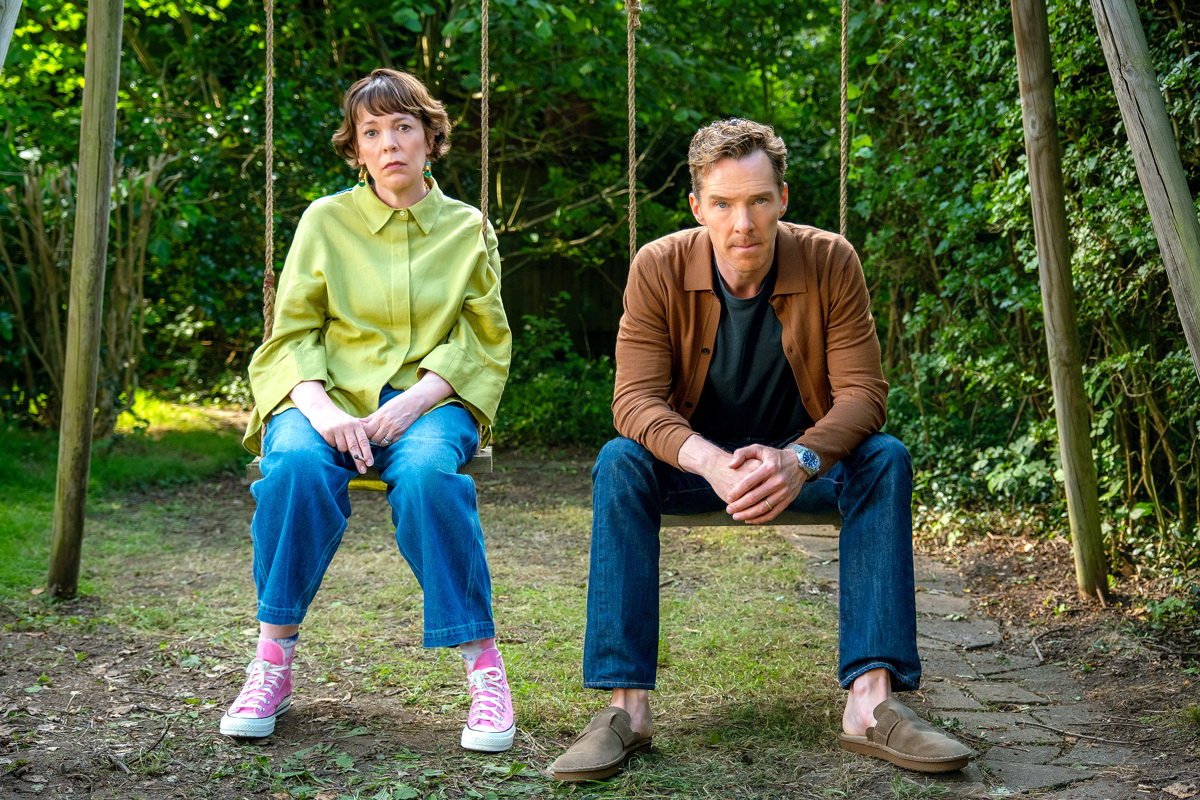
I have vague memories of watching 1989’s War of the Roses, starring Michael Douglas and Kathleen Turner, as a married couple whose divorce turns comically homicidal (with Danny DeVito, who also directed, playing their sleazy divorce lawyer). Mostly I remember a lot of broad slapstick and smashing dishes, like a live-action Spy Vs. Spy with a divorce twist. Cartoony. Whether it’s actually like that or I just remembered it that way because I was a little kid when I saw it, and thus tended to remember Home Alone stunts better than the witty repartée of a once-happy yuppie couple embittered by the materialist culture of the go-go 80s, I couldn’t say.
The same 1981 Warren Adler novel that inspired the 1989 movie has since been readapted by Tony McNamara (The Favourite, Poor Things, The Great) for director Jay Roach in this week’s The Roses. The Roach/McNamara version stars Olivia Colman and Benedict Cumberbatch as the married couple, trading most of the Wile E. Coyote stuff for deliciously barbed British banter. The story feels dated at times and the Looney Tunes DNA peeks through occasionally, especially near the end, but when you’ve got arguably our greatest living actress (Colman) delivering lines from one of our sharpest dialogue writers (McNamara), not much else matters. Not even that Jay Roach (Austin Powers, Meet the Parents) hasn’t made a funny movie in probably 20 years or that Benedict Cumberbatch still looks like Sid the Sloth from the Ice Age movies (he’s great, but still, it must be said).
Cumberbatch plays Theo, a long-suffering architect whose potential master works are always being sabotaged by some penny-pinching suit who can’t see his vision. Theo and Ivy meet-cute when Theo storms out of a celebratory luncheon for his latest project (so disgusted is Theo with the compromised design for their apartment complex) and into the restaurant’s kitchen. It’s there he finds Ivy, working on a trout carpaccio that could be sublime but is merely above-average, thanks to her boss forbidding her from using her too-weird-sounding secret ingredients. Kindred spirits! They bond. They banter. They immediately screw in the walk-in, and soon they’re off to America together.
Theo and Ivy’s initial meeting seems like an improvement over Oliver and Barbara’s in the 1989 version, in which they met attempting to outbid each other at an antique’s auction. And suitably relevant for 2025—which seems defined more by shitty bosses than upwardly mobile yuppies. With Theo and Ivy’s bond forged in the fires of similar circumstances, it figures that it will eventually be put to the test by a reversal of professional fortunes. The two move to Mendocino on the Northern California coast, where Theo gets his dream gig of designing “The East Bay Maritime Museum” (Mendocino is nowhere near the east bay and generally looks a lot more rugged and rural than depicted here but I won’t bore you with geography). When Theo senses Ivy’s boredom at being a housewife, he surprises her with the lease on a rundown seaside shuck shack, which she quickly renovates and christens “We’ve Got Crabs.” (Discovering that the guy from Poor Things and The Great wrote this seems to explain all the gleeful, witty vulgarisms).
The source material is about role reversal, which in the novel and previous movie takes the form of a fateful heart attack. In McNamara’s script, the turn comes by way of a freak storm, which, through a bit of clever writing, has the dual effect of ruining Theo’s career (his signature building collapses) while putting Ivy’s on the fast track (important people discover her restaurant thanks to road closures). She becomes an acclaimed restauranteur while Theo morphs into a fitness-obsessed stay-at-home dad.
The husband becoming a sort of homemaker had the distinct whiff of a remake that had been gender swapped, and indeed it was Kathleen Turner’s character doing the homemaking in the original and becoming alienated from her workaholic husband and his glamorous lifestyle. Yet The Roses doesn’t immediately read “timely gender swap!” If anything, McNamara’s writing is generally cleverer and more grounded than the previous version, with fewer obvious contrivances and more elegant plot solutions. Both Colman and Cumberbatch make their characters come alive in such a way that they never feel like stand-ins for a gender or a generalization, and the movie is sublime pretty much any time they’re on screen together. Through them, you see how good a relationship comedy (or a break-up comedy) can truly be.
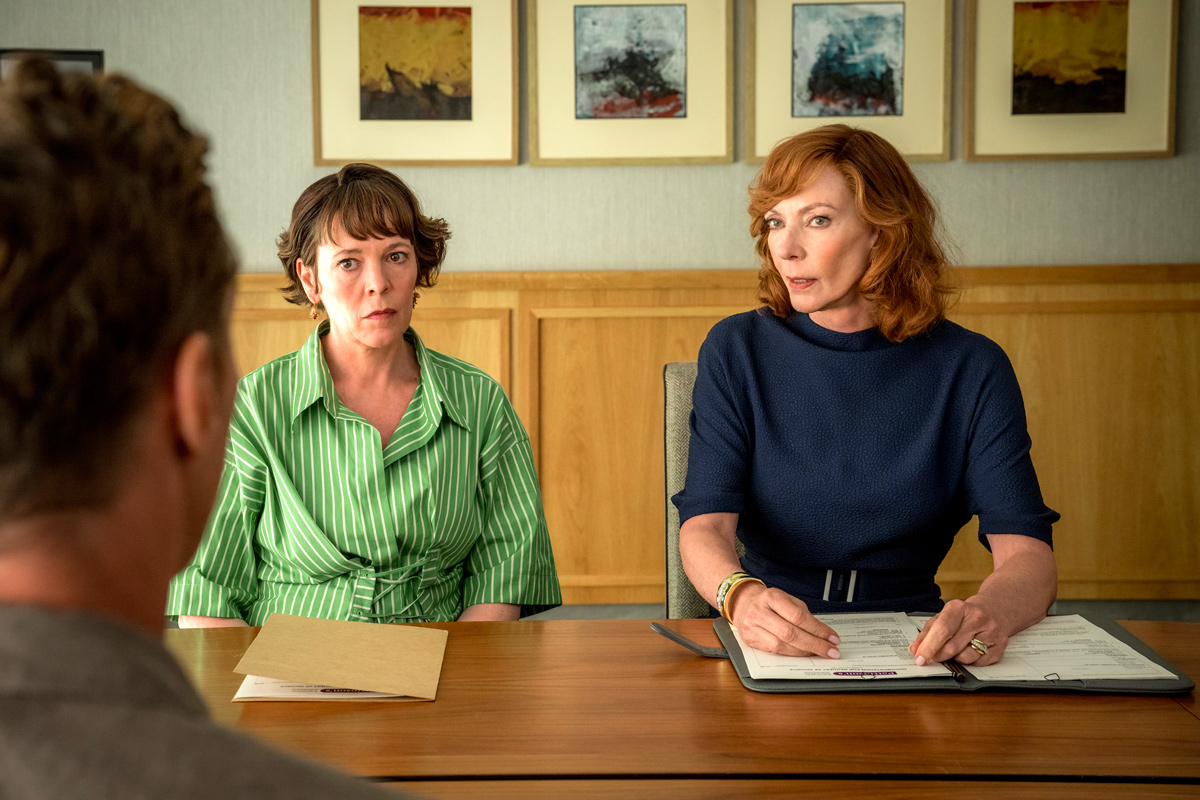
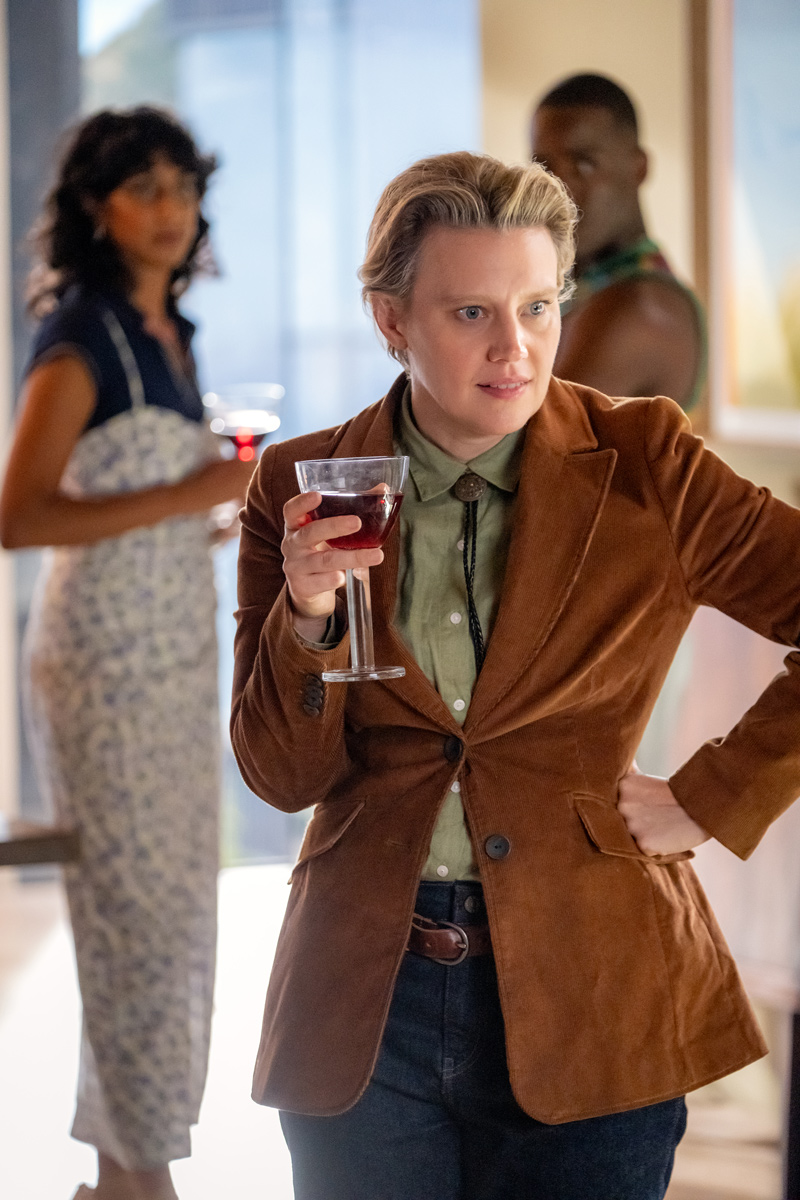
Colman and Cumberbatch (Colberbatch? Cumberman?) are so good, in fact, that other elements of the film suffer a bit from the point of comparison. “Kate McKinnon as the kooky best friend” is one of those evergreen rom-com casting choices, and if you only grade her on “can she get a laugh,” she’s basically batting a thousand. But here especially, her comedy lives on a different plane of reality than the rest of this story, and sort of grinds the movie to a halt whenever she comes onscreen to do her one-woman show. McKinnon plays the wife of Andy Samberg’s character, one of Theo and Ivy’s handful of friends in America, which also includes the more understated but still funny Sunita Mani and Jamie Demetriou. The running gag is that she and Samberg are sexually bored and McKinnon is endlessly horny for the hot sloth-man. It’s… fine, as far as rom-com bits go. It just seems beneath the standards of the rest of the movie. And anyway, didn’t we already see Melissa McCarthy do the “lesbian-coded character who is actually hetero and hypersexual” in Bridesmaids? It wasn’t great then either.
When she’s initially introduced, McKinnon’s character isn’t the horned up ersatz lesbian she later becomes, but more of a butch capitalist who nonetheless speaks the language of woo woo Norcal pseudo-hippies. That version was more interesting, and more true to Mendocino. McKinnon is an undeniably talented performer, so it would seem to be on Roach to rein in and refine. Roach seems to have a light editorial touch when it comes to comedy, which doesn’t always work, though this could just be me projecting my inability to forgive him for Dinner For Schmucks.
The other main flaw of the film is how easily wealth comes to the Roses. It’s very rom-com traditional for the characters to seem rich beyond what would be believable for their professions, and certainly we’re willing suspend disbelief in exchange for the eye candy of designer outfits and sumptuous interiors (the latter is at least thematically relevant here since Theo is an architect who eventually designs their dream home). Rich people also have the capacity to get into weirder, more entertaining shit. That’s practically a timeless truism of relationship fiction, from Jane Austen to Hunting Wives.
The Roses is also a story about jealousy and reversal of fortunes. So the success makes some sense, but still: did the fortunes have to be quite this big? At a certain level of wealth, it’s hard to feel sympathy for failing relationships. Like when Jeff Bezos or Bill Gates gets divorced, you mostly just think “couldn’t you have just bought separate compounds?”
After so much delicious Cumberman banter, The Roses’ brief descent into mutual sabotage—complete with gunplay, knives, and fire—isn’t quite as interesting as the verbal warfare. It feels like a vestigial element, a part of the elevator pitch they should’ve excised as soon as the story outgrew it. Yet The Roses also eventually redeems some of its minor flaws by succeeding where countless movies fail: it knows when to end. Rather than drawing things out and belaboring a denouement, The Roses goes out on a punchline, which is always a good place to leave it in a comedy. That it ends up feeling more like a too-rare-these-days theatrical comedy than a gender-swapped remake is a credit to all involved.
Thanks for reading The #Content Report, By Vince Mancini! This post is public so feel free to share it.
