Don't Sleep on 'Roofman,' a Jaundiced Take on Catch Me If You Can-Era Spielberg
Praise for Derek Cianfrance's damning yet irrepressibly sweet indictment of the Potemkin economy.
Welcome to The #Content Report, a newsletter by Vince Mancini. I’ve been writing about movies, culture, and food since the late aughts. Now I’m delivering it straight to you, with none of the autoplay videos, takeover ads, or chumboxes of the ad-ruined internet. Support my work and help me bring back the cool internet by subscribing, sharing, commenting, and keeping it real.
—

While one could be forgiven for not noticing, this past weekend saw the release of movies from no less auteurs than Luca Guadagnino (Challengers, Call Me By Your Name, Bones and All), Kathryn Bigelow (Point Break, The Hurt Locker), and Derek Cianfrance, not to mention a J. Lo musical from the director of Chicago—seemingly an embarrassment of cinematic riches, had anyone noticed. Sadly, movie marketing’s penetration of the national psyche is at an all-time low. Meanwhile, the trades would have you believe that the number one movie in America was something called “Tron Ares,” starring “Jared Leto,” both of which I’m fairly certain were hallucinated by rogue AI. That Sam Altman is a real sick fuck.
The Bigelow joint (A House of Dynamite) hits Netflix this week and the Guadagnino (After the Hunt) has gotten savage reviews, so it seems I chose correctly with Roofman, Derek Cianfrance’s all-around solid crowdpleaser starring Channing Tatum as a lovable con man living inside the walls at a Toys R Us. Sidenote: does Derek Cianfrance sort of look like Ryan Gosling doing “normal guy” cosplay or is it just me?
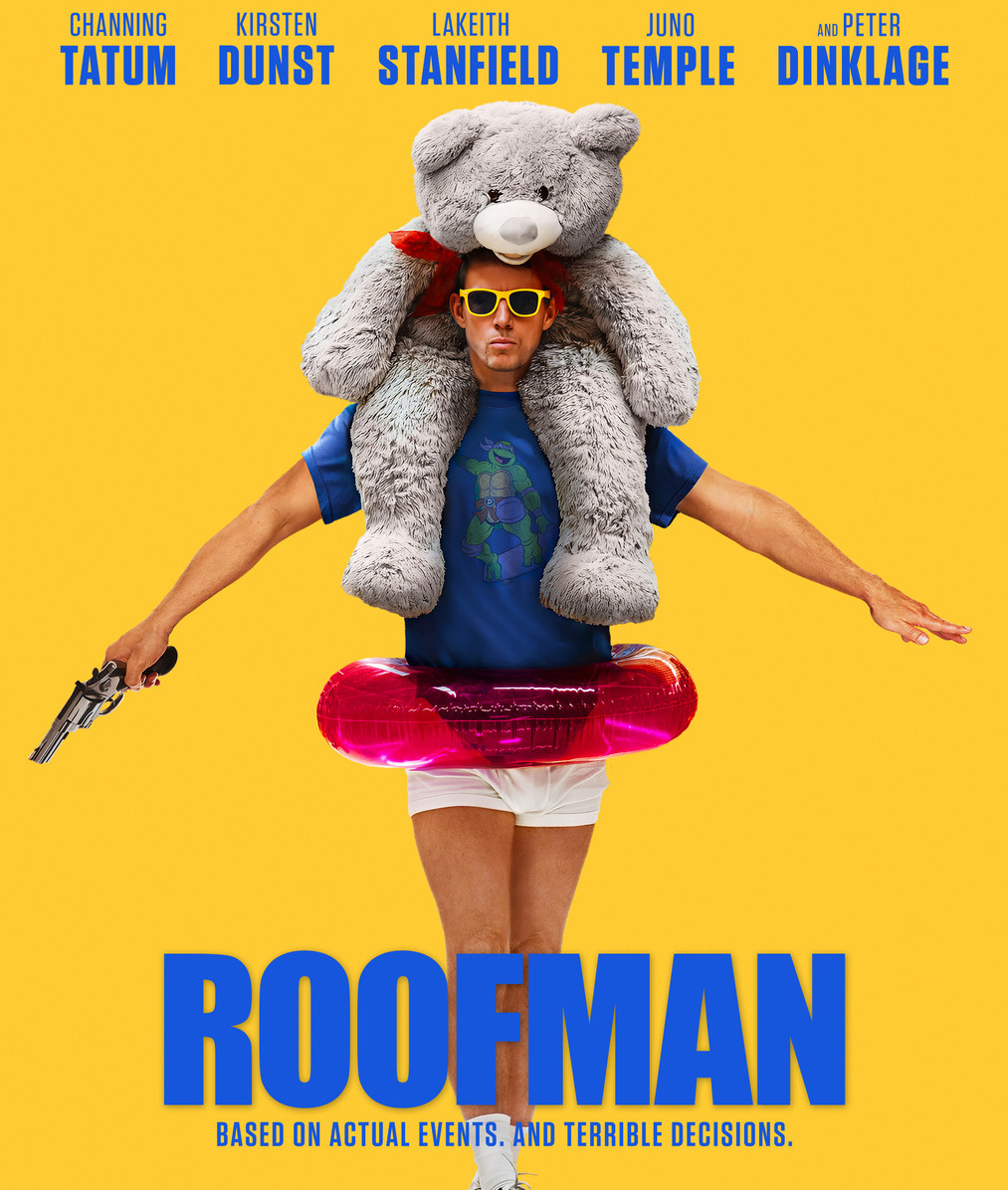
Roofman, a movie that was marketed like Cocaine Bear—some memed up, hypersaturated post-modern take on the quirky news long read du jour— turns out to be much more like a cross between Catch Me If You Can and some alternate universe version of The Terminal that didn’t suck. Cianfrance apes Spielberg, but in a good way: capturing the sentimental heart but adding a critical edge and a level of reflection in a surprising-but-welcome departure from the guy who used to specialize in brilliant-but-depressing romance dramas like Blue Valentine, The Place Beyond the Pines, and The Light Between Oceans. Great story, incredible cast, a sneaky-mean take on modern suburbia that paradoxically left me smiling.
Roofman is, yes, the story of a fugitive who builds a house—nay, a home—inside a big box retailer and attempts to start a new life there with the people he meets. The symbolism is plain for anyone who wants it, though Cianfrance (along with co-writer Kirt Gunn) wisely lets his well-drawn characters speak for themselves without overly browbeating us with the themes. If Spielberg had made it, Roofman would probably be contemporary. In Cianfrance’s hands, it’s more like an elegy (and probably a lot funnier).
Ya boy C-Tates (iykyk) plays Jeffrey Manchester, a charming veteran of the 82nd Airborne who, as he tells us in an opening voiceover, never really found his place in the world until he joined the Army. Now he’s out, and he’s sort of back to square one, not to mention broke. In the first scene, he’s forced to break his daughter’s heart on her birthday when, instead of the bike she wanted, our man Jeffrey (“my name is… Jeff”) is forced by reduced circumstances to gift her his old erector set. “But… you can build anything you want with it,” he urges pathetically.
“…Can she build a bike?” asks one of her smartass friends.
When Jeffrey returns his daughter to her mom afterwards, the mom asks how the party went. “Everyone tried their best,” Jeff’s daughter says, with heartbreaking diplomacy.
Meanwhile, Jeffrey’s old military buddy, played by the always excellent LaKeith Stanfield, clowns him for not being able to afford a bike, and implores him to get his act together. Use “your superpower,” Stanfield urges, by which he means Jeffrey’s savant-like knack for observation that made him so perfect for reconnaissance work. Taking perhaps the wrong message from their conversation, Jeffrey is soon hacking his way through the roof at a local McDonald’s, hiding there overnight before shepherding the arriving workers into the walk-in freezer the next morning. He chides the store manager, played by Tony Revelori (the bellhop from Grand Budapest Hotel) for not bringing a jacket that day before reluctantly giving him his own to keep warm until the cops arrive. Jeffrey is polite like that, a perfect fit for Tatum’s dopey affability.
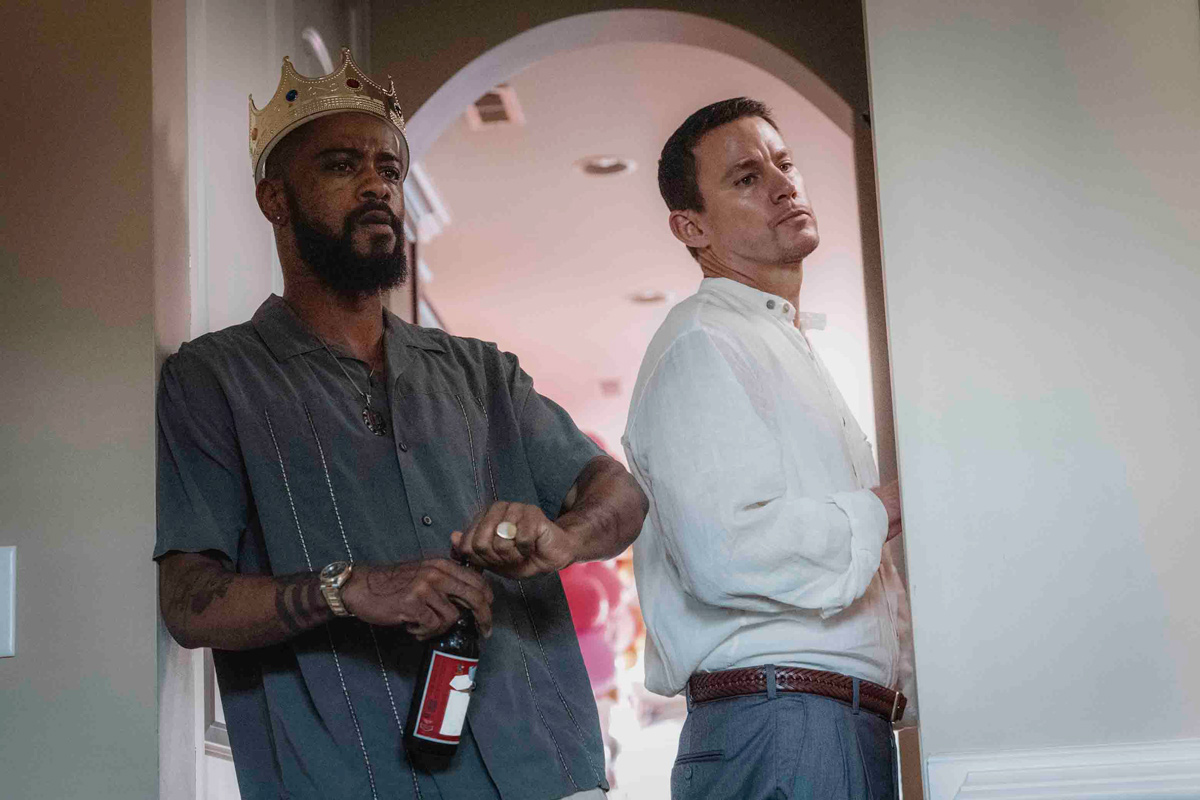
“You might wonder how many McDonaldses you’d have to rob in order to afford a normal, middle class home,” Jeffrey expounds in another voiceover. “The answer is 45.”
Unfortunately for Jeffrey, his genius for logistics and reconnaissance doesn’t quite extend to self-preservation, and the cops nab him during the following year’s birthday party just as he’s presented his daughter with the bike of her dreams. The judge throws the whole library at him, leaving Jeffrey no real recourse but to escape from prison. Rather than run as far away as fast as he can like every other inevitably captured escapee, Jeffrey opts to stay put, hole up, and hide out until everyone forgets about him again.
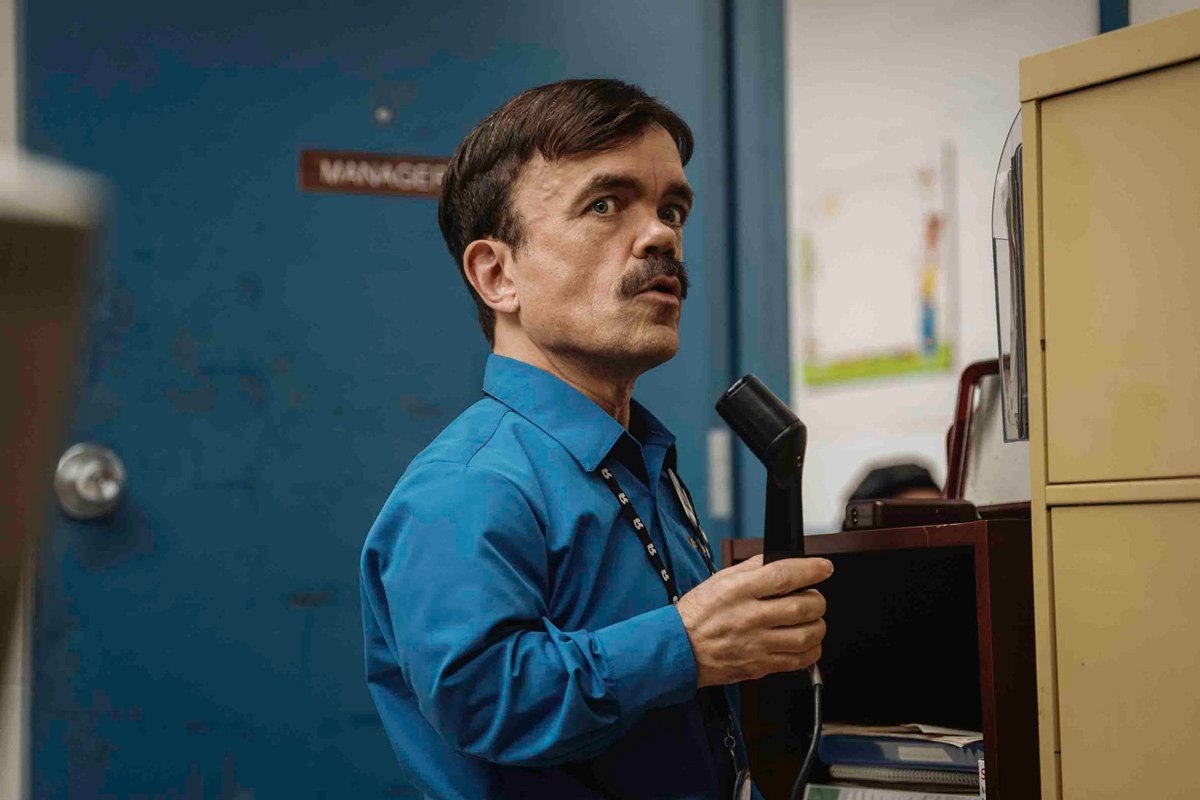
He manages this by finding a hidden space inside the walls at a Toys R Us (behind the bike rack, if you can believe), living off peanut M&Ms, bathing in the sink, and eventually pawning videogames to support his modest needs. Other players in the drama come to include the A-hole store manager played by Peter Dinklage, a sweet single mom played by Kirsten Dunst, Emory Cohen as the store whipping boy, and Ben Mendolsohn, playing against type as the lovably dorky local pastor. It’s my earnest hope that Emory Cohen one day gets the same due for his chameleonic brilliance as Mendolsohn has for going “Full Mendo”—and that Cianfrance receive his flowers for helping discover them both early on.
The cast is so good and Roofman’s writing so clever—with a nuanced lead whose actions you don’t have to justify in order to root for—that it doesn’t need another gear in order fulfill its assignment as competent popcorn entertainment. Yet for certain sickos it’s impossible not to ponder Roofman’s deeper implications.
Only an idiot would earnestly memorialize the early aughts, a time of deep moral rot when the US was fruitlessly spreading death and instability across the Middle East while inflating a predatory subprime mortgage bubble at home and blowing ill-gotten gains on garish McMansions and ubiquitously advertised Girls Gone Wild Videos. A bikini-clad Paris Hilton ironically hawking drippy burgers seems the definitive image of the time (“Fuck you, I’m eating,” Idiocracy succinctly parodied it, eclipsing Carl’s Jr.’s original slogan). And yet. Roofman can’t help but function as a perverse requiem for the coda to the death of the American Dream.
The Big Box brick-and-mortars in which Manchester made a home—Toys R Us in the film, but also Circuit City in real life—are mostly gone now, along with other businesses he robbed, like Blockbuster Video and HomeBase. Again, I’m old enough to remember when soulless corporate entities like Blockbuster killed off my beloved mom-and-pops before they were themselves sucked dry by private equity in turn, but it’s hard not to note a distinction. Even when those businesses were homogenizing culture and monopolizing industries, they were at least, in some ways, still storing that money in those local communities. Jeffrey Manchester still had to resort to crime to access any, but at least there was money to steal; employees to befriend. Who would the Jeffrey Manchester of 2025 befriend? His DoorDash driver? An AI service agent?

The last time I visited my local mall, I walked for what felt like the length of three football fields without encountering a single employee. Less than 24 hours after I saw Roofman, my wife ordered some gravel from a Lowe’s (ACE was out, the only reason to ever go to a Lowe’s). I pulled up to the loading area, and found a guy with a vest and a radio. I showed him the receipt for her order. He was perfectly polite. The guy radioed inside. After a couple of hangups, the person on the other end of the radio told my guy to tell me to have my wife download the Lowe’s app, so that she could check in, to let them know that I was there to pick up the order. And this counts as one of the more positive experiences I’ve had at one of these places. This is, by and large, how everything works now: a low-wage skeleton crew staffing a mostly empty corporate outpost, trying to manage malevolent software designed specifically to replace them.
Where is the money now? Doubtful much of it is actually inside the store. Where does it go? To the app consultants, presumably. Oliver Bullough coined the name for it in the title of his book, Moneyland, to describe the supra-national pseudo-state inhabited by thieves and the bankers who serve them: a place where laws and taxes don’t apply, and money is parked in mega yachts and offshore caches of high-end art that accumulate value out of public view (to say nothing of crypto and assorted scam securities that make for less evocative imagery).

The family that Jeffrey finds in Toys R Us isn’t a happy one, to be sure, with a tyrannical little person lording his modest power over his bullied employees, but they at least see each other face to face. Only when Jeffrey robs them do they discover their own sense of community.
Roofman, then, isn’t a requiem for some lost halcyon, which was dead even before Jeffrey literally hacked his way into the walls. It’s a requiem for a time when middle class idyll was still out of reach, but at least was still visible just over the horizon. Like that dopey Applebee’s song, we’re writing love songs to our own imagined past. At least Cianfrance delivers this vision with the intended critique.
Even in Cianfrance’s fictionalized version, Jeffrey Manchester (played, it should be said, with winning charm and pathos by Channing Tatum, who continues to blossom as an actor) is not, strictly speaking, a “good guy.” Jeffrey, who later renames himself John, is charming, polite, and clever, to be sure, but also an inveterate gaslighter and lovebomber, addicted to the shallow high he gets from showering friends and family with chintzy crapola. Gifting stolen shit is Jeffrey’s love language, incapable as he is of any vocabulary beyond commerce. We root not for Jeffrey, specifically, but for the human spirit, to defy a system hostile to it and claw back some sense of agency.
Kirsten Dunst is brilliant as Leigh Wainscott, Jeffrey’s source of redemption but also his mark, who isn’t immune to his charms but can see him for what he is whenever she’s forced to. The two meet at the local church, where Mendo, playing against type in exactly the same way as Cianfrance is directing against it, plays the dowdy pastor, singing weird love songs to Jesus with his eyes closed. While Wainscott gripes about her turdy little boss at one of the church’s outings to Red Lobster (the culinary complement to a Circuit City), one of her friends asks, “Why are you even still working there anyways? You have a master’s degree.”
It’s the kind of seemingly throwaway little detail that I was sure would resurface in the film’s final moments, to help engineer the qualified happy ending we all secretly crave in movies like these. The Spielberg version might’ve given us that. But Cianfrance arguably isn’t quite as shameless about rewriting the truth. And so he lets Leigh’s master’s degree revelation to lie there unresolved, and to simply exist for what it was: another cruel little detail in a story that maybe wasn’t so nice to begin with, but that we can look back on nostalgically anyway.
Thanks for reading The #Content Report, By Vince Mancini! This post is public so feel free to share it.
