The Long Watch: 'The Long Walk' is a Joyless Slog
The latest Stephen King adaptation from the director of 'The Hunger Games' starring Philip Seymour Hoffman's son is, uh, gonna be a nope from me, dog.
Welcome to The #Content Report, a newsletter by Vince Mancini. I’ve been writing about movies, culture, and food since the late aughts. Now I’m delivering it straight to you, with none of the autoplay videos, takeover ads, or chumboxes of the ad-ruined internet. Support my work and help me bring back the cool internet by subscribing, sharing, commenting, and keeping it real.
—
Every once in a while, I see a movie that makes me question my own motives as a moviegoer. One that I walk out of thinking, “Why the hell did I want to see that?”
It’s tempting to say that this describes every bad movie, but it doesn’t. Lots of bad movies feel like missed opportunities. Like somebody fumbled an intriguing premise. An exec didn’t understand the material and gave bad notes. There were too many cooks in the creative kitchen, a filmmaker couldn’t self edit, ideas that could’ve been explored instead came out jumbled, etc. etc. etc. You get it, bad movies come in many forms. As a moviegoer you don’t always feel complicit.
The Long Walk is instead the feeling of watching a grim premise play out grimly, the only thing carrying it a sense of rote completism. The crime was starting it, the punishment is having to finish it. It’s about a world in which young men embark upon a long walk in which the last man standing wins and everyone else dies—a sort of game show/societal ritual in which the fittest is feted and the losers are sacrifices to the winner’s greatness (torn from headlines much????). If Stephen King hadn’t written the novel on which it was based in 1979, I’d say it’s a shame that 50 Cent stole the title “Get Rich or Die Tryin’” (for both his famous album and for his much less famous movie, which believe it or not came out 20 damned years ago).
“Get Rich or Die Tryin’” is better title for the kind of movie The Long Walk could’ve been. “Get Rich or Die Tryin’” would be a nod to the underlying theme, whereas “The Long Walk” is a great title for The Long Walk, which is actually just about a long walk (did I just have a stroke?). The themes are stated plainly in the first five minutes and everything else just sort of plays out logically from there.
Suffice it to say, the characters walk until they can’t, and then they die. Roll credits. I saw all that in the trailer, so it’s worth asking: what did I expect? Looking back, I suppose I expected… I don’t know, some world-building. What else happens “in a world” where 50 young men start walking and 49 of them die? What does it even mean to win? Failing that, how about… a twist? Damn, remember those? The Long Walk is a movie that will make you reminisce fondly about the concept of a plot twist.
The biggest issue with The Long Walk, directed by Francis Lawrence with a script by JT Mollner, is that they never really tells us what this event means to the society that produced it. As we learn in the first five minutes, partly through prologue text, 50 young men are chosen by lottery to represent their states in a competition to see who can walk longer than the competition.
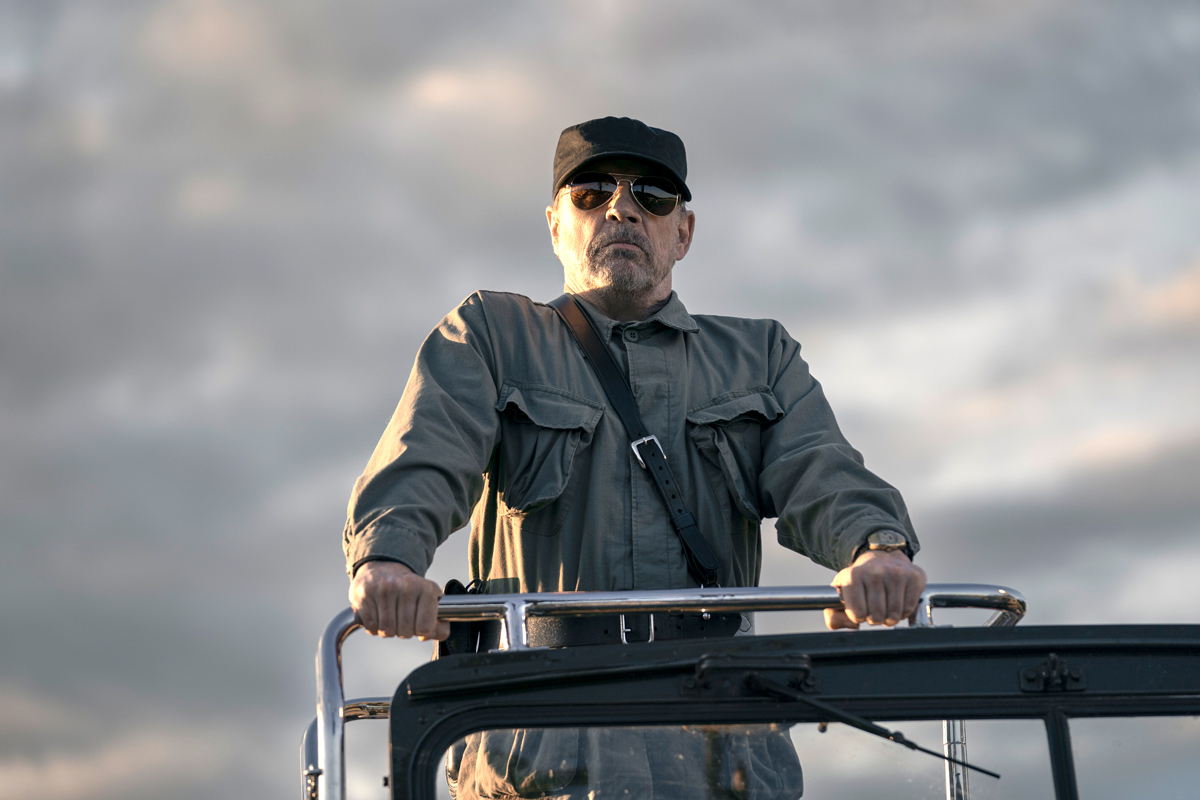
We’re given to understand that this is some sort of Purge-like tradition, broadcast throughout the land (whatever that may look like in this sort of alternate 1955), a way for this parallel timeline society to periodically reencourage productivity in a time of post-war financial depression. But this is all told to us, never shown. The whole ritual is presided over by a capitalist-militarist demagogue—present in the flesh, which seems weird for a ubiquitous, Kim Il-Sung Big Brother-like figure. Known as “The Major,” he’s mostly hidden behind aviator shades, and played by a mostly unrecognizable Mark Hamill. The script doesn’t give him much to do besides yell drill sergeant stuff. The matter of whether he’s the big boss or just an overseer is slightly unclear. In any case, the broad outline is obvious enough; The Long Walk is The Hunger Games or The Squid Game or The Purge, minus production design and a sense of fun.
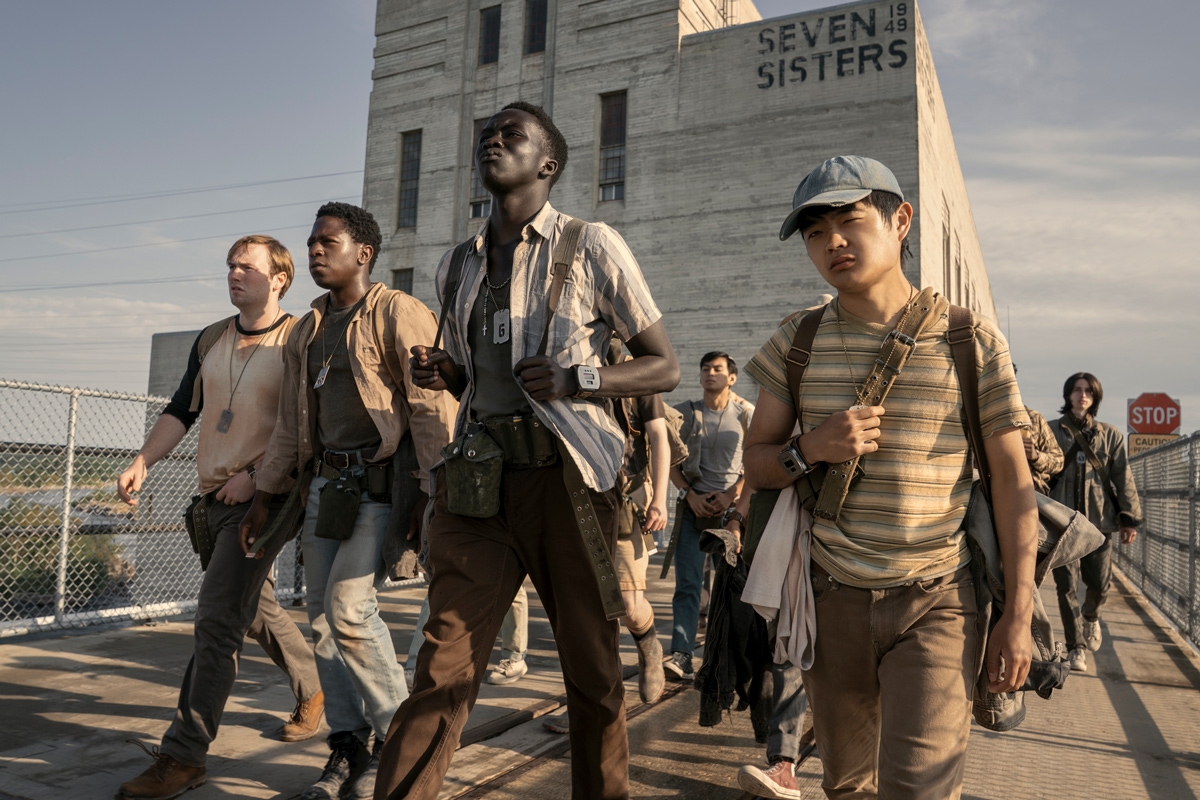
It’s all set in a dreary, mid-century ghost pastoral that one would need a near psychotic appetite for Dorothea Lange Dust Bowl photography in order to enjoy. Maybe one of the reasons its own iconography is so weak is that everything in it feels like a ghostly echo of something else. It’s hard to know what anything means when everything just feels like a mashup of The Breakfast Club, Newsies, The Outsiders and The Hunger Games. Are we indicting society or just recreating other movies we liked? Young men, they’ve got trauma.
Our “heroes” are Ray Gerraghty (Cooper Hoffman) and Pete McVries (David Jonsson), who are also far and away the most competent actors of this group. Jonsson’s bone-deep Britishness is never disguised by his rock-candy-in-the-mouth affected southernish American accent, but at least he’s not marble mouthed and annoying, like Ben Wang’s Hank Wilson—an overcaffeinated 20s newsboy impression with too much volume and an endless supply of jerky movements. I had the urge to applaud when his character finally died (spoiler alert), which didn’t seem to be the movie’s intention. Hoffman, on the other hand, is a compelling presence, and Jonsson, once you get past the accent, has an interesting face and a naturalistic acting style. More minor characters were less insufferable than Wang but not much more memorable. It feels cruel to bag on the acting when the material doesn’t give this group much to work with beyond a sort of local-theater-troupe attempt at Stand By Me.
Stand By Me (another King adaptation, possibly my favorite) worked not just because the characters all had pathos-inducing sob stories, but because they had stuff to do; the potential for growth. In The Long Walk, everyone gradually reveals their melodramatic Breakfast Club backstory just in time for another rote headshot. The first one is gory and graphic in an obvious CGI sort of way, and after that they (and we) become increasingly desensitized to it (message!). Sometimes the deaths are overtly tragic, other times overtly senseless, other times sold as heroic in a way that doesn’t really come off heroic at all, more like different flavors of suicide.
Even the most dystopian premises normally offer some kernel of hope, or humanism, or something that isn’t grim and predictable and kind of pathetic. The characters in The Long Walk only ever seem barely aware of the absurdity of their situation, and totally at a loss to figure some way out of it. The futility of escape or revolt is basically taken as given. Ray is the lone character who expresses a desire to win this competition for a greater purpose than personal gain, so that he can change the society that invented it (or so he says). His plan, as he explains it, isn’t very well thought out or multi-faceted (which isn’t a criticism in and of itself; it’s fine, and realistic, to have characters who don’t know how to change the world or understand the bigger picture), but when he shares his plan to avenge his martyred father, Pete tries to talk him out of it.
“Choose love!” Pete urges him, which is literally a social justice slogan so acceptably apolitical that the NFL’s ownership allowed players to use it as their helmet decal (do a smidge of politics, as a treat!). You’d think a scene parroting this particular slogan would be intended as a comment on the uselessness of such platitudes, but here it seems genuinely intended as an uplifting pep talk. It’s quite possible that no one who read the script has watched an NFL game.
