'Project Hail Mary' is a Grandiose Combination of the Profound and the Glib
Lord & Miller's Andy Weir adaptation feels big, and sometimes that's enough.
Welcome to The Content Report, a newsletter by Vince Mancini. I’ve been writing about movies, culture, and food since the late aughts. Now I’m delivering it straight to you, with none of the autoplay videos, takeover ads, or chumboxes of the ad-ruined internet. Support my work and help me bring back the cool internet by subscribing, sharing, commenting, and keeping it real.
—
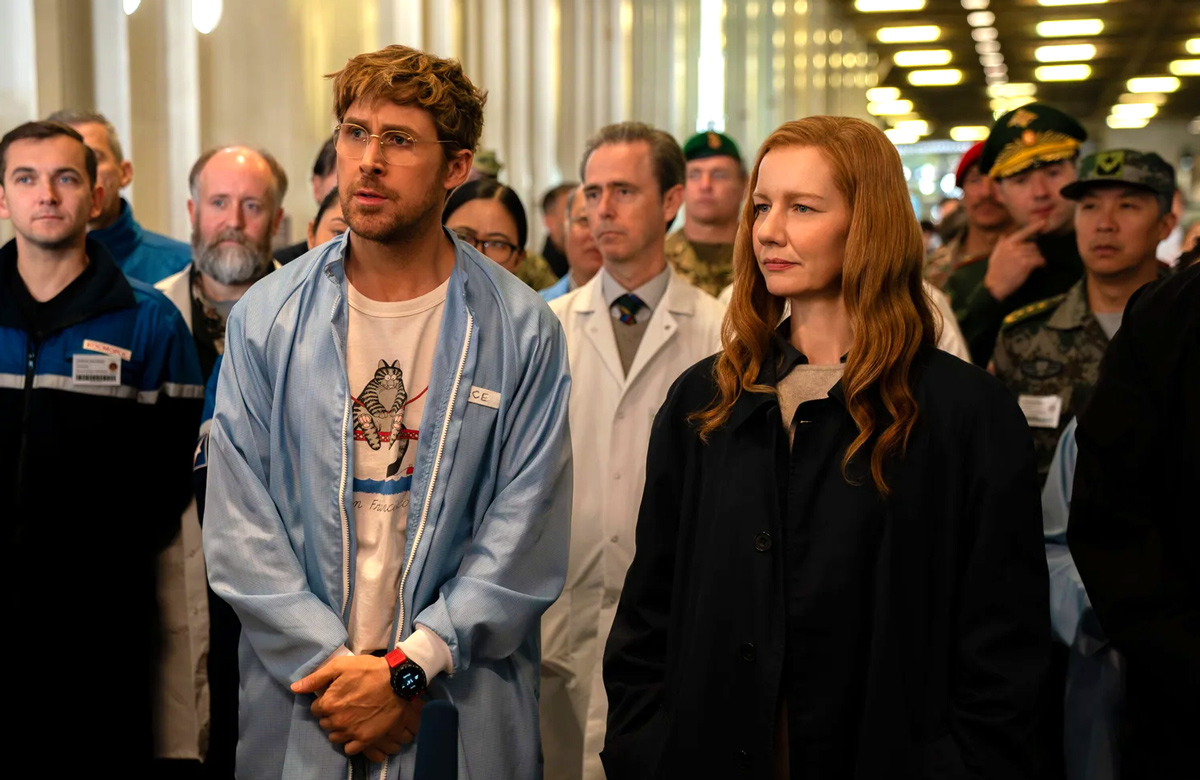
“Sad astronaut” is one of our finest movie genres, and so it makes sense to try to fit Ryan Gosling, one of our most likable actors, into it. Unfortunately Damien Chazelle already thought of that when he cast Baby Goose as Neil Armstrong in First Man in 2018. So directors Lord & Miller had to pivot a bit, and have Gosling play a glib space scientist instead, in this week’s Project Hail Mary, an adaptation of The Martian author Andy Weir’s novel from 2021 and L&M’s first directed feature since 2014’s 22 Jump Street. (In the intervening years, of course, they’ve become some of Hollywood’s most prolific producers).
(Phil) Lord and (Christopher) Miller, from their underrated and underseen first show Clone High on through 21 Jump Street and the LEGO Movie, have proven themselves capable of spinning gold out of utter horseshit, turning the laziest recycled IP concepts into genuinely winning films (Ice Cube even delivers an extended meta joke about this in the first part of 22 Jump Street). The incalculable damage they may have done to the industry in the process, convincing execs that toys and 30-year-old bad television shows could easily become good movies, is only forgivable on the basis of their talent and obvious affability. You can usually tell that Lord and Miller are having fun, and it’s hard not to have fun along with them. In terms of genuinely populist entertainment that maintains a baseline competence, they’re almost a class unto themselves.
If a lot of their past projects involved doing a lot with a little, Project Hail Mary, with a script adapted by Drew Goddard, seems to present the opposite challenge. Weir’s book, which I haven’t read but I gather is sort of dense and technical (it opens with a diagram of a space vessel), imagines a universe in which Earth’s scientists have discovered that the sun is dying. It’s narrated by a self-deprecating science-teacher-turned-unlikely-spaceman, who wakes up the only survivor of a one-way journey to try to save the solar system. Along the way he makes an unlikely alien friend. If the inherent challenge of The LEGO Movie was creating a story where there wasn’t one, the challenge of Project Hail Mary seems to be squeezing daunting amounts of exposition into a coherent three-act structure. The resulting film seems to confirm Lord and Miller’s status as modern-day Spielbergs, even as they can’t entirely paper over what feels like a gnawing void at the center of the story.
There’s a feeling I sometimes get when I’m at the planetarium or staring at the stars, or reading or watching anything that deals with the far reaches of the universe. At first I feel inspired by the vastness of creation and then pretty soon I start to get sweaty and panicky, anxious about my own cosmic insignificance, humanity’s collective loneliness, and the likelihood that I’ll just die and become nothing before ever understanding the scope and purpose of all this. Yuuup, whoooole lotta emptiness out there… William Shatner’s trip to space filling him with a deep loneliness is incredibly relatable.
The tension between the yawning abyss and humanity’s perseverance in the face of it is probably a big part of the appeal of the sad astronaut movie in general (a genre which, again, I love. I even liked Midnight Sky, the lesser of George Clooney’s two sad astronaut movies). The beauty of Project Hail Mary is that it presents this tension straightforwardly, and the world it builds is so grand and fully realized on a sets-and-composition level that it had me at full buy-in straightaway. It hits the right notes and everything looks gorgeous. And then Ryan Gosling will look into his front-facing space video diary and say something like “So… I met an alien,” and the illusion if not shattered, is certainly cheapened a bit.
“Unassuming fella who’d probably rather stay home” is nice counter-programming in a space-movie protagonist from the usual lantern-jawed hero or hubristic fool, but aw shucks can easily turn nauseating if you overdo it. On a technical level, Project Hail Mary is an undeniable achievement, but narratively it feels like it’s constantly peering into the great abyss and then filling the loneliness with the dancing baby from Ally McBeal. At its best it feels like comedic Interstellar, at its worst like the most unkind take on The Good Dinosaur. The music soars when it needs to, outer space yawns with infinite possibility, but there’s pat glibness just beneath the surface that occasionally breaks through and undermines all the larger questions.

Baby Goose plays Ryland Grace, who we know is a big nerd because his glasses are always slightly askew, and we know is likable because he’s always underselling his own obvious brilliance. Is Gosling a great actor or just especially adorable? Probably it doesn’t matter. He’s one of a small handful of actors alive who could carry a role like this, with so much screen time spent alone, but there are times that Ryland Grace feels like a Ryan Reynolds role that Gosling was only just able to sand away the smuggest, most grating parts of.
