'Marty Supreme' is a Rollicking Addition to New York Grime
Ping pong wizard Marty Mauser turns his own precarity into a parlor game.
Welcome to The #Content Report, a newsletter by Vince Mancini. I’ve been writing about movies, culture, and food since the late aughts. Now I’m delivering it straight to you, with none of the autoplay videos, takeover ads, or chumboxes of the ad-ruined internet. Support my work and help me bring back the cool internet by subscribing, sharing, commenting, and keeping it real.
—
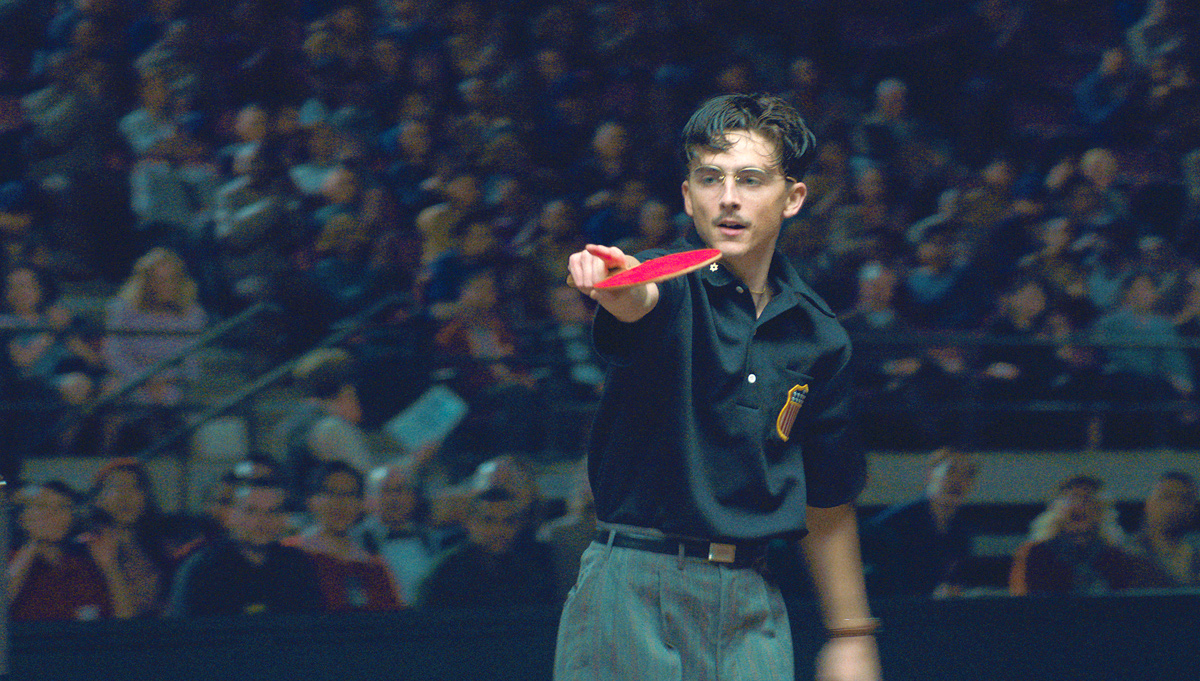
Josh Safdie’s movies all feel like they began life as a crazy story he overheard from some locally-famous outer borough pseudo-celebrity. It’s hard to watch them without imagining some rummy barfly buttonholing Safdie in the corner of a dive, rasping “Ay kid, I eva tell you about da time I beat Japan’s numbah one ping pong player at da woild championships a table tennis? It’s true, I even had a paddle named aftah me…”
His movies all, to some extent, live on this same plane of text and subtext, like arthouse Drunk History or Shorties Watching Shorties (deep pull alert), with Safdie the dutiful technician doing his level best to shoot the most faithful reenactment of the craziest story he ever heard from the least reliable narrator in Queens. Whether this is a quality traceable to Safdie or to screenwriter Ronald Bronstein—Safdie’s collaborator on Daddy Longlegs, Good Time, Uncut Gems, and now Marty Supreme—is up for debate.
Whatever the case, “listening to a charming fabulist unspooling a tall tale” is the best frame of mind in which to enjoy Marty Supreme, yet another Bronstein/Safdie classic of New York grime. As a 1950s period piece set to 1980s, Roadhouse-style music, a sort of Jewish Catch Me If You Can staged as a perversion of the inspirational sports movie, it’s arguably their biggest stretch to date. Yet Marty Supreme still fits cleanly into their established canon of Tri-State desperation. Pseudo-sports movie and pseudo-biopic though it is, you can practically feel the humid wafts of cocaine sweat coming off Marty Supreme in dank waves.
There is a kooky, sketchy, grimy, eternally scheming but weirdly charming New York that comes alive in Safdie’s movies, where the city is not this multicultural paradise of gleaming skyscrapers and zooming subways, but rather some forgotten enclave, a semi-shameful family secret that one might take perverse pride in but usually only from afar. The “only in New York” cliché retains its lurid edge in Safdie’s movies, the same way it did in early Scorsese and in films from Abel Ferrara, like King of New York and Bad Lieutenant.
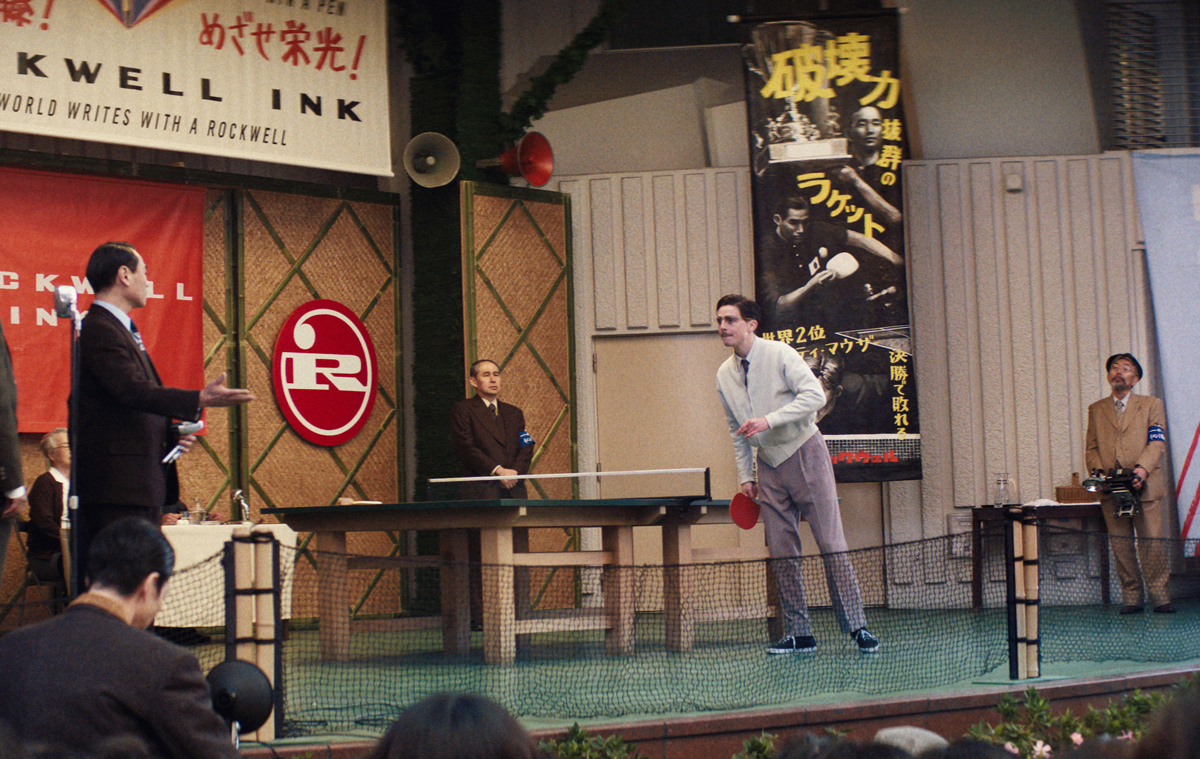
Bronstein/Safdie seem to be as conscious of this as anyone, casting Ferrara himself in a minor role as a dog-loving Jewish gangster. Other stunt-cast Marty Supreme characters include Larry “Ratso” Sloman as Murray Norkin (is the real name or the character name more evocative? A real “Rupert Grint as Ron Weaselly” situation), Tyler the Creator as a cab driver, Ted Williams (whom you may remember as “The Golden-Voiced Hobo”) as a pool hall owner, Mitchell Wenig (the weird guy from Uncut Gems who has an identical twin) as… well, a weird guy; Shark Tank’s Kevin O’Leary in a major role (!!), Penn Jillette as a violent New Jersey farmer, along with many other odd faces and evocative names from the larger Safdie-verse as various other weird characters. Stunt casting doesn’t always work, but Bronstein/Safdie have turned it into an art, the collection of slightly uncanny faces only heightenening the general vibe of an outer borough family reunion gone sideways.
Timothee Chalamet plays the titular Marty—Mauser in the movie, Reisman in real life—a table tennis champion known as “The Needle” “for his quick wit and slender build.” Reisman’s career section on Wikipedia begins with the heading “As a hustler and a showman…” and you could probably guess without knowing it that Reisman was once a guest on David Letterman. Safdie and Bronstein seem to gravitate to the kinds of oddballs who were or should’ve been Letterman regulars, a cinematic expanded universe built on various Larries “Bud” Melman. Chalamet, in convincing fake pockmarks and still looking perennially 15, embodies Mauser, the best employee at a lower East Side shoe store where he works, if only he could accept a quiet life as a shoe salesman (spoiler alert: he can’t). He takes his childhood friend Rachel (Odessa A’zion from I Love LA) downstairs to the stock room for a quickie while his boss (played by the aforementioned Ratso) tries to convince him to take a position as manager. It’s a non-starter. Marty is a professional athlete! He’s only selling shoes to make the money for his ticket across the pond for the World Championships.
When Marty’s boss goes incommunicado the day before Marty’s set to leave, essentially holding Marty’s expected paycheck hostage, Marty grabs the gun from his desk drawer and uses it to commit a sort of light armed robbery, trying to cajole a colleague to just give him what the boss owes him from the store safe. The pistol, Marty assures him, is just there to provide plausible deniability. “Come on, I’m holding the gun on you in a threatening manner!” Marty cajoles.
It’s a testament to Marty Supreme’s greatness that the rest of the film consists almost solely of other setpieces exactly as hare-brained as this one for almost two and a half hours, and it’s never not a blast. Marty Mauser is a master persuader, yet not exactly “smooth,” and always self-sabotaging at some point in the process. He is “The Needle” after all, perennially poking and prodding and pestering until he gets what he wants, which is usually something esoteric. Or it’s something straightforward, like money, that he needs for esoteric purposes, like paying off a fine to the International Table Tennis Association, whose chairman seems to hate Marty, probably on account of he’s so annoying.
Bronstein and Safdie understand that the kinds of strange digressions unreliable narrators like Reisman take, that would normally be left on the biopic’s cutting room floor, are exactly the root of this particular character. It matters less whether it happened exactly that way in real life than that the subject thinks they did. Without spoiling too much, there’s a lost dog, a deus ex bathtub, and a totally unforced indecency interlude along the road to Marty’s big moment. Kevin O’Leary is, I’m almost ashamed to say it, shockingly good in his big screen acting debut, playing Milton Rockwell, the pen tycoon husband of an aging film starlet Marty is courting (Gwyneth Paltrow). His very punchable face does a lot of the work. (I looked him up and discovered that he’s half Lebanese, which may help explain how a Canadian named “Kevin O’Leary” could fit so comfortably into this Semitic milieu).
In one scene, which really doesn’t spoil anything to describe, Milton notices the tattoo on the forearm of Marty’s friend and competitor, a Czech named Kletzki, played by Géza Röhrig (actually a Hungarian, don’t tell the Czechs). “You were in the camps?” Milton asks.
“He was,” Marty answers for him, and prods, “Kletzki, why don’t you tell him a story?”
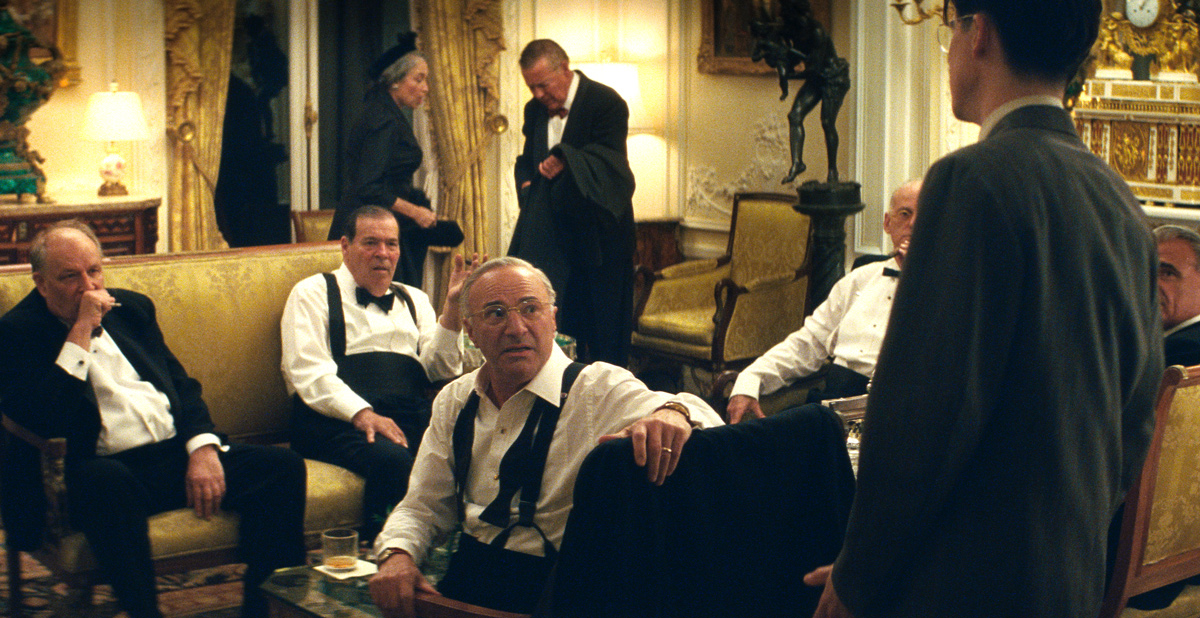
The story Kletzki relates is how he survived the camps, by learning how to defuse bombs. The Nazis would send him deep into the forest, so that in case he failed at his task the explosion wouldn’t hurt anyone but him. One day, Kletzki says, a bee buzzed by him, so he followed it back to the hive. Then he used a cigarette to smoke out all the bees, took their honey and spread it all over his body. Then he smuggled the honey back into the barracks under his clothes, and let the other prisoners lick the honey off of him for sustenance.
Would you believe me if I told you that this dark tale of Holocaust ingenuity, delivered as provocative breakfast repartee and recreated in a vivid flashback, is possibly the single funniest movie scene I saw this year?
