I Am Begging Spike Lee to Stop Directing Love Letters to New York
'Highest 2 Lowest' seems to consist of 60% random shoutouts and 40% actual movie.
Welcome to The #Content Report, a newsletter by Vince Mancini. I’ve been writing about movies, culture, and food since the late aughts. Now I’m delivering it straight to you, with none of the autoplay videos, takeover ads, or chumboxes of the ad-ruined internet. Support my work and help me bring back the cool internet by subscribing, sharing, commenting, and keeping it real.
—
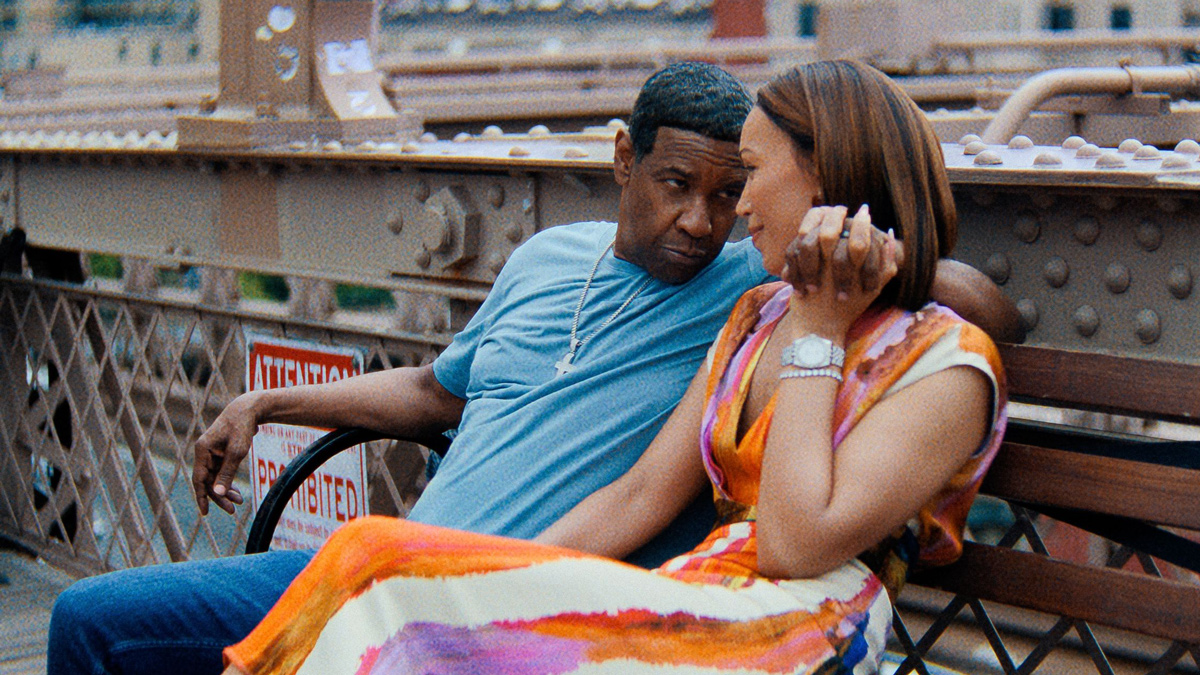
Spike Lee, a filmmaker almost more iconic as a character than the characters in the movies he makes, has always existed for me somewhere in between Woody Allen and Oliver Stone—part prolific artist whose solution to creative blocks is to just barrel through them, part technician whose intuitive grasp of schlock allows his work to sing whenever it isn’t overly concerned with itself.
Highest 2 Lowest, Lee’s first fiction feature since 2020’s Da 5 Bloods, is actually a reinterpretation of Akira Kurosawa’s 1963 film High and Low, which was in turn adapted from Ed McBain’s 1959 novel King’s Ransom. Where McBain’s novel followed gruff cops and a stubborn American shoe tycoon in the wake of a kidnapping-for-ransom plot, Kurosawa’s version cast Toshiro Mifune as the businessman and delved the psyche of post-war Japan. It seemed like promising source material for Lee (adapted by Alan Fox), combining the pulp of a McBain novel with the pedigree of Kurosawa and the modern sheen of an A24 movie starring Denzel Washington. Only, once the movie begins, the backstory quickly falls away and we’re soon left with something that feels suspiciously like an above-average Law & Order episode trapped inside the world’s corniest hype reel for New York City.
Does Spike Lee moonlight for the New York City Tourism Board? Does he get a nickel for every shot of the Yankees logo or a Puerto Rican flag? Let us never forget that Spike Lee loves the Knicks and that white people like Larry Bird. Highest 2 Lowest is packed so tightly with shoutouts to whatever random thing Spike Lee enjoys or wants to promote in that moment that there are stretches where you forget that there’s supposed to be a movie happening.
The final scene of Highest 2 Lowest, for instance (and you’ll have to trust me that this isn’t really a spoiler) sees a character heretofore unknown to us named Sula C. Sing (it stands for “Sula can sing,” we learn) performing the entirety of a three-minute song as her audition for Denzel Washington’s record label. Song is played by newcomer Aiyana-Lee—no relation—who it must be said does have a beautiful voice, and when she finishes, Washington’s character asks her what the song is called.
“Highest 2 Lowest,” she says.
Roll credits.
If there was a deeper meaning to this scene, I missed it. Maybe I should’ve paid closer attention to the lyrics? Also confusing were the six or seven closeups of the Steinway Pianos logo Lee manages to squeeze into the scene, apropos of nothing, so far as I could tell. The entire movie is like this. Confusing plugs for random shit nearly break the fourth wall throughout and definitely stretch the narrative continuity.
Ed McBain’s Doug King, who became Kingo Gondo for Kurosawa, becomes David King, played by Washington, for Lee and Alan Fox. After a lengthy series of (admittedly grand) drone shots of NYC, Lee introduces us to King, the much-acclaimed founder of Stackin’ Hits Records, on the balcony of his highrise penthouse in Dumbo. King came from the streets to become the famous hitmaker with the Midas touch—think, framed covers of Rolling Stone and The New Yorker behind his desk—and then he cashed out, becoming little more than the rich figurehead for the company he started.
After years of coasting on past successes, King is, when we catch up with him, in the process trying to regain control of his company—over the mild objections of his catalogue wife, Pam (Ilfanesh Hadera) and basketball-loving, social media-obsessed son, Trey (Aubrey Joseph), who are concerned that this ego-trip might upend their comfortable one-percenter existence.
Does David lecture Trey about getting off his dang phone and being present in his real life in one of the very first scenes? You bet he does. In fact, Highest 2 Lowest feels suspiciously like a pull-up-your-pants-style unc lecture whenever it isn’t otherwise bogged down in New Yorksploitation bodega porn.
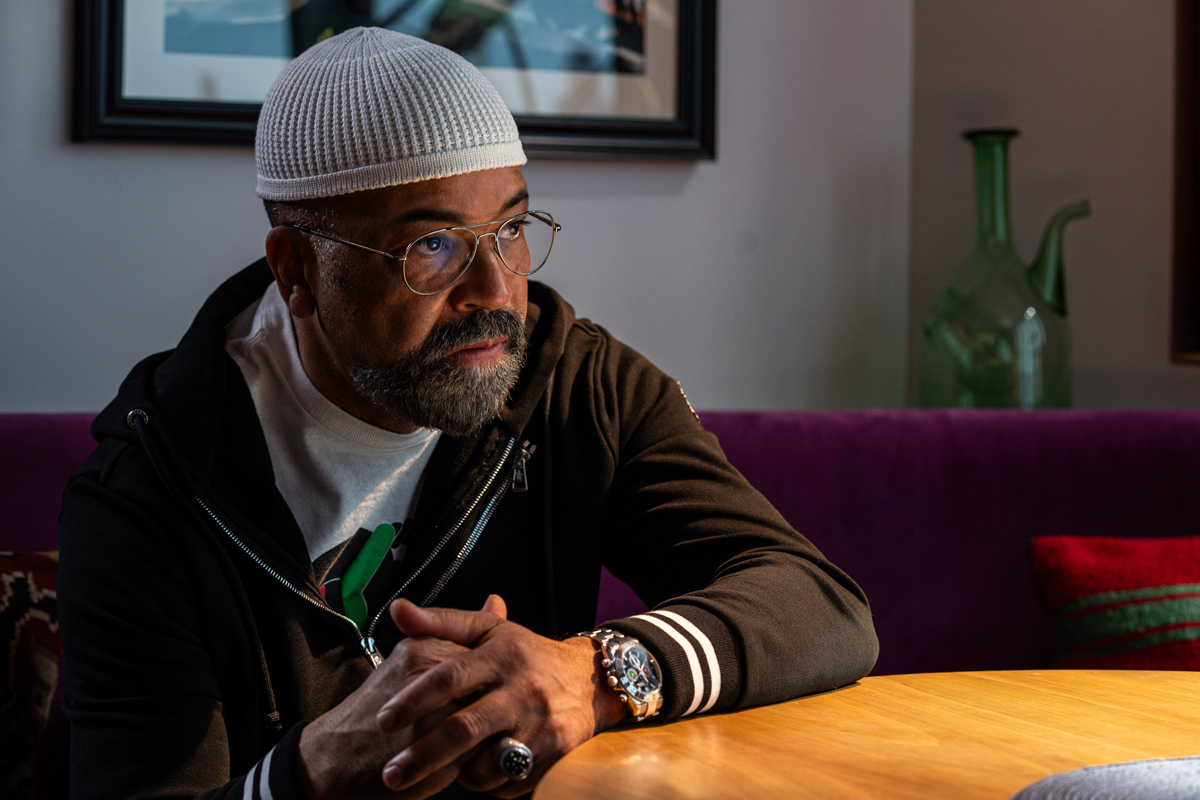
David’s Muslim ex-con limo driver, Paul (Jeffrey Wright) drives David and Trey to Trey’s basketball camp, led by Rick Fox. On the way there, David clowns Trey’s Celtics-colors headband (never clear why Trey chose this) and, once they arrive, banters with Fox about the Knicks and the Lakers and their respective championships. Fox, at least, is an enjoyable presence more than capable of playing himself. David ends up being too busy with his corporate takeover attempt to stay for the whole camp, and when he gets home later that day, he gets a phone call informing him that his son has been kidnapped and is being held for ransom. The scene is oddly disjointed and abrupt, with King’s gorgeous wife reacting to the news that her son has been kidnapped the way she might if someone messed up her DoorDash order.
Soon enough we discover, true to the source material, that, through a case of mistaken identity, the kidnappers have accidentally nabbed Trey’s friend Kyle instead—the son of David’s driver Paul, played by Jeffrey Wright’s actual son, Elijah Wright. The boys, we learn from Trey, snuck out of camp to grab lunch. They split up after Trey wanted a slice while Kyle was craving a chopped cheese from his favorite bodega, and the next thing Trey knew Kyle was gone. Bodegas, chopped cheese, gettin’ a slice… what, no bagels? Who is walkin’ here? I can only imagine the restraint it must’ve taken Lee not to include a whole exchange about how the pizza’s so good because of the water. As such an iconic New Yorker, why does Spike Lee’s love letter to the city sound so much like it was written by ChatGPT?
The revelation that it’s Kyle being held for ransom instead of Trey in turn sets up a dilemma for David—who has to choose between paying off the kidnappers using money he needs to buy back his company for the return of a kid who isn’t even his. Will he make the handoff?
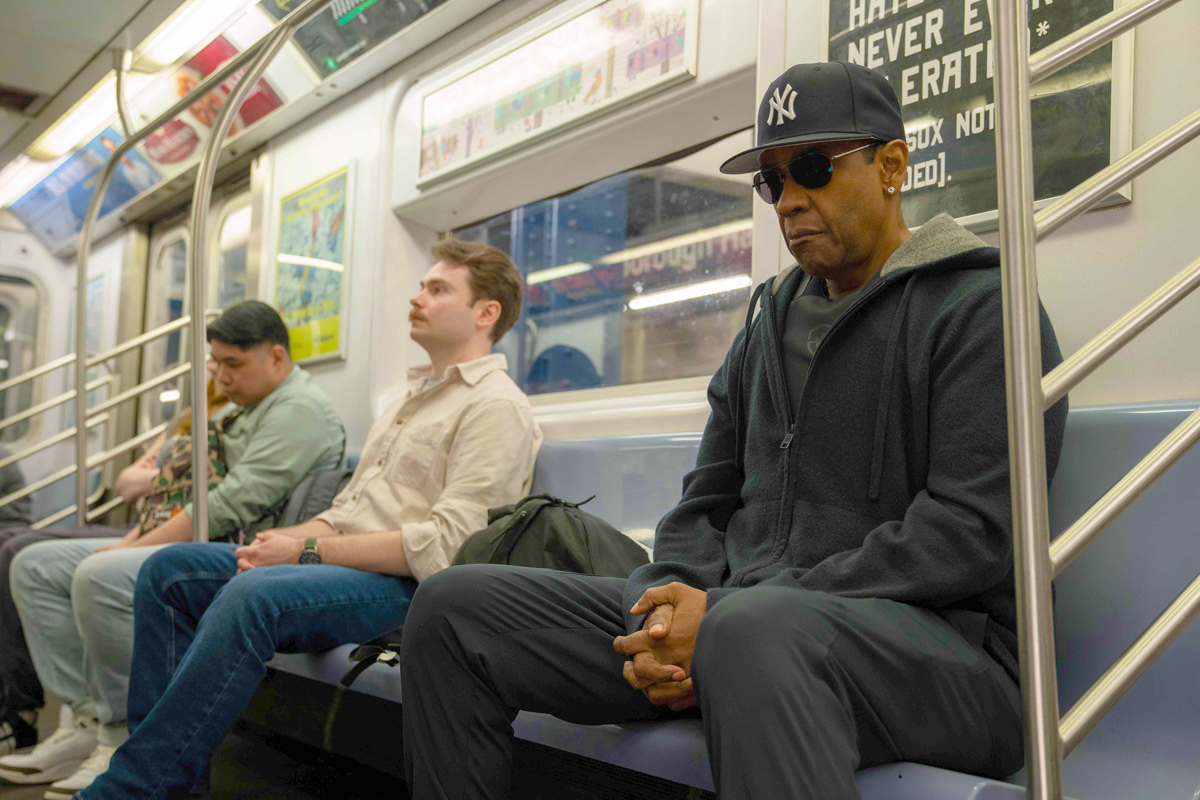
Lee stages the ensuing action setpiece during the Puerto Rican Day parade, complete with cameos by Rosie Perez and Anthony Ramos, and nearly an entire song from a lovingly shot salsa orchestra, intercut with a subway train full of rowdy Yankees fans chanting “Boston Sucks!” led by Nick Turturro. Hard to say whether the musical interlude or Turturro Yankeesing directly at the camera is more disruptive to the narrative, but either way probably a case where Lee would’ve been better off choosing one or the other.
A$AP Rocky (good actor) later shows up as “Yung Felon,” an aspiring rapper who believes that attention is the only currency in this economy. In the process he clashes with David King, who derides his son’s obsession with reels and TikToks, saying “not all money is good money.”
Does David stick to his guns and do what he’s always done, or evolve with the times and capitulate to the demands of algorithm-generated content and the pressures of social media, where selling out is something to aspire to? It might not have been a terrible idea to make this the film’s central conflict, if all the references to the internet economy didn’t feel so much like they were written by a 70-year-old. People are going viral! David is taking a beating on social media! “MediaTakeOut, Black Twitter is dogging me out now…” Trey says of all the online chatter.
Hey, kid! Stop all the downloadin’!
And that’s when Highest 2 Lowest is coherent. Many of Lee’s other dramatic choices are so baffling as to defy categorization. Like when David and Paul track the kidnappers to an apartment, which happens to be apt “A24.” Well sure, gotta shout out the distributor.
When Paul reveals that he’s packing heat, David looks at the gun and asks, “What’s that for?”
“This is my insurance policy,” Paul says, holding up the pistol. “This is Jake from State Farm right here.” (This was, sadly, a huge laugh line in my screening).
