Every Darren Aronofsky Movie, Ranked
Is there any director as hard to pin down? Just when you think you know his shtick he does something completely different.
Welcome to The #Content Report, a newsletter by Vince Mancini. I’ve been writing about movies, culture, and food since the late aughts. Now I’m delivering it straight to you, with none of the autoplay videos, takeover ads, or chumboxes of the ad-ruined internet. Support my work and help me bring back the cool internet by subscribing, sharing, commenting, and keeping it real.
—
This past week I saw and loved Darren Aronofsky’s latest movie, Caught Stealing. That Aronofsky made a great movie wasn’t such a shock—it wasn’t the first Aronofsky movie I’ve loved, and 11 Oscar nominations and 18 BAFTAs suggest I’m not alone—but the kind of movie it was I never could predicted. It was bright, vivid, fast-paced. Kooky, even. I never imagined that the guy who directed The Whale and Mother! would give us a comedic, character-based action drama that felt like Go or Snatch.
Yet if there’s one common thread in the last 27 years of Aronofsky movies it’s consistent surprise. After Pi (1998) and Requiem for a Dream (2000), he certainly seemed to have an identifiable shtick (extreme close-ups, quirky edits), an established brand it would’ve been easy to parody. But that brand was only faintly present in The Fountain (2006) and had disappeared completely by The Wrestler (2008).
The Wrestler in turn feels like it could’ve been made by the Safdies or Sean Baker (it’s also, like a lot of Safdie movies and at least one Baker, an underrated entry in the canon of movies that make the Tri-State Area look absolutely disgusting). That was followed by Black Swan (2010), which feels like about as different from The Wrestler as a movie could possibly be. There are some Aronofsky “eras,” like his religion era (Noah, Mother!) and his art stunt era (Black Swan, The Whale), but across his whole body of work, he seems congenitally incapable of getting locked into a single style or subject matter.
There are directors like Wes Anderson and Tarantino (or even Scorsese or David Fincher) who have a particular look and a style that they refine through the years, or use as a base to tinker with. Whereas Aronofsky seems mostly to hate repeating himself. You see a center-framed composition that looks like a diorama and think “That’s Wes Anderson,” or a split-diopter and say “De Palma,” but it’s hard to think of any stylistic tic after Requiem For A Dream that screams “Aronofsky.”
He’s not even as defined by endless experimentation and reinvention as, say, Steven Soderbergh. He’s too obviously intentional to ever really feel like he’s playing around or improvising.If anything, his output feels like a rebuke to the modern era’s merciless push towards personal branding. Every time he edges towards a recognizable personal brand he blows it up and does something different.
He’s made movies that I love and movies that I hate, but there’s something very human about an artist who has recognizable phases but never feels like he’s following trends. I don’t always “get” his movies, but periodically getting sick of your own bullshit seems intensely relatable. There aren’t many “name” auteurs working whose recent work is arguably more interesting than their breakout hits. Anyway, he seemed like a fun director to rank.
9. The Fountain (2006)
Writing Credits: Aronofsky, Ari Handel.
The Fountain is the only Aronofsky movie I never saw when it came out and in fact didn’t watch until this week even though I always meant to before now. It has the feel of a movie in which the filmmaker is on the brink of losing his mind as he tries to find the meaning of life in order to finish his story. Fiction-as-suicide note—underrated genre. Yet my main takeaway from The Fountain is “brown.” There’s a lot going on and so much to wrap your head around, but mainly everything is always brown. Brown brown brown. What can brown do for you? For me, not that much.
The plot connects three stories from different times and places, with a recurring protagonist Hugh Jackman) and love interest (Rachel Weisz, to whom Aronofsky was married from 2001-2010). In the present day thread, Jackman plays a researcher racing against time trying to find a cure for Weisz’ brain cancer. He also plays a conquistador trying to save his queen (Weisz) by finding the Fountain of Youth off in the New World, and a future monk meditating near the Tree of Life somewhere off in a metaphysical snow globe adjacent the crab nebula. It’s the nebula of xibalba, where the Mayans believed souls would meet after death. (/Christopher from Sopranos voice: “It’s called the nebula of xibalba, T. The Mayans would lick frogs and convince each other it was God or some shit.”)
The Fountain is clearly an attempt to come to terms with mortality and find meaning in life (arguably Aronofsky’s most frequent theme). It’s respectable for the attempt, especially if you prefer artists who seem like they’re seeking answers for themselves rather than dictating them to you.
Yet The Fountain also feels like it belongs to the mid-aughts downer-core genre (see also: 21 Grams) where being relentlessly maudlin and wallowing in grief was the established path artistic respectability. “Oh, now I see why I’m miserable, it’s because it’s art.”
The timeless love affair/interwoven stories throughout time plays kind of like a less house-broken Cloud Atlas, and utterly lacks Aronosky’s underrated sense of humor. I think I could’ve enjoyed the metaphysical story and morose tone if the cinematography hadn’t also been so grim and dingy and relentlessly brown.
8. Pi (1998)
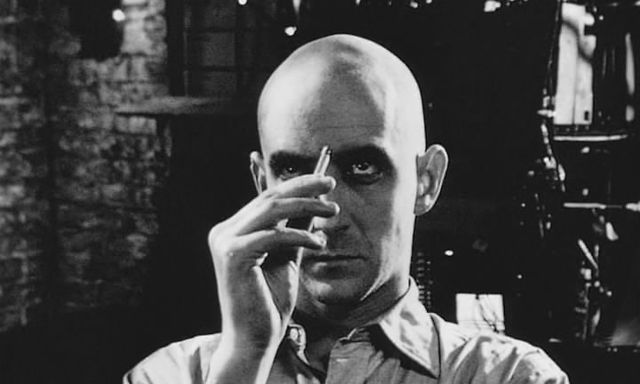
Writing Credits: Aronofsky, Sean Gullette, Eric Watson.
Pi surely has some cachet on account of its classic 90s-indie-movie origin story: being made with unknown actors for a scrounged-together microbudget ($60,000) and ultimately launching Aronofsky’s career when it won a directing award at Sundance. It’s a black and white montage about a crazed mathematician, and the kind of movie it’s hard to imagine *not* in black and white—ugly beautiful, like Willem Dafoe. Even watching it now, the main sense I get from it is “whoever made this is a real filmmaker.”
That is, unfortunately about all I get from it. It’s a great calling card but not really a great film. Aronofsky uses every trick in the book to keep us interested in one weird guy’s obsession with numerology, and manages to make it feel like something big is just about to happen for almost the entire movie. When it ends 84 minutes later, mostly without anything happening, the impression is sort of “wow, this guy sure has a lot of tricks.”
Pi is a vibe. It has style. But I don’t get much from the whole film that I don’t get from watching the first five minutes. The rest feels mostly redundant, and parts feel like they’re actively trying to make me turn it off. How many times does a phone need to ring to evoke “constantly ringing phone”? Probably not this many.
It accomplishes what it sets out to though, which is sell its director as a guy worth paying attention to. It’s not on my list of rewatchables but it got the job done. Maybe I just don’t know enough about math to enjoy it? Spheres, the golden ratio, Fibonacci! Fibo… fibo not gonna watch that one again any time soon, anyway.
7. Requiem For A Dream (2000)
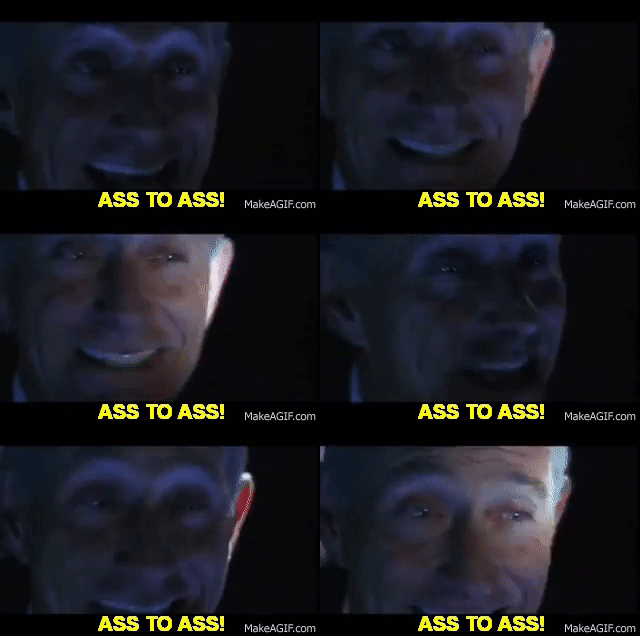
Here it is, the Aronofsky film that we’ve all probably seen and have opinions about. One of the things that inspired me to write this list is that Requiem for a Dream was the first Aronofsky movie I saw, and I hated it. Even the title seems pretentious. The editing (a punched up, quicker version of some of the quick cuts in Pi) felt smug, the story was over-the-top sensationalist, and the whole thing had the feel of an art school DARE video. Don’t do drugs, kids! You’ll end up fucking double-sided dildos for money and your arm will fall off! Also, Jared Leto will be there.
And yet it’s hard for me to think of any other filmmakers who I initially hated but later came to love. That alone makes Aronofsky interesting.
With the benefit of hindsight, and no longer spending many nights arguing with other film nerds, I must grant that Requiem for a Dream was memorable. Or at least, very meme-able. Sometimes lines blur between those two things.

Requiem for a Dream established the Aronofsky shtick. It got him an Oscar nomination (for Ellen Burstyn, which is also a great porno name), was named the film of the year by AFI, and generally put him in the conversation of “filmmakers to watch.” That he took that winning shtick and almost immediately chucked it out the window is the part I find more endearing.
While it’s a movie that I don’t particularly like (there are some great individual scenes, and Aronofsky deserves credit for being the first guy to discover that Marlon Wayans is actually much better at drama), I can also see some of my favorite Aronofsky qualities present, in embryonic form: his subtle, dark sense of humor; his love of pairing high art and low culture. For a guy who’s always exploring mortality and the meaning of life he really loves a shit and dick joke.
6. (Tie) Noah (2014)
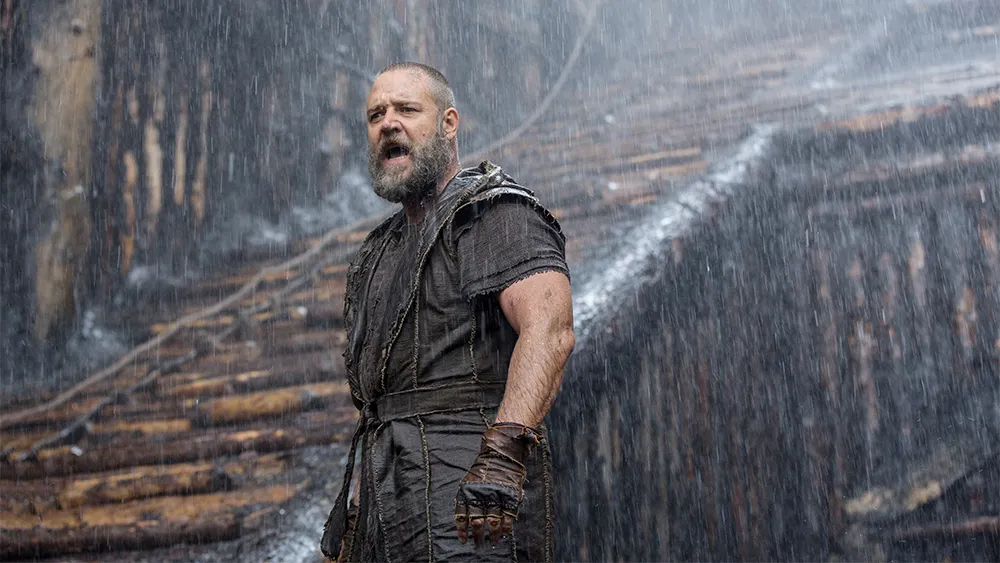
Writing Credits: Aronofsky, Ari Handel.
I have a tough time choosing between Noah and Mother!, because they’re kind of the same movie, done two different ways. Noah is the prose version, Mother! is poetry.
One of Aronofsky’s most charming (and nutty) qualities is that he earnestly wants ot make sense of the Old Testament (see also: Pi). It’s funny to think that, once upon a time, movie execs earnestly believed that the guy who made Pi and The Fountain might simultaneously resurrect the Biblical epic, drawing both action movie audiences and the people who made The Passion of the Christ (released ten years prior) the highest-grossing movie of all time, with a big budget action film starring Russell Crowe as the Biblical Noah (Australians in the Bible?? Lol). He spent $125 million of their money making an environmentalist epic about hallucinogens and incest featuring CGI rock people.
Noah is necessarily messy, because it’s about the Biblical story of Noah, which, at least in its details, not even Biblical scholars can figure out. In Aronofsky’s hands, it’s a movie that posits the profound hypothesis that maybe mankind is forever cursed to destroy God’s creations because of our irrational love of our own progeny. In Noah, that comes off both terrifying and kind of sweet.
6. (tie) Mother! (2017)
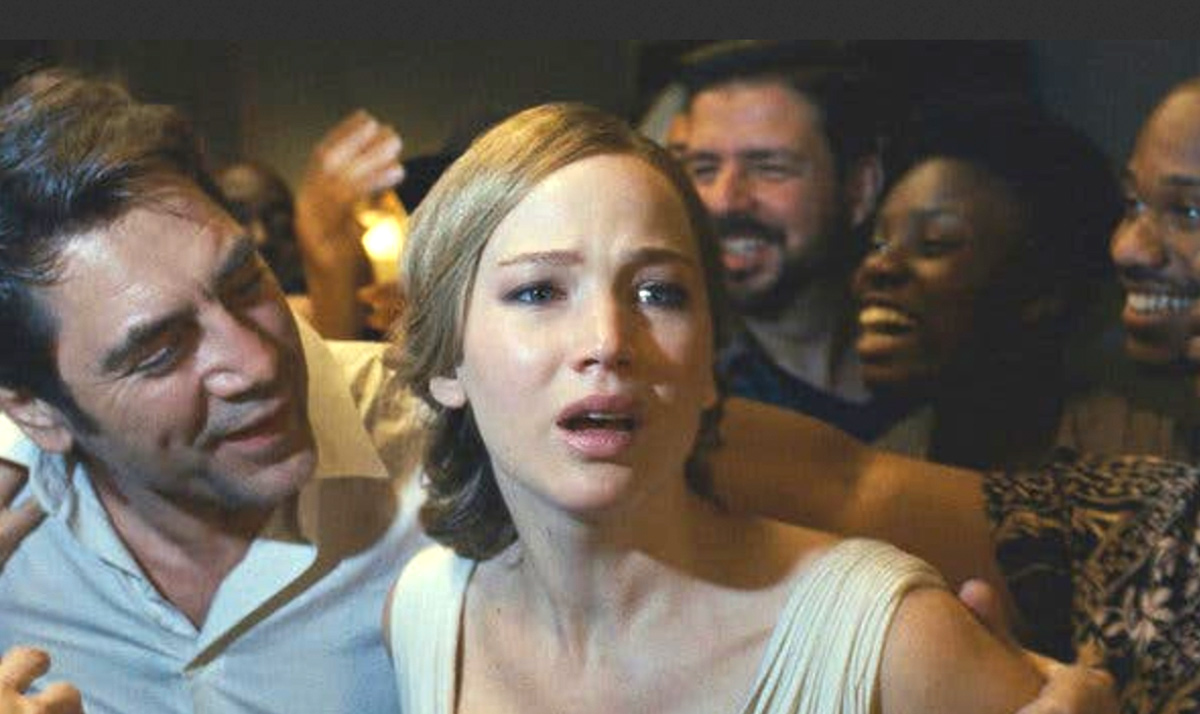
Writing Credits: Aronofsky.
Mother! is also about the conflict between creation and protecting your offspring, which in Mother! seems to be not only Biblical but a comment on being an artist. My feelings about it haven’t changed much from my initial review:
Childless newlyweds Javier Bardem and Jennifer Lawrence have built a beautiful bucolic life together in vintage farmhouse in an unnamed meadow somewhere.
Lawrence is happy with their isolated existence, but her husband, a famous poet, can’t resist trying to share paradise with anyone who shows up, starting with a crazed fan and his wife, played by Ed Harris and Michelle Pfeiffer. Their two sons show up, one of them kills the other, Lawrence gets pregnant, Bardem’s writer’s block is cured, and soon the house is overrun with even more crazed fans, turning the film into what can only be described as the first horror-comedy of manners with an unbraced sink MacGuffin. It’s like Aronofsky took the public’s somewhat ambivalent response to Noah and thought Okay, so the public doesn’t love it when I explore my earnest questions about The Bible. But what if I posed them in the form of something they already love, like home improvement shows on HGTV?
Mother! is basically a Bible story repackaged as an HGTV horror movie—the Biblical flood as demo day. It’s a movie with obvious biblical parallels—Ed Harris’ Cain and Abel-esque sons, Ed Harris’ rib, the son sacrifice/communion scene—and easy symbolism. Lawrence as “mother” Earth, Bardem as God, their son as Jesus, the people as the people.
Mother! is basically the flip side of Noah, positing the notion that maybe part of what makes God God is his willingness to let everyone share the joy of his offspring, even if in so doing they kill it (people really are the worst). Bardem’s God character is also an artist, leading to endless arguments over whether Mother! is really a movie about religion or a movie about art, which is a bit like arguing over whether Miller Lite tastes great or is less filling. It’s both. Art and religion are inextricably linked, hence why “creator” and “creativity” have the same root word. In Mother!, God is the original artist. In a way, it’s a gloriously grandiose riff on the age-old writer’s exhortation to “kill your darlings.”
The only thing I’d add to this in the present day is that I enjoy Mother! a lot more in concept than I do in execution. The cinematography is relentlessly dark and almost the whole thing is shot in claustrophobic closeups, which just aren’t very fun to watch. I don’t think I enjoyed watching it nearly as much as I did Noah at the time, but more of it has stuck with me since—specifically the part where everyone rushes in and ruins their farmhouse. Which is very similar to the parts that stick with me from Beau is Afraid. Not sure what that says about me. Don’t fuck up my house, man! I got that sink just the way I like it, do you know how long that took me??
