'Bugonia' is the Arthouse 'Deep Blue Sea'
Yorgos Lanthimos goes with poetry instead of prose, and turns Stavros Halkias into a movie star.
Welcome to The #Content Report, a newsletter by Vince Mancini. I’ve been writing about movies, culture, and food since the late aughts. Now I’m delivering it straight to you, with none of the autoplay videos, takeover ads, or chumboxes of the ad-ruined internet. Support my work and help me bring back the cool internet by subscribing, sharing, commenting, and keeping it real.
—
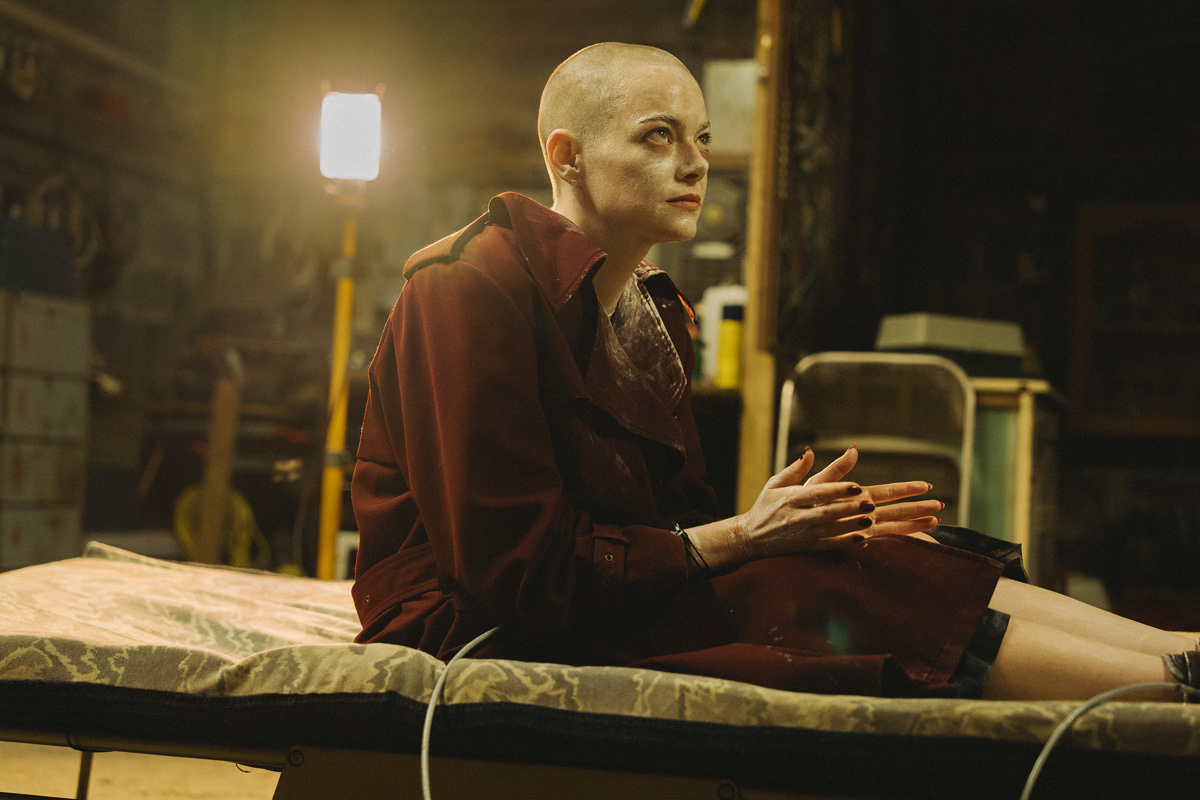
At the risk of sounding uncool, I think I prefer Prose Yorgos Lanthimos to Poetry Yorgos Lanthimos. The Favourite is peak Prose Yorgos, with a close second to Poor Things (both co-written by Tony McNamara, who seems to bring out the best in Lanthimos and vice versa). Bugonia, by contrast, seems far more like Poetry Yorgos, more of a piece with the Lanthimos of Kinds of Kindness than his other works. Which is to say: funny as a concept in a way that didn’t make me laugh that much in execution, and narratively bold in a way that’s maybe more admirable than it is memorable. Bugonia starts strong and ends strong, but lacks momentum in between. It ultimately reaches a level of abstraction beyond my capacity to grasp, the kind of dish I taste and say “interesting” but don’t order seconds.
A sort of meth-skinny iteration of Jesse Plemons (Jesse P. Lemons, as I call him) plays Teddy, a conspiratorial beekeeper living in rural Georgia who, along with his autistic brother, Don (Aidan Delbis, who’s actually on the spectrum), kidnaps a powerful businesswoman named Michelle Fuller (Emma Stone). She’s the CEO of a pharmaceutical-skewing Amazon-type company, Auxolith, as well as Teddy’s many-levels-removed boss, more a picture on the wall like the figurehead of a Stalinist regime than a direct superior. Teddy has convinced himself, and sort-of convinced Don, that she’s actually a Lizard Person-type alien called an Andromedan, part of an invasive race that seeks to poison, enslave, and replace humanity, the same way humanity has bees (sort of). Teddy doesn’t know much but he does knows bees, as well as the more fantastical parts of online discourse. He’s sort of the beekeeping philosopher version of the guy who has only seen Boss Baby saying “getting a lot of Boss Baby vibes from this.”
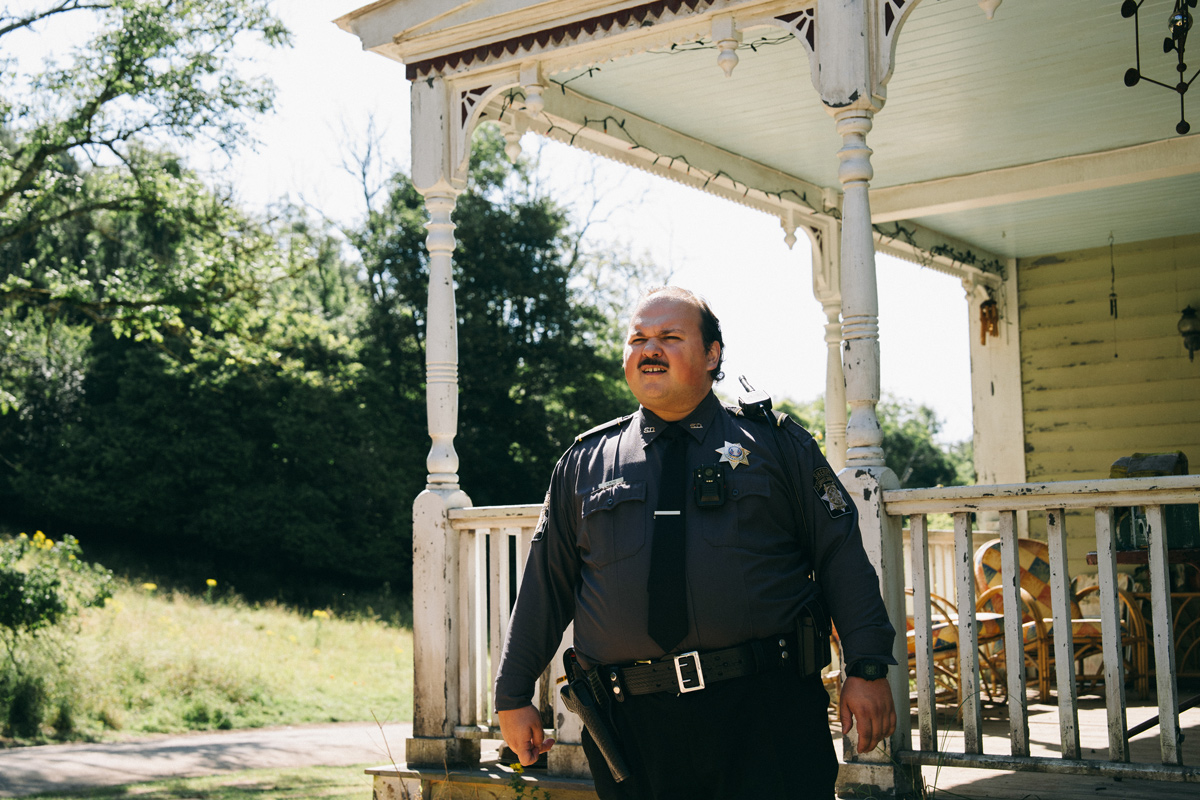
It’s a strong premise and a dynamite cast, full of the kind of wonderful little bits of absurdity that Lanthimos has made his calling card: Teddy having to shave Michelle’s head to keep her from communicating with the mothership; Teddy ordering Don to slather her with antihistamine to keep her skin from reacting to the human environment in his basement. Stavros Halkias (!) from Cumtown (not to mention gold star Pod Yourself Guest) plays Sheriff Casey, a character I can only describe as “Remorseful Molester Cop.” If not strictly necessary to the larger plot, Stav’s Sheriff provides most of Bugonia’s legitimate laughs. I wanted more.
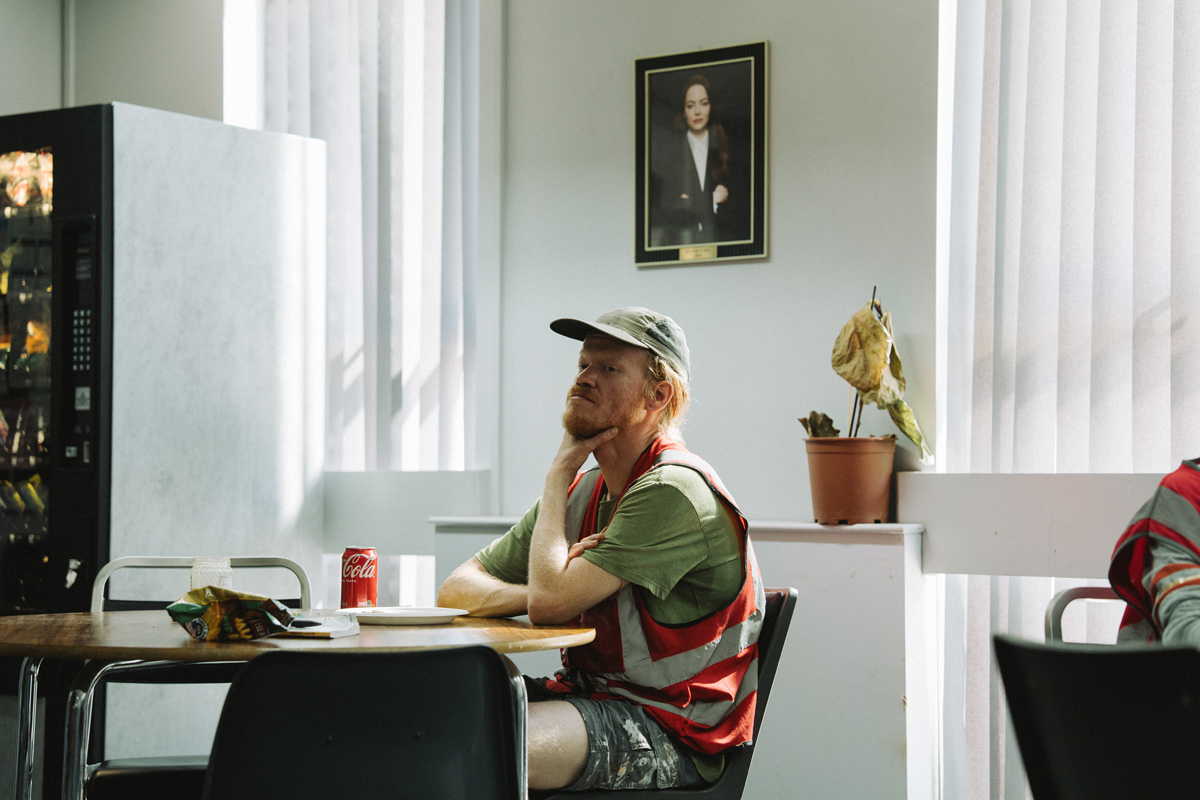
Teddy’s motive? Auxolith’s experimental drugs have put his mother, played by Alicia Silverstone (!) into a coma. In one early scene, Michelle attempts a hilariously convoluted directive to her staff about how they should leave at 5:30 to maintain the proper work-life balance, but only if they can also meet all deadlines and not forget that they’re running a business. “It’s a new regime!” she says, the only coherent part of her enlightened capitalism being the constant tone of self-congratulation.
How can you beat any of that? I certainly wasn’t bored, but Bugonia has a tendency to feel more like a series of stunts than a story, taking big swings that seem to obliterate what came before rather than build on it.
There’s an old Hitchcock analogy, I think from Hitchcock/Truffaut, about how if there’s a bomb under a table and it goes off, that’s surprise. But if there’s a bomb under a table with a ticking timer, and everyone in the audience knows it but the people onscreen don’t, that’s suspense. Yorgos Lanthimos (remaking Jang-Joon Hwan’s Save The Green Planet!, adapted by The Menu’s Will Tracy) seems to offer a third option, where there’s a ticking bomb under the table, and just as it’s about to go off a guy crashes through the wall and punts the bomb over the moon. This approach offers both suspense and surprise in spades, but the payoff offers more of a provocation than catharsis. Suspense + surprise + middle finger = …profit?
The ending already promises to be Bugonia’s most discussed part, and in my mind it’s certainly the most visually impressive: a globe-spanning montage set to “Where Have All The Flowers Gone?” all to drive home a massive third act twist. The denouement seems to offer the objective perspective most of the previous movie lacks, trapped as it is within the dueling worldviews of a conspiracy-obsessed incel hermit who insists that humanity is about to be made extinct and a Girlboss capitalist who insists innovation is salvation and even aging can be reversed, provided enough of us learn to code. I generally appreciate a big middle finger, but this one seems to be raised at a hall of mirrors. Is this provocation or just deflection?\
